Showing posts with label automation. Show all posts

Saturday, 25 May 2019

Tier5 Partnership Program - The Ultimate Software Program


𝗪𝗵𝗮𝘁 𝗶𝗳 𝘆𝗼𝘂 𝗴𝗼𝘁 𝟭𝟬𝟬% 𝗰𝗼𝗺𝗺𝗶𝘀𝘀𝗶𝗼𝗻𝘀 𝗮𝘀 𝗮𝗻 𝗮𝗳𝗳𝗶𝗹𝗶𝗮𝘁𝗲?
Wouldn't that be like an Affiliate Marketers Dream?
Here's what you get as a Tier5 Jr. Par
tner

✅ Access to all current and future Tier5 Software, there are 12 in the market right now, and 30+ full time software engineers on staff.

✅ Agency Accounts. Get 25 accounts on all Tier5 Software, sell at the price you want and keep 100% of the revenue you generate


✅ Advanced training – Tier5 will provide advanced training in using the software, automation, chatbots, affiliate marketing, and many other things.

✅ Networking opportunity. Network with the guys you see in the videos, and many more Tier5 Partners.

Does that sound like “The Ultimate Affiliate Business Program”?
How much is it? $97/month
What can the software do?
Generate Leads
Increase Conversion
Collect Payment
Ringless Voicemail
2 way calling
IVR's (press 1 campaigns)
SMS Marketing
SMS Chatbots
Email Autoresponder
Drip Campaign

Watch the videos from people I'm sure you know of in the Clickfunnels space (they are also partners)

If you want to learn more, you can visit the link below an offer that you will literally lose money if you pass it up.


 >>>>>>>   Tier5 Partnership Program 


Spots are limited. You don't have to act now, but if you wait the spots will run out and you will miss a Passive Income opportunity. 

Tier5 builds amazing software that people love to buy. 

Watch the videos and you will see what people are saying about the Company and the Software


 >>>>>>> Tier5 Partnership Program   


This post contains affiliate links which we receive a commision if you make a purchase using the link. You are not charged anymore using the link to make your purchase.

Monday, 19 February 2018

Using Automation to Be More Efficient With Social Media


WE ALL have 24 hours in a day, so we need to always be looking for ways to maximize our time. Fortunately, with social media there are ways to be more efficient with your activities through automation.


I’ll preface this by saying that you do not need to automate your entire social presence.
It kind of takes away from the whole social aspect of the channel.
Instead, let’s identify how you can use automation to be more efficient with social media that will allow you to spend more time on engagement with your audience.

Why You Need to use Automation in Social Media

I like to look for ways to automate or streamline repetitive tasks. It helps to free up my time to do other things that can’t be automated.
I know what you are thinking:
“You shouldn’t automate social media, it’s not authentic.”
Automation needs to supplement your social media, not replace it. This doesn’t mean using every social media tool to automate your existence.
Instead, you need to look for ways to streamline certain aspects of your social media initiatives.
If you are like me, I can’t stand doing the same things over and over…especially if it something that I know can be put on autopilot (or at least semi-automated).
This is the perfect starting point to figure out what you can (or should) automate.
I’ll share 3 ways I like to use automation to complement various social media activities.

Use IFTTT to Automate Social Media

One of my favorite go-to tools for automation is IFTTT. IFTTT is short for “if this, then that.” Basically, it means that if something happens, then something else should be a result of it. Essentially a “trigger” and an “action.”
This is referred to as a recipe in IFTTT.
Creating recipes in IFTTT is pretty straight forward. There is a nice wizard that will walk you through their simple 7 step process to set up your recipe.

However, creating a recipe from scratch is not necessary at all.
There are hundreds of pre-made recipes you can easily copy and use. Some of my favorite recipes are:
I’ll quickly go over what each one can do.

Archive Tweets into Google Sheets

The archiving of tweets into a Google Spreadsheet allows you to create a running list of all your tweets. This can come in handy in a variety of ways. The most notable is that you will have a running backup of your tweets. You can grab some of these old tweets and reuse them for future social media updates.
One thing to note about Google Sheets is that it will max out at 2,000 rows. When this happens, IFTTT will create a new spreadsheet to keep going.

Autopin to Pinterest

With Pinterest, your automation is limited in that there are not too many tools available yet for automation since their API is new/limited.
However, by using this IFTTT recipe you can automatically pin articles from your Feedly account to your Pinterest account.
Every time the recipe is triggered, a pin will be created for the board that you specified. It’s an easy way to add content to your boards from your favorite sources.

Create Twitter Lists Automatically

The final recipe is a simple way to add people that mention you on Twitter to a list automatically. This recipe will look for your username (or perhaps a competitor) and add people who mention the name to a list.
You can either use a public list which I recommend for adding people that mention you, or a private list for mentions of your competitor.
The benefit of adding users to a public list is that they will be notified of being added to the list which will typically drive more engagement.
If you haven’t used IFTTT, I highly recommend looking at all the recipes available and how they can help you automate some of your social media.

Recycle Your Pinterest Pins

I the previous section, I mentioned that there are not a lot of opportunities to automate Pinterest. However, there is one tool that I find invaluable when it comes to Pinterest automation.
It’s called Board Booster.
Board Booster does several things, most notably a feature called “looping.”
By using their looping feature, it will essentially recycle and re-post your pins from a board. This works particularly well if you have evergreen social content.
Setup is rather easy in that you load up one of your Pinterest boards and configure your settings:

As you can see, there are quite a few ways to configure this. I find that the most important thing to have enabled is the “automatic deduplication” which will:
“…give the new pin some time to accumulate repins, and then compare its number of repins to the number of repins on the original pin, and delete the pin that has the lowest number of repins.”
This ensures that you don’t have dozens of duplicate pins floating around your board.
Board Booster will also allow you to schedule pins. While I don’t really use this since I use IFTTT as mentioned above for posting to Pinterest, Board Booster is an option to use.
The way it works is that a “secret” board is created in your Pinterest account. A secret board is only visible to you (and Board Booster), so no one will know it exists. You can then manually add content to it and Board Booster will publish it according to the criteria you set.

It’s pretty straight forward to get going. You’ll just need to be sure to keep your secret board filled with content so Board Booster has something to publish.
If you want to get crafty, you can use IFTTT to add content to your secret board so you have more control of when items are pinned.

Find and Follow New People on Twitter

Back in the day there were quite a few Twitter tools that could follow and unfollow users automatically each day. However, Twitter clamped down on this eliminating many tools that once worked.
However, there are still tools out there that can assist with identifying and following users on Twitter. Albeit in a semi-automated fashion.
The one tool I continuously use is ManageFlitter.
If you are managing multiple Twitter accounts, I recommend upgrading your account to really get the most out of it.
With ManageFlitter, you have several ways to find people to follow. Primarily you can follow the followers of someone’s account, follow the accounts a user is following, search for specific accounts (bios, location, followers, etc), or search for tweets containing certain text.
Should you choose to follow the followers of an account, ManageFlitter will go and get the latest people to follow that account. With one click you can select them all and add them to your “process” queue.
Same goes for following the accounts a user is following.
When searching bios, you get some flexibility of the criteria to use.

You can get pretty granular with your requirements. Just keep in mind the more specific you are, the fewer the results will be. However, they will be more targeted than a broad search.
Finally, you can search for tweets containing specific text and location.

You don’t get as many options with this as other search methods on ManageFlitter. The results will be listed for you to sift through and hand pick people to add to your “process” queue, or you can bulk add all of them.

Aside from finding targeted followers, ManageFlitter will also unfollow anyone not following you back. This can be very useful in that you don’t have to manually sift through and check your followers to ensure they are following you back. In just one click you can select all who are not following you back and add them to you “process” queue.
In your “process” queue is where you will actually follow or unfollow Twitter users. Unfortunately, you will have to manually click follow or unfollow on each user.
Even though this is not the most fun thing to do, what is nice is that the way the site is designed is that once you click on follow/unfollow, that user disappears and the next one in the list scrolls up. This puts the button you need to click in the exact same spot, so it makes it easy to just click real fast to get through the list.
Now if you really want to fully automate these processes, ManageFlitter has a service you can pay extra for and they will handle all this for you. However, I have never paid them for it and would rather save a few bucks to do it myself.

Automate Social Media With Moderation

Social media automation is something you will need to use with moderation. By no means should automation be used to replace your presence on your social accounts.
The various tools and techniques are meant to help keep you out of the weeds and free up your time from performing mundane tasks. You can then use this freed up time to put more effort in engaging with your audience.
So the big question is, what are you going to automate and how are you going to use your additional free time?

Monday, 5 February 2018

How to Get More Facebook Fans Organically: A Guide for Small Business Owners


According to a study conducted by G2 Crowd, 80% small businesses now consider Facebook their primary marketing channel. This could be because they find Facebook marketing affordable, or effective, or a combination of both. This could also be because creating a Facebook Business page is among the easiest things small business owners could do to kickstart their marketing efforts.
While it’s easy to create a Business page, it’s anything but easy to run marketing successfully on the platform. Here are some of the reasons why your Facebook marketing is failing –
-You publish content sporadically (if you don’t have the time to post consistently, consider using a social media management tool that supports automation)
-You don’t have a Facebook marketing strategy
-You rely on ads to grow and engage your audience
-Your marketing strategy doesn’t address Facebook’s declining organic reach

Why your organic reach on Facebook has declined

Ever since Facebook switched from EdgeRank to a sophisticated machine learning algorithm in 2013, organic reach for businesses has been on the decline. The new algorithm considers over 100,000 factors to rank posts in users’ feeds. Among them are –
-Affinity – The interactions between your fans and your brand
-Weight – The quality and type of your content (On Facebook, certain types of content, like visual content, carry more weight than others)
-Decay – The age of the post (Older posts show up less often on feeds than younger posts)

It's no surprise that Facebook has limited organic reach for businesses, after all, Facebook is a for-profit organization and is home to millions of business pages that are all vying for user attention. So it gets businesses to pay for exposure.
That doesn’t necessarily mean that you rely completely on paid exposure. Organic reach on Facebook is still relevant and important.

Why organic reach on Facebook matters

People react differently to advertisements and organic content. A growing segment of people despise ads, and about 30% of them have begun to use Ad Block software to keep ads astray.
Plus, Facebook ads are not intent based like Google ads. Facebook ads are simply displayed to the entirety of your target audience, a group that includes people who are not remotely ready to purchase from or even engage with your brand. Organic Facebook marketing plays an important role in targeting such people.

How to organically grow your fan following on Facebook

Publishing without a strategy won’t get you very far with Facebook marketing. You need a sound strategy and content created considering Facebook’s feed ranking system. Here are 7 quick tips to increase your organic reach on Facebook today.

1. Post more often

Social media managers underestimate the volume of posts published on Facebook. Like Twitter, Facebook has tons of posts being published every second, and it doesn’t hurt you to publish posts repeatedly.
Create multiple versions of the same post and save them in DrumUp libraries. Connect your Facebook page to DrumUp and set the posts in the libraries on an auto-posting schedule.

2. Identify windows of high engagement & capitalize on them

Your audience is more active during specific time intervals. But those time intervals won’t necessarily give you the most engagement. For some brands, publishing during off-hours gives better results. Jon Loomer found that his engagement was better for posts published during off-hours (10pm to 3 am) than for posts published during peak hours (6am to 3pm).
Use Facebook’s analytics (or DrumUp’s social media analytics) to identify your windows of high-engagement and log them into DrumUp for easy 1-click schedule of posts during them.

3. Use CTAs

Most social media managers misunderstand virality. “Viral” doesn’t mean a massive amount of engagement; it simply refers to how a content is distributed (through engagement). When your fans engage with your content, it appears on their friends’ feeds. And CTAs work wonders in getting fans to engage.
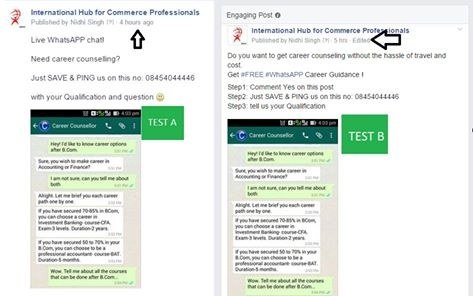
Facebook marketing expert Nidhi Singh A/B tested a post, with and without a CTA, and observed that the CTA version got 20% more reach than the expected standard.
1

4. Experiment with content types

As mentioned earlier on this post, certain content types (especially visuals) get more reach on Facebook than other content types. And there are so many types of visual content with which you can experiment.
Conduct A/B tests every time you publish a post and collect data pertaining to what works best with your audience. You can even curate content in libraries and set them on a repeat schedule.

5. Go LIVE

Everyone who has liked your page will get a notification when you’re LIVE, according to Mark Zuckerberg’s official statement.  So for important messages and brand announcements, consider using Facebook LIVE in addition to your regular marketing activities.
You can use Facebook LIVE for anything from product launches to QnAs and random entertainment. Trey Ratcliff, professional photographer, gets fans to submit photos and reviews them LIVE.
Screenshot 2017-11-21 10.19.22

6. Cross-post on other social networks

If you have already built a sizeable audience on other social networks like Twitter or LinkedIn, or marketing channels like email, you can use that audience to build your Facebook following.
Add your Facebook page link to your other social profiles, add clickable social icons to your email or broadcast your Facebook page info to your other social networks and ask them to follow you.

7. Use transparency

Today’s audience is smart. They don’t appreciate ads being forced on them. They celebrate independence and honesty, which is why transparency is such a great marketing strategy when targeting them.
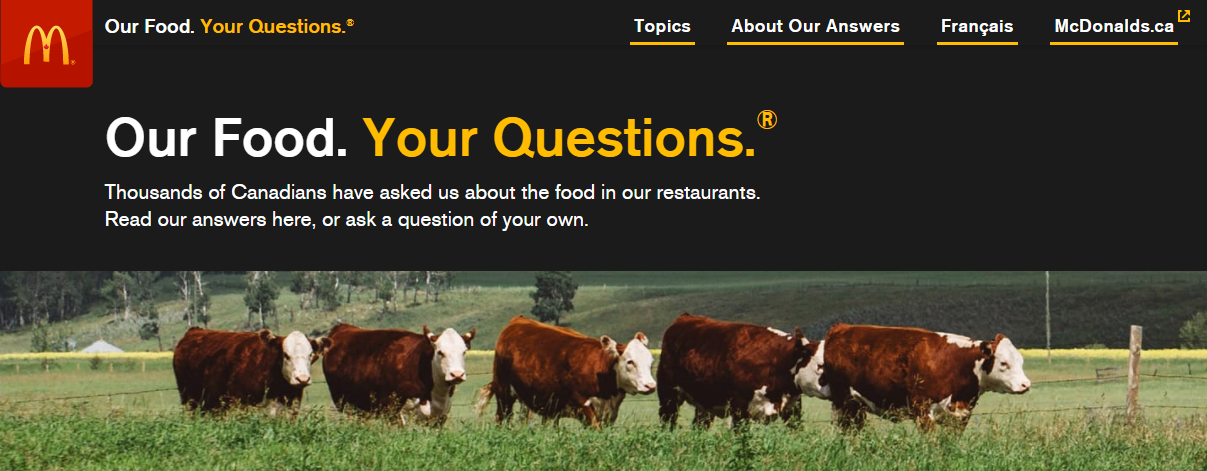
Show your audience what happens behind the scenes. Be transparent about your intentions. Respect their space and refrain from forcing ads on them. McDonald’s has a website dedicated to answering customers’ questions about the food in their kitchens.
Screenshot 2017-11-21 10.24.49
Wrap
Organic Facebook marketing matters, when building a real and engaged community that will earn you business in the long run. Use the ideas mentioned on this post to boost your organic Facebook reach today.
Feature image via Freepik.com 

Monday, 15 January 2018

4 Ways Automation Develops Real-Life Relationships with Buyers


A lot of people make assumptions when they see the word “automatic.”
They imagine it means less human, less engaging, and less insightful.
But the opposite is true for marketing automation.
The “automatic” aspect doesn’t cheapen your brand, it makes your voice stronger.
With digital marketing automation technology, you can develop consistent, spot-on communication that builds authentic relationships with your target buyers.
Here are four specific ways that marketing automation goes the extra mile to develop real-life connections with consumers:

1. Communication Is Consistent

When you make a new friend, the consistency of your day-to-day communication dictates how the relationship grows or fizzles.
You’re more likely to appreciate a friend who responds to your daily texts than someone who blows you off.
The same goes for marketing: buyers expect consistent interactions with a brand.
Instead of failing to juggle relationships with thousands (or tens of thousands) of potential buyers, use automation to connect consistently with your audience via email.
Expert Tip: Always send your email marketing at the same day and time — it sets up a positive expectation for your customers. 

2. The Focus Shifts To Your Brand Voice (Instead of Logistics)

Sending regular emails through an automated marketing program creates the opportunity to emphasize and hone your brand voice.
Instead of managing a ton of email addresses in Gmail, you can use that extra time to work on creating copy that resonates with buyers.
Marie Forleo, for example, personalizes her automated emails with brilliant humor and warm enthusiasm.
A recent email from Marie read, “So thanks, truly, for allowing us to travel along your side as you continue to create and expand your life.”
You can feel how genuine that connection is for her.
Automation, more than any other technology, allows those warm-and-fuzzy sentiments to reach a growing pool of readers.
Expert Tip: When you write marketing emails, ask yourself the question, “What emotion or feeling am I trying to evoke in my buyers?” 

3. Keeps You Relevant with Buyers

Marketing automation enables you to scale your business exponentially without losing your niche as a company.
As your business grows, you can stay relevant with your audience by breaking a group into multiple segments that draw on your strengths.
Let’s say you own a chain of local taquerias with two primary sets of buyers: local Spanish-speaking families and young college students.
Email automation allows you to send one email to each group rather than bunching everyone together.
You keep the conversation relevant by only including the information that benefits each one.
Expert Tip: If your target audience includes native speakers of multiple languages, consider sending out separate emails in different languages to segmented groups.

4. Seals the Deal With Personalization

Personalizing your marketing campaign develops a one-on-one dialogue that goes a step beyond segmentation.
To simulate the same experience of interaction at a brick-and-mortar store, automate your marketing to send triggered emails in response to consumer actions.
If a prospective client clicks on a guide you wrote or reads an email about a special offer, you can follow-up with a planned, automated email.
Here’s a great example:

“Hey there!
I saw that you expressed interest in our May offer. Is there any more information I can give you to help make that decision? Feel free to reach out to me on my cell phone (xxx) – xxx – xxxx with any questions.
Warmly,
Dan”
Expert Tip: Don’t trigger every customer action with an email. Too much of a good thing is just too much!

Marketing Automation and Buyer Relationships: Final Wrap Up

Let’s face it.
Anything you can do to increase productivity without losing your personal touch is worth considering.
With marketing automation, you do just that!
By supporting consistent and personalized email marketing, marketing automation technology strengthens the impact of your messages.
So, before you hit send on your latest campaign, consider these 4 tips.
Try to implement at least one today and reap the benefits!
Can you think of any more reasons to consider automating your communication?
Please share in the comments below so everyone can benefit from your insight!


Source

Sunday, 17 December 2017

2018 email marketing trend report


We may be in the midst of a social media boom, but email marketing is holding strong. Not only has email continued to be one of the most cost-effective ways to reach customers, but 72 percent of consumers say that they prefer to hear from businesses via email. The channel’s longevity can be ascribed to innovation: Every year, marketers develop new ways to make email even more powerful.
Wondering what 2018 has in store for your email marketing program? Here are five trends that we have our eye on:


Improved personalization and segmentation

We’ve explored the power of personalization and segmentation here before. Together the two tactics increase engagement by providing readers with messages that are relevant and timely.
Now marketers are collecting more data about their audiences to improve their targeting capabilities. In a recent Econsultancy report, 80 percent of respondents said they were segmenting their contact lists into customer groups. Where personalization once meant addressing email readers by their first name, marketers now divide their contact lists based on everything from birthdays to time zones, enabling themselves to create messages that resonate with specific segments on a deeper level.


Interactivity

Fifty-three percent of marketers now integrate interactive content into the buyer’s journey. Running the gamut from embedded surveys to quizzes to GIFs, interactive content brings emails to life. It also encourages readers to engage with a brand, generating twice as many conversions as passive content. Not only is a quiz or slideshow attention-grabbing, but businesses have discovered that elements like these can be easier for subscribers to consume. In some cases (such as product releases), an image carousel or three-second GIF may convey a message more effectively than a block of text.


Creative typography

Want to make sure readers hone in on a specific offer? Decorative typefaces make the most important information in marketing emails stand out. And, when used judiciously, creative typography makes emails vibrant, adds a compelling element and can showcase a brand’s personality.


Spread of automation

The emergence of accessible automation tools is enabling small business owners to reach their audiences at the right time with the right messages. Not only is automation a time-saver — making it possible to create and schedule messages when it’s most convenient — but it also improves email performance. According to Epsilon research, automated emails boost click-through rates by 119 percent.


Making the most of transactional emails

Transactional emails can be more than just receipts. Since they deliver eight times as many opens and clicks than any other type of email, they also can provide businesses with a great opportunity to market to customers. Savvy business owners use the emails that are automatically triggered after a purchase or other customer action has taken place to present special, relevant offers to customers.

Email marketing is constantly evolving. To achieve your best results in 2018, start integrating these latest trends into your email strategy today.


Source

Wednesday, 13 December 2017

12 Tips for Christmas Email Marketing Campaigns


 Christmas is well and truly just around the corner. Take a look at our 12 Christmas email marketing top tips to help you build and send fetching, festive email campaigns.


Analyse

Take the time to view and analyse past email marketing campaigns to see what worked well and what didn’t. Once you have acquired this knowledge you can plan your future festive campaigns to give them the best chance of getting good engagement rates.


Research

Spend a bit of time researching what’s hot and what’s not in your industry and check out the competition to see what they have up their sleeves. Try and incorporate these trends into your email marketing to show that you are also on trend.

Set A Goal

Whether it’s to get 20% more opens or 30 more clicks than last year, it’s good to set a goal as it gives you something to work towards. This way you can also aim towards improving results and statistics which always goes down well!

Plan

The old saying ‘failing to plan is planning to fail’ is something to abide by here. Without having a plan of action for your email marketing it’s bound to not do as well as it could. Take a bit of time to sit down and think about individual emails and overall email campaigns. Look out for key dates and content that can be included to target specific audience members.

Christmas Email Marketing

Punchy Subject Lines

As potentially the most important part of an email, your subject line needs to be powerful and punchy to encourage the recipient to read on. The best subject lines create excitement, urgency and curiosity. This can be done using personalisation or even emojis! Just be sure to keep them short and snappy.


Engaging Content

Probably one of the most important elements of an email – the content. Create engaging content by including clear images, gifs and easy to ready text.


Mobile Optimised

The festive period is a busy time, people are out and about on the move so you want to be able to target them whenever and wherever they are. Do this by ensuring your emails are optimised for mobile. Up to 75% of emails are opened on mobiles or tablets so it’s crucial that you make them compatible with mobile viewing!


Clear CTA’s

Call to actions are essential, they catch the readers eye and give them direction/instruction. Whether this be ‘BUY NOW’, ‘SEE MORE’ or ‘SHOP’ make sure they are direct enough to encourage recipients to click through to your website.

Christmas Email Marketing

Test

Before any campaign is sent it’s imperative to carry out the necessary tests and checks. This includes making sure your email looks correct across multiple platforms, any spelling mistakes, images load properly, link errors, plus split and multivariate testing. For peace of mind, it’s always handy to have someone else take a glance as a fresh pair of eyes may notice things you haven’t spotted!


Dynamic Content

Some of your subscribers will be previous customers and you will have details of their last purchases. Use this to your advantage and tailor emails using dynamic content to include products relevant to recipients. This way you will have a much better chance of engaging them and potentially making another purchase.


Automation

Automation is crucial for email marketing these days. It allows you to set up multiple workflows for customer journeys including welcome programmes, nurture programmes, basket abandonment programmes, loyalty scheme programmes and many more!
Find out more about our visual marketing automation system, Maxautomation.


Review

Once an email campaign has been sent don’t just forget about it! Use this time to review and analyse how the campaign did. Without tracking and analysing results how will you know if they have been a success or not? Take the time after each campaign to look at delivery rates, open rates, click through rates and conversion rates.


Source

Monday, 11 December 2017

3 Changes To Your Email Marketing For Success


 So you have email marketing set up for your business, but it’s not doing as well as you would like. What changes can be made to encourage better results? Take a look at our suggestions to help destine your email marketing for success.
Whether your email marketing has been running for months or years, it’s vital to take a step back every now and then to look at your process to ensure you it’s maximising its full potential. If you have found yourself in this position and looking for ways to improve your email marketing, take a look at our 3 top changes we suggest.


Automate your Emails with Automation

Automation is a crucial tool for email marketers. Without it, you will be trailing behind your competitors who are using it. Not only does automation save time and money, it also helps you to improve your overall relationship with customers. So how can automation help change your email marketing?

Targeted Email Programmes
Welcome, nurture, loyalty and milestone are just a few of the countless email programmes you can create based on the behaviour of subscribers – engaged or not engaged with an email. Using automation saves time having to create and send multiple daily emails as once it’s set up it does all the work for you!

Save Time
Having automated workflows/programmes allows you to send multiple campaigns 24/7, which is a massive time saver. Once a workflow is set up and running, emails can be sent throughout the day leaving you time to carry out other important tasks.

Planned Campaigns
Visualising and creating workflows/programmes in front of you will encourage you to plan more meticulously. Having a workflow and all its stages will open your eyes to more opportunities and will benefit your overall marketing strategy.

Personalised Emails
Automated emails and personalisation go hand in hand. Combined they allow you to tailor your emails and send unique content to individuals, creating a more personal and relatable customer experience.

Relevant Emails for Recipients
Automation allows you to tailor and send email campaigns more efficiently. Sending relevant content to suitable recipients will encourage more clicks and in return create more conversions.


Clean your Lists

Keeping your lists clean is standard practice for email marketers. It can sometimes get neglected but your subscribers are one of the most important components of email marketing so here are a few tips to help you maintain a clean list of data.

Double Opt-In Subscription
A double opt-in process provides extra peace of mind and an archived record that individuals have signed up to receive your marketing campaigns. It’s also great for highlighting any errors to the users’ details allowing them to edit and rectify if necessary.

Provide a Preference Center
Having a preference center allows your subscribers to update their details if any changes take place, this, in turn, helps to keep your list up to date and clean.

GDPR
The General Data Protection Regulation (GDPR) will be coming into legal force in May 2018 so it should be of high priority on your list. It will affect the way you collect your email marketing data in quite a big way. It’s good to get to grips with all the changes, regulations and how to ensure you are up to date with your data collection now.
Find out more about GDPR here.

Let People Unsubscribe If They Want To
As part of the CAN-SPAM Act, every email you send must include a clear unsubscribe link and you must then honour these opt-out requests promptly. It may seem like a step backward to make it easy for users to unsubscribe but it is actually very beneficial for keeping your data lists clean. When sending campaigns you are aiming to target engaged users so it’s good practice to get rid of the uninterested recipients.

Take a more in-depth look into your list housekeeping here.


Measure, Analyse and Improve

Analytics are there for a reason, they allow you to track and evaluate the results of your campaigns – whether they are good or bad. Making time to take note of the number of opens, clicks, bounces and unsubscribes can give you an insight into what is working well and what isn’t – which is crucial for any email strategy.

Once you have the stats in front of you – don’t just ignore them. Findings should be addressed and adjustments to your future strategies should be made. These changes should then be monitored to ensure they are helping to improve your campaigns and not sending them backward!


Source

Tuesday, 28 November 2017

Should You Let a Bot Manage Your Instagram Account?


Doesn't it feel like most people are falling a little too much in love with automation just because it's faster and easier?
Sure, automation can save you time and mitigate the grind associated with repetitive tasks. But does it produce better results?
Can a bot truly be effective at replacing human interaction?


Download our essential guide to Instagram for business for more helpful tips and tricks.

We wanted to see the best way to build an engaged audience on Instagram, so we decided to test outbound automation against human engagement -- and see which one got better results.

What Do We Mean By Engaged Audience?

An engaged audience contains people who actually care about what you post.
What’s the point in running up a large follower count if the people on that list don’t engage with your content?
It’s easy to artificially inflate your follower numbers, which is impressive at a superficial glance -- but it doesn’t indicate that your content actually has any impact.
An engaged audience contains followers who like your posts, comment when you add something, and respond to your comments. It’s about creating a loyal following that opens up conversation and opportunity for all parties involved.

The Experiment

I teamed up with Fouad Tolaib, Founder of Jolted, to develop the framework for the experiment.
We had two initial hypotheses:

  1. The automated account will have more followers. A bot’s ability to reach more people would be more seamless than a human’s.
  2. Automation currently isn’t sophisticated enough to be as effective at connecting with an audience peer-to-peer.

The Profiles

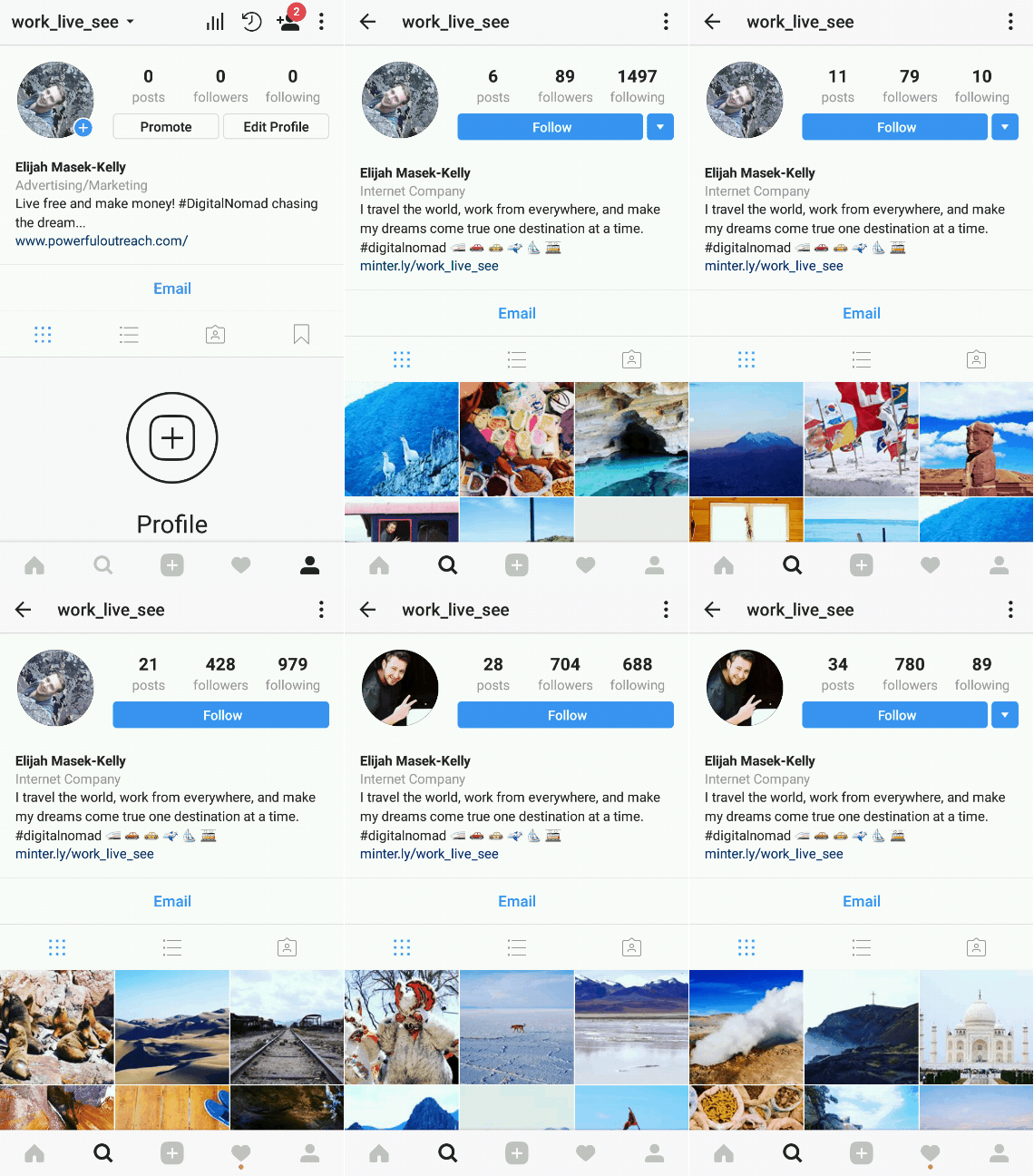
The experiment featured two identical profiles where I branded myself as a digital nomad. The first account, @liveworksee, had Instagram interactions come from a person:

The second account, @work_live_see, was automated.

Rules for the Instagram Experiment

After setting up two Instagram profiles, we set the following parameters around the experiment:

  1. Each account contained the same profile description.
  2. We posted the same content at the same time on both profiles each day, for one month.
  3. Every post contained the same hashtags to drive inbound engagement.
All of the results over 30 days were tracked by Minter.io.

The Human Profile (@liveworksee)

All outbound engagement was done by a human. We defined "human" by using organic engagement -- that means a real person commented on and liked other Instagram posts from this account.

The Automated Profile (@work_live_see)

All outbound engagement was controlled by Gramista’s automation software. We allowed it to log in on our behalf, set specific hashtags to target, applied restrictive filters, set the algorithm on ‘auto like,’ and gave permission for the bot to leave a certain amount of generic comments.

The Results

Thirty days later, we found some surprising results.
The average post engagement rate -- which we calculated by taking the sum of likes and comments, divided by the number of posts on a profile, then divided by followers -- on our organic engagement profile was nearly 3X higher.
That meant one thing:
The Loser: Bots. The Winner: Humans!

In addition to a significantly higher engagement, the organic engagement profile had over 2,000 more likes, and the number of comments was 41% higher.

Follower Demographics

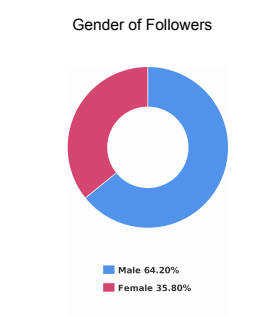
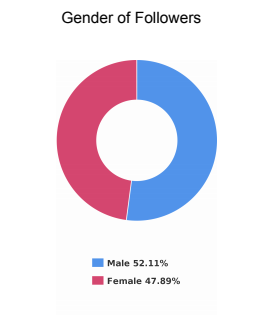
The demographics of followers also skewed significantly. Female followers of the automated account were just 35.8%, compared to 47.8% on the organic engagement profile. At last check, Instagram users overall are predominantly female.

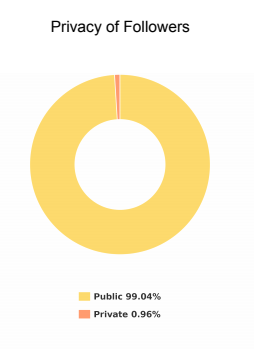
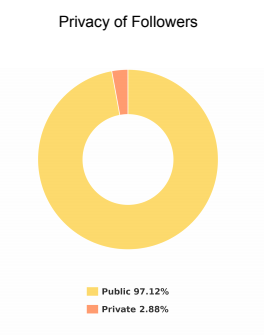
The number of private users that followed the organic engagement profile was also close to 3X more.

The top country of origin for followers on the automated profile was India (28%), followed by the United States (13%). For the human-run account, U.S. was first (22%), and Italy second (8%). On the organic profile, India was sixth, comprising 4% of followers.

Reaching Influencers

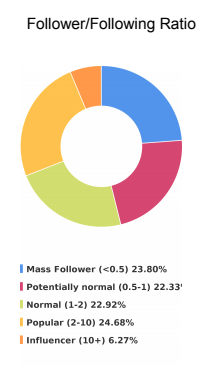
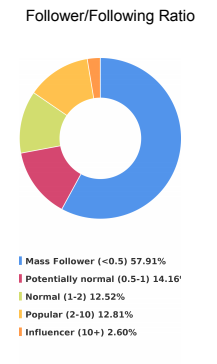
We then looked at the number of popular, or influencer profiles. Minter.io defines "popular" or "influencer" according to a user's  follower-to-following ratio. The more followers that user has, compared to the number of users they follow, the more influential they are per this metric.
Popular and influencer profiles comprised 30.95% of the organic engagement profile's followers, compared to 15.41% on the automated profile.

image16.pngimage5-3.png

Photo Engagement

Interestingly, despite posting uniform content on each profile, the most engaged-with photos on each account were also different.
The most engaging photos on the human-run profile were:

  • A small harbor in Colombia.
  • A shot of Macchu Picchu.
  • A little boy and woman walking in Viacha, Bolivia.
And on the automated profile:

  • A shot of the moon hanging over a mountain range in La Paz, Bolivia.
  • A man in sunglasses posing next to a bunch of flags left at the top of a mountain.
  • An archaeological site in western Bolivia.
The best performing hashtags on the human-operated profile were #ilovetravel, #neverstopexploring, and #travelgoals, while the automated profile’s top three were #neverstopexploring, #digitalnomads, and #ilovetravel.

The only two hashtags to crack the organic profile’s top ten that didn’t make it on the automated results were #instatravel (just over 1,500 interactions) and #backpack (1,450).
Alternatively, #nomadlife (900 interactions) and #travellife (910 interactions) made the automated profile’s top ten hashtags, but not the human-run profile's.
The key point here: Automated software may not necessarily detect all hashtags generating a high number of interactions.

Scheduling Future Posts

Minter.io also determined, based on the organic profile’s data, that the best time of the week to post for engagement was Monday night and Tuesday evening.
An aggregate report from CoSchedule confirms that the best time to post is typically Monday mornings and evenings.

However, on the automated account, the greatest time for engagement was on Saturday afternoons.

Lessons Learned

1. Automation Leads to Less Engagement.

The end number of followers on the automated profile was 799, compared to 621 for the personally managed account. Automated tools will run up the follower count faster and get you off to a quicker start, but organic engagement creates a more engaged audience.
Generic comments and rapid liking does not create the same kind of human connection that followers actually crave. The organic profile generated a significantly larger amount of engagement with the average rate being nearly three times more.

2. Organic Engagement Has A Higher Content Reach Potential

For the organic profile, the potential reach of content (regramming, future partnerships, etc.) was also higher as we looked at the number of followers who were influencers or popular. Responding to each comment with a personal touch made for more engagement with private Instagram users as well.

3. Automation Connects More With Bots Than Humans.

We found the automated profile had more automated followers. Yes: bots following bots. In other words, these followers were either scheduling a large amount posts of posts, or leaving very generic messages.
That's likely due to a bot's inability to recognize the difference between generic comments and real responses. However, humans will naturally connect more with a thoughtful response and ignore a meaningless “awesome!” comment.

So, How Do I Build an Engaged Audience?

Have someone (yes, a real person) spend two-to-three hours per day per day on your Instagram profile completing tasks including:

  • Replying to all comments
  • Liking other posts
  • Adding insightful comments to other posts
  • Asking followers questions to connect with them
  • Researching emerging content trends and hashtags
  • Reaching out to influencers
From our observations, we believe tailoring your content to your target audience, engaging naturally and consistently with both followers and non-followers, and using targeted tags (up to 30) in your post’s first comment all contribute to an increased rate of post engagement.
Automation can supplement the speed of your growth, particularly in regards to follower count, but it should not be relied on as the only strategy for Instagram.
If you’re tight on time, a combination of automated and manual outbound engagement might work best.
However, when it comes to commenting on other people’s content, there’s no better alternative than a human responding with something specific. This has proved to be true in our case study and resulted in a higher conversion (non-follower to follower) ratio.
After all, this is social media - it’s about human connection and social sharing.
If we all just have bots running our profiles and interacting with each other, what’s the point of doing it at all?


Source