Showing posts with label Email Personalization. Show all posts

Sunday, 17 December 2017

4 tips to beat back email burnout


There’s no denying that email marketing is an efficient way to drive business, but maintaining a steady flow of fresh content can be a challenge.
On the one hand, you don’t want to inundate your readers with so many messages that they unsubscribe. On the other hand, it’s incredibly valuable to sustain digital communications that keep you top-of-mind with past, current and potential clientele.
The key is to keep your email content compelling and original. If you have email marketing writer’s block, here are four quick tips that will help jump-start your efforts.


1. Empathize with your audience

As you start crafting an email message, put yourself in the shoes of your desired customer base. If you were one of the many subscribers receiving this message, what would you like to see? What would encourage you to open the email, and more importantly, act on it? 
There is some give-and-take at play here as well. You want to deliver content your customers will act on, but you also want to remain true to your brand’s voice and positioning. Don’t let the desire for opens and clicks tempt you to write something that is out of character for your business, or you’ll risk confusing your audience.


2. Make it personal

Of the hundreds of emails most of us receive on a daily basis, how many are actually opened and read from start to finish? Considering most email clients automatically divert messages away from recipients’ inboxes, the percentage is relatively small.
That said, the emails we’re most likely to open and read are from people we know. These messages are written in a very personal way, rather than as a large company addressing a nameless, faceless customer.
No matter what you communicate in your emails, write them as if you’re sending them to a single person, even if there are hundreds or thousands of recipients on your subscriber list. Assuming you’ve already imagined what your customers want to hear from you, writing as if you’re sending to a single recipient will further guide your content as you start tapping at the keyboard.


3. Use numbers

People love numbers. Offering readers a numbered list is a proven attention-grabber. This technique is most often used in “listicle”-style stories popularized by websites like BuzzFeed.
If the subject line of your email reads, “5 Things to Know Right Now About Your Health,” it’s much more likely to get opened than one with a subject line reading, “Get To Know Your Health.”
There is something about numbers in a news headline that makes audiences feel they’re about to read a quick-hitting story that can be consumed in no time. That same principle can be applied to email subject lines for great effect.


4. Keep it short and simple

Driving potential customers to open an email is one thing, and getting them to act on it is another. A great subject line can cause your open rates to skyrocket. That means you need body copy to match it. Avoid ultra-long body content in emails, which is more likely to induce eye rolls than produce clicks.
Come up with a catchy opening to your email, get to the heart of your message, and then get out. Don’t overthink it. Audiences appreciate emails that are short and simple because it shows how much you appreciate their time.

When writer’s block strikes, get your creative juices flowing again by remembering to empathize with your readers, talk on a personal level, offer some interesting numbers if appropriate, and above all keep it simple! Or if you’re simply too short on time, let Pro+ Full-Service Email Marketing handle the entire email marketing process for you.


Source

2018 email marketing trend report


We may be in the midst of a social media boom, but email marketing is holding strong. Not only has email continued to be one of the most cost-effective ways to reach customers, but 72 percent of consumers say that they prefer to hear from businesses via email. The channel’s longevity can be ascribed to innovation: Every year, marketers develop new ways to make email even more powerful.
Wondering what 2018 has in store for your email marketing program? Here are five trends that we have our eye on:


Improved personalization and segmentation

We’ve explored the power of personalization and segmentation here before. Together the two tactics increase engagement by providing readers with messages that are relevant and timely.
Now marketers are collecting more data about their audiences to improve their targeting capabilities. In a recent Econsultancy report, 80 percent of respondents said they were segmenting their contact lists into customer groups. Where personalization once meant addressing email readers by their first name, marketers now divide their contact lists based on everything from birthdays to time zones, enabling themselves to create messages that resonate with specific segments on a deeper level.


Interactivity

Fifty-three percent of marketers now integrate interactive content into the buyer’s journey. Running the gamut from embedded surveys to quizzes to GIFs, interactive content brings emails to life. It also encourages readers to engage with a brand, generating twice as many conversions as passive content. Not only is a quiz or slideshow attention-grabbing, but businesses have discovered that elements like these can be easier for subscribers to consume. In some cases (such as product releases), an image carousel or three-second GIF may convey a message more effectively than a block of text.


Creative typography

Want to make sure readers hone in on a specific offer? Decorative typefaces make the most important information in marketing emails stand out. And, when used judiciously, creative typography makes emails vibrant, adds a compelling element and can showcase a brand’s personality.


Spread of automation

The emergence of accessible automation tools is enabling small business owners to reach their audiences at the right time with the right messages. Not only is automation a time-saver — making it possible to create and schedule messages when it’s most convenient — but it also improves email performance. According to Epsilon research, automated emails boost click-through rates by 119 percent.


Making the most of transactional emails

Transactional emails can be more than just receipts. Since they deliver eight times as many opens and clicks than any other type of email, they also can provide businesses with a great opportunity to market to customers. Savvy business owners use the emails that are automatically triggered after a purchase or other customer action has taken place to present special, relevant offers to customers.

Email marketing is constantly evolving. To achieve your best results in 2018, start integrating these latest trends into your email strategy today.


Source

Wednesday, 13 December 2017

12 Tips for Christmas Email Marketing Campaigns


 Christmas is well and truly just around the corner. Take a look at our 12 Christmas email marketing top tips to help you build and send fetching, festive email campaigns.


Analyse

Take the time to view and analyse past email marketing campaigns to see what worked well and what didn’t. Once you have acquired this knowledge you can plan your future festive campaigns to give them the best chance of getting good engagement rates.


Research

Spend a bit of time researching what’s hot and what’s not in your industry and check out the competition to see what they have up their sleeves. Try and incorporate these trends into your email marketing to show that you are also on trend.

Set A Goal

Whether it’s to get 20% more opens or 30 more clicks than last year, it’s good to set a goal as it gives you something to work towards. This way you can also aim towards improving results and statistics which always goes down well!

Plan

The old saying ‘failing to plan is planning to fail’ is something to abide by here. Without having a plan of action for your email marketing it’s bound to not do as well as it could. Take a bit of time to sit down and think about individual emails and overall email campaigns. Look out for key dates and content that can be included to target specific audience members.

Christmas Email Marketing

Punchy Subject Lines

As potentially the most important part of an email, your subject line needs to be powerful and punchy to encourage the recipient to read on. The best subject lines create excitement, urgency and curiosity. This can be done using personalisation or even emojis! Just be sure to keep them short and snappy.


Engaging Content

Probably one of the most important elements of an email – the content. Create engaging content by including clear images, gifs and easy to ready text.


Mobile Optimised

The festive period is a busy time, people are out and about on the move so you want to be able to target them whenever and wherever they are. Do this by ensuring your emails are optimised for mobile. Up to 75% of emails are opened on mobiles or tablets so it’s crucial that you make them compatible with mobile viewing!


Clear CTA’s

Call to actions are essential, they catch the readers eye and give them direction/instruction. Whether this be ‘BUY NOW’, ‘SEE MORE’ or ‘SHOP’ make sure they are direct enough to encourage recipients to click through to your website.

Christmas Email Marketing

Test

Before any campaign is sent it’s imperative to carry out the necessary tests and checks. This includes making sure your email looks correct across multiple platforms, any spelling mistakes, images load properly, link errors, plus split and multivariate testing. For peace of mind, it’s always handy to have someone else take a glance as a fresh pair of eyes may notice things you haven’t spotted!


Dynamic Content

Some of your subscribers will be previous customers and you will have details of their last purchases. Use this to your advantage and tailor emails using dynamic content to include products relevant to recipients. This way you will have a much better chance of engaging them and potentially making another purchase.


Automation

Automation is crucial for email marketing these days. It allows you to set up multiple workflows for customer journeys including welcome programmes, nurture programmes, basket abandonment programmes, loyalty scheme programmes and many more!
Find out more about our visual marketing automation system, Maxautomation.


Review

Once an email campaign has been sent don’t just forget about it! Use this time to review and analyse how the campaign did. Without tracking and analysing results how will you know if they have been a success or not? Take the time after each campaign to look at delivery rates, open rates, click through rates and conversion rates.


Source

Monday, 11 December 2017

3 Changes To Your Email Marketing For Success


 So you have email marketing set up for your business, but it’s not doing as well as you would like. What changes can be made to encourage better results? Take a look at our suggestions to help destine your email marketing for success.
Whether your email marketing has been running for months or years, it’s vital to take a step back every now and then to look at your process to ensure you it’s maximising its full potential. If you have found yourself in this position and looking for ways to improve your email marketing, take a look at our 3 top changes we suggest.


Automate your Emails with Automation

Automation is a crucial tool for email marketers. Without it, you will be trailing behind your competitors who are using it. Not only does automation save time and money, it also helps you to improve your overall relationship with customers. So how can automation help change your email marketing?

Targeted Email Programmes
Welcome, nurture, loyalty and milestone are just a few of the countless email programmes you can create based on the behaviour of subscribers – engaged or not engaged with an email. Using automation saves time having to create and send multiple daily emails as once it’s set up it does all the work for you!

Save Time
Having automated workflows/programmes allows you to send multiple campaigns 24/7, which is a massive time saver. Once a workflow is set up and running, emails can be sent throughout the day leaving you time to carry out other important tasks.

Planned Campaigns
Visualising and creating workflows/programmes in front of you will encourage you to plan more meticulously. Having a workflow and all its stages will open your eyes to more opportunities and will benefit your overall marketing strategy.

Personalised Emails
Automated emails and personalisation go hand in hand. Combined they allow you to tailor your emails and send unique content to individuals, creating a more personal and relatable customer experience.

Relevant Emails for Recipients
Automation allows you to tailor and send email campaigns more efficiently. Sending relevant content to suitable recipients will encourage more clicks and in return create more conversions.


Clean your Lists

Keeping your lists clean is standard practice for email marketers. It can sometimes get neglected but your subscribers are one of the most important components of email marketing so here are a few tips to help you maintain a clean list of data.

Double Opt-In Subscription
A double opt-in process provides extra peace of mind and an archived record that individuals have signed up to receive your marketing campaigns. It’s also great for highlighting any errors to the users’ details allowing them to edit and rectify if necessary.

Provide a Preference Center
Having a preference center allows your subscribers to update their details if any changes take place, this, in turn, helps to keep your list up to date and clean.

GDPR
The General Data Protection Regulation (GDPR) will be coming into legal force in May 2018 so it should be of high priority on your list. It will affect the way you collect your email marketing data in quite a big way. It’s good to get to grips with all the changes, regulations and how to ensure you are up to date with your data collection now.
Find out more about GDPR here.

Let People Unsubscribe If They Want To
As part of the CAN-SPAM Act, every email you send must include a clear unsubscribe link and you must then honour these opt-out requests promptly. It may seem like a step backward to make it easy for users to unsubscribe but it is actually very beneficial for keeping your data lists clean. When sending campaigns you are aiming to target engaged users so it’s good practice to get rid of the uninterested recipients.

Take a more in-depth look into your list housekeeping here.


Measure, Analyse and Improve

Analytics are there for a reason, they allow you to track and evaluate the results of your campaigns – whether they are good or bad. Making time to take note of the number of opens, clicks, bounces and unsubscribes can give you an insight into what is working well and what isn’t – which is crucial for any email strategy.

Once you have the stats in front of you – don’t just ignore them. Findings should be addressed and adjustments to your future strategies should be made. These changes should then be monitored to ensure they are helping to improve your campaigns and not sending them backward!


Source

Thursday, 7 December 2017

Don’t Do It! Most Common Email Marketing Mistakes


 Email marketing is one of the simplest forms of marketing, however, even with its simplicity there are a lot of common mistakes that Marketers can make. We’ve put together some of the most common email mistakes and tips on how to avoid them.

Mistakes in Subject/Preview Lines

Subject and preview lines are one of the most important components of an email however this is where mistakes are often made. Marketers tend to focus a lot on the actual content of the email and, more than often when testing or reviewing, the subject and preview lines are overlooked.

The best way to avoid this is to send test versions of your emails to a group of people within your office – this way the chance of mistakes slipping through the net is much more unlikely.


Email not Optimised for Mobile

In this day and age not having your emails optimised for mobile is a cardinal sin and there is no excuse for it. Up to 75% of emails are opened on mobiles or tablets so it’s crucial that you make them compatible for mobile viewing.

Your email builder should offer the option to create mobile-optimised templates at the least or in other builders such as Maxemail, the builder will automatically create a mobile version which can then be edited.

When testing your email always ensure you check it on mobile variants too!


Using A ‘No Reply’ Email Address

A big part of email is being connected and able to communicate – having a ‘no reply’ email address signifies the complete opposite. Recipients like to know there is someone ready and available to talk to if needed but being faced with an email they can’t reply to can lead to missed engagement opportunities.

To combat this you can use an email such as ‘contact@’ to encourage correspondance and include details of how recipients can get in contact with you if required. This promotes a much more friendly and helpful customer service.


Non-Personalised Content

Every recipient is different and has varied interests. Often Marketers send bulk blast emails to their whole list of contacts without regard to what individuals are actually interested in. Not only does this cause low engagement/click through rates it increases the amount of unsubscribes and spam marking as recipients are effectively being spammed with information they are uninterested in.

To keep your customers engaged and subscribed to your emails, personalise your emails to suit individuals. Use a mixture of segmentation, dynamic content and automation to tailor your emails to be relevant for recipients.

Find out some more tips on personalisation.


Not Using Automation

Automation is the hottest trend within the email marketing industry at the moment, so not using it would be one of the biggest mistakes you could make! Marketers can spend hours trying to create perfect workflows for customers’ and their journeys, but with automation, this time can be significantly reduced. Multiple programmes and workflows can be set up within minutes with ease and emails are so much more targeted for recipients – which ultimately improves the experience for recipients.

We’ve recently launched a brand new visual marketing automation system, Maxautomation. Find out more here!


Source

Wednesday, 22 November 2017

5 Most Critical Elements of Every Email


 Email marketing remains core to most marketing strategies. A cohesive blend of copy and design - along with a clear picture of your ideal audience - will enable you to build an email process that establishes a connection with subscribers, collects data, and generates results. But which components of your email campaign matter most? And how do you leverage those elements to maximize effectiveness?

5 Keys to Email Success

Your email must feature 5 critical elements:
  1. Subject Line - The first words your audience sees when they open their inbox are those that comprise the subject line. You need to hook the reader with a phrase that compels them to open the email and find out more. At the same time, you must keep the subject line concise. The perfect email subject line is a unique mixture of creativity and information that grabs the reader and incites them to read more.
  2. Tight Copy - Members of your audience likely receive hundreds of emails a day. The copy in your email must quickly communicate the message you want to impart and intrigue them enough to react. Email marketing, in most cases, is not the place to spin long-winded stories or share layered messages. It's a place to hit hard and fast with the idea you're communicating. Your copy should drive an almost subconscious reaction and response.
  3. Appealing Visuals - Working hand in hand with the copy is the need to draw readers in with striking email design You need to grab their attention with compelling visuals that communicate the key messages of your email while still generating a call to action. Email design requires active use of white space, an awareness of what visual cues impact readers, and an understanding of how color theory can make a difference in causing a reaction.
  4. Personalized Messages - Research shows that personalized email subject lines are even more likely to be opened than standard subject lines. But that's just the start. Personalizing email leads to greater engagement, higher click-through rates, and improved insight into customer segmentation. Your customers want to feel that you're trying to establish a long-term relationship. Personalization helps in reaching that goal.
  5. Mobile Optimization - Every email you send out needs to be optimized for mobile responsiveness. Data shows that people in growing numbers are accessing their email through their mobile devices. And your customers are spending more time on their phones and tablets, so they often go back to review old emails after initially opening the message. As your customers continue this trend toward mobile responsiveness, it is paramount that all email sent out as part of a marketing campaign be optimized to reach the greatest audience.
Even with the growth of social media channels, email is still the most successful online tool for reaching potential customers. By successfully implementing the 5 elements listed above, you increase the likelihood of running a successful campaign.

Interested in Learning More?

Learn more about creating highly personalized email campaigns with industry-leading scalability and ease. Download 8 Stories of Email Success.


Monday, 13 November 2017

Eight Tips to Create Clear, Concise Email Subject Lines


You’ve put time and effort into creating an email you’re sure will interest and intrigue your audience. Now you just need to get them to open it.
The subject line is the gateway to your email content. If your subject line doesn’t quickly grab your reader’s attention and tell them exactly what they’ll find inside your email, you’ll lose out on valuable opens. Here are eight tips for keeping your email subject lines clear and concise.

1. Keep it short and sweet.

A good rule of thumb to follow is to keep your subject lines to 50 characters or fewer. The key is to use as few characters as possible to get your message across. An analysis of more than 40 million emails found that three to four words is the ideal length for a subject line.

2. Avoid spam triggers.

Avoid obvious spam trigger words like “Free offer,” “Order now,” and “Incredible deal!” Even if these words don’t automatically trigger spam filters, they may decrease your open rates.
These words tend to set off readers’ radars and distract from the more substantive message you want to get across.

3. Stand out.

A picture is worth a thousand words. Used sparingly and cleverly, emojis can stick out from a cluttered inbox and draw attention to your email, while saving on characters. Don’t rely on them to convey your entire message, though, since not all email clients support them.
On the flip side, NO ONE LIKES BEING YELLED AT!!!! so cool it with the caps and exclamation points.

4. Follow rules for clear, concise writing.

Subject lines are like any form of writing, and the same rules for writing clear, concise essays or articles still apply.
Avoid adverbs. Stick to the active voice. Don’t use two words where one will do.

5. Use groups and segmentation.

You can improve your email open rates by segmenting your lists and sending tailored emails only to groups to whom they are most relevant.
This allows you to be smarter and more targeted with your email content and avoid inundating your subscribers’ inboxes with too many messages or cramming too much content into a single email. It also allows you to keep your subject lines concise because you can focus on conveying a single message, rather than many.

6. Personalize.

If you’re keeping with the curve, you’re already using machine learning to personalize email content. (If not, check out Salesforce Einstein to see what you’re missing.) Take personalization a step further and use your data to personalize your subject lines.
Using your recipient’s name can cut through the clutter and make your message more direct and relevant.

7. Keep your email concise.

If the body of your email is concise and direct, it will be simpler to write a concise and direct subject line. Instead of trying to fit multiple, disconnected messages into one email, choose the most important to focus on for both the email and subject line.
If your email strategy calls for multiple messages — a newsletter, for example — make your most important message more prominent in the email body, and draw from that single message or theme to inspire your subject line.

8. Conduct A/B testing.

What works for one brand’s audience won’t necessarily work for another. Whenever you try something new, test it against your status quo to make sure it’s a tactic that will work with your audience.


Inspired to learn more about writing email subject lines that get you more opens? Check out email subject line best practices.


Tuesday, 31 October 2017

4 Tricks to Boost Your Email Click-Through Rates


Want to know how to increase the click-through rate of your emails?
To increase email click-through, you need to nurture your list. Email nurturing is essential because no one wants to engage with an email sent by a stranger.
On average, 13+ promotional emails are hitting the inbox of your subscribers daily from various brands. It goes without saying that if you don’t build a relationship with your subscribers, it is hard to get your emails noticed, let alone receive clicks and engagement.
Let’s take a look at a few tricks that could help you boost your email click-through rate.

1. Create a scarcity effect

Creating a sense of urgency (the scarcity principle) is the best way to persuade your leads to engage with your emails. Urgency works because when you put a deadline on a specific action like the purchase of a product before an offer ends, people automatically lean towards taking that action by engaging with your email.
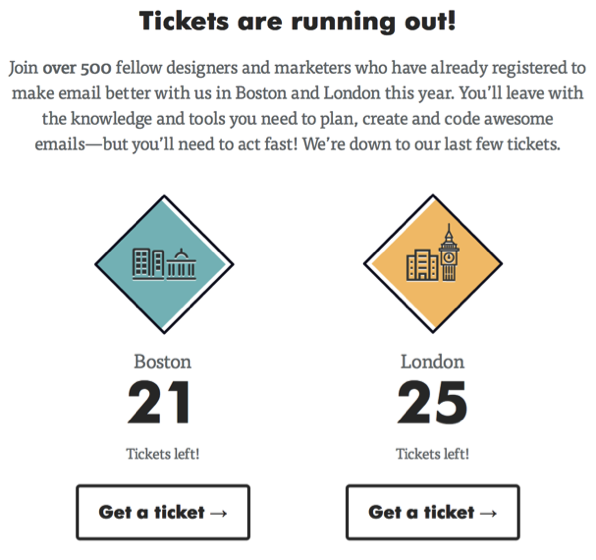
Litmus’ email campaign is a perfect example of using urgency to drive people to complete an action based on urgency. It persuades users to purchase tickets before they get sold out by showing the exact number of tickets that are left for the event.


boost-email-click-through-rates1

There are two types of urgency you can make use of in your email marketing campaigns: time-based urgency and scarcity-based urgency.
Time-based urgency entices prospects to engage with a campaign by providing only a limited timeframe. Whereas scarcity-based urgency capitalizes on scarcity to make it work just like the Litmus example mentioned above.

2. Send personalized emails

The best way to improve email click-through rates is to send more personalized emails to your leads. When emails are personalized on the basis of your individual subscriber’s unique behavior and interests, they are more likely to engage with your emails.
Now, it’s next to impossible to manually personalize emails. This is where segmentation comes in.
Email segmentation allows you to classify your leads on the basis of common interests and behaviors. This way you can send targeted emails to each individual group addressing the needs of their concerns and behaviors.
Some ways to segment your email list are:

  • Ask your subscribers’ email preference
  • Know their locations
  • Pay attention to purchasing behavior
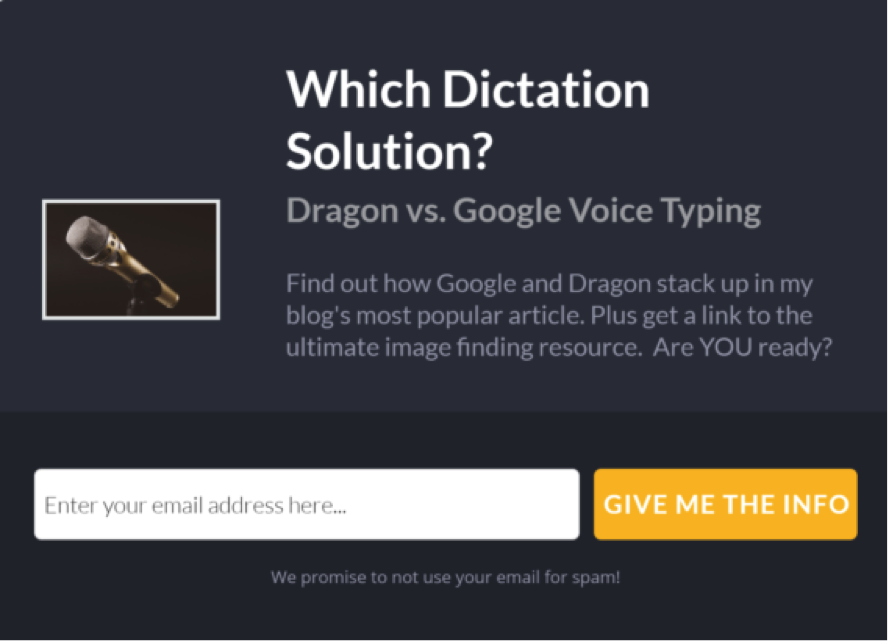
Email segmentation isn’t scary as it seems to be. With a tool like OptinMonster, one of Constant Contact’s integration partners, you can easily build a hyper targeted and segmented email list based on visitors’ location and user activity. Combining with its exit intent technology, you can rapidly grow a hyper segmented email list by prompting a targeted popup form to abandoning visitors at the precise moment they’re about to leave.

boost-email-click-through-rates2

After building a segmented email list, you can start sending personalized emails to your subscribers. Here are a few ideas for email personalization:

  • Educate your leads: Let’s say you recently launched a mobile app. Based on users’ activity, create a segment of leads who probably didn’t know it existed. The idea is to teach a subscriber what they mightn’t know about your product or services.
  • Notify your customer about an activity: For example, if a customer recently added a product to the cart but didn’t complete the purchase, you can notify them to complete the purchase.
  • Send product recommendations: Send a personalized email promoting products that you know your leads are more likely to buy.


3. Ask email preferences

Sending too many emails can be annoying to your potential customers, which makes them unsubscribe from the list. To make your list active and to boost click-through rate, it is essential to know your subscribers’ email preferences.
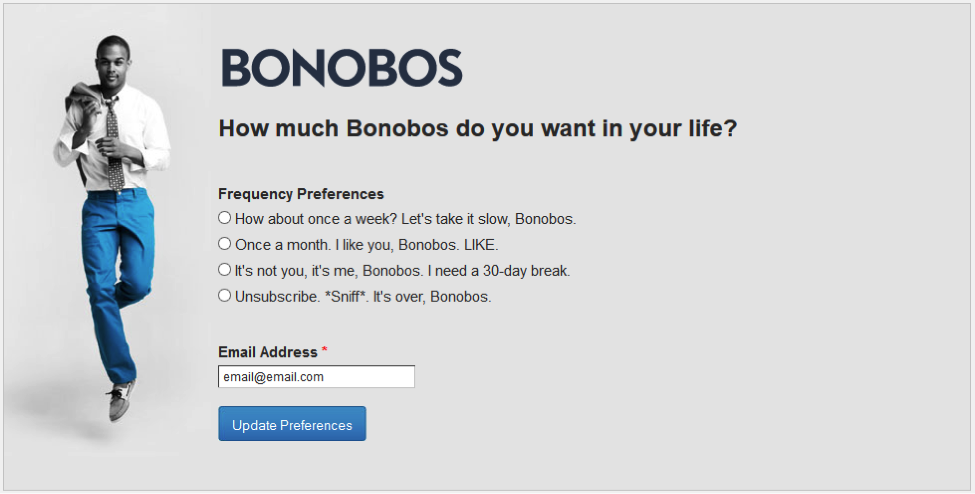
You can ask your subscribers how often they wish to receive your emails and the types of email they want to receive from you. This way, you can ensure that you’re not annoying your leads, keep them longer on your email list and more importantly, keep them engaged with your emails.


boost-email-click-through-rates3

By asking email preferences of subscribers, Bonobos maintained strong user engagement ratios, sent 2-3X more emails to highly engaged contacts and also increased engagement with lower-engaged contacts due to reduced frequency.

4. Create a win-back email campaign

The harsh reality of email marketing is that an average of 60% of email lists are full of dead email subscribers. Since every subscriber is costing you, you need to make your list active by regularly cleaning up your inactive emails from the list. Additionally, having a high number of inactive leads can even adversely affect your email deliverability and cause your emails to be delivered to spam.
Before you clean up your list, you need to take the last step to make your leads re-engaged with your emails by creating a win-back email campaign. According to a study, an average open rate of win back emails is 12%. This rate is respectable since all leads were identified as inactive before.
One of the best ways to persuade your inactive leads to engage with your emails is to make an offer they can’t refuse.
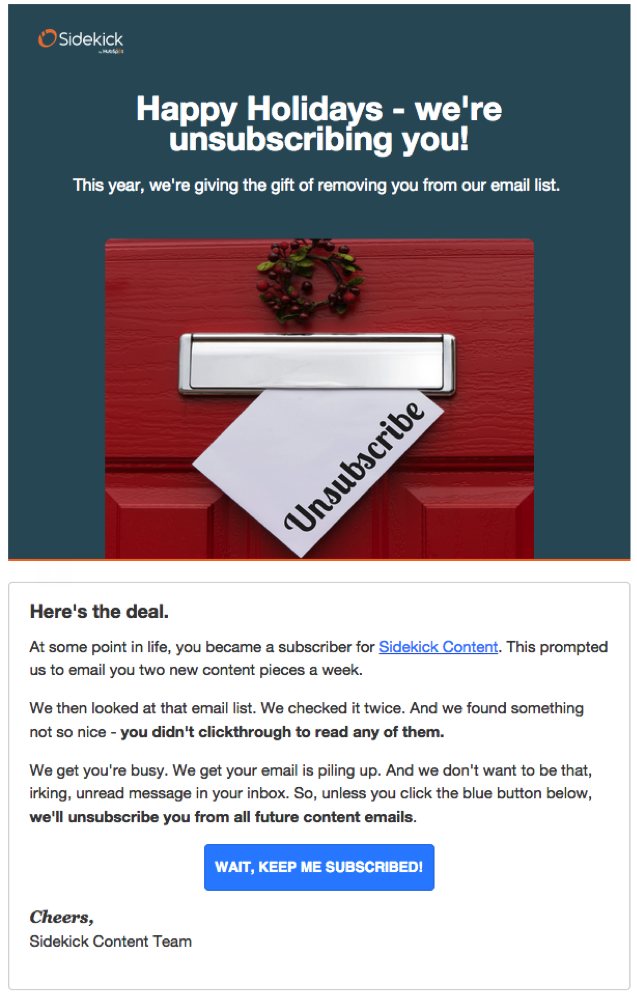
Another strategy to make a list engaged is to send an unsubscription notice to your leads who haven’t engaged with your list for a while.


boost-email-click-through-rates4

In addition to unsubscription notice, Sidekick also provides an option to users to remain in the list by clicking the ‘Keep me subscribed’ button.

Evaluate your email click-through rates

If you feel that you could do better, you can follow these recommendations to boost your click-through rates.
What is your favorite trick to boost email CTRs? Let us know by commenting below!


Source

Monday, 16 October 2017

Email Marketing: Five ideas to increase your email’s perceived value


This article was partially informed by The MECLABS Guide for Optimizing Your Webpages and Better Serving Your Customers. For more information, you may download the full, free guide here. 

Email messaging is a constant evolution of tiny tweaks and testing, always in search of the “perfect” formula to keep customers interested and clicking.

The ugly truth is, of course, that there is no perfect email formula. You will always need to test to see what is working — and what will continue to work for your customers.

You always need to be striving towards value. People will open your email and engage with it if they perceive that it will provide some value or service to them.

Marketers and customers shouldn’t be opposed — their issues, concerns and needs are yours as well. So it follows that when you focus on customer-centric tactics that put providing value before promoting your own product, engagement is bound to follow.

In fact, according to a MarketingSherpa online research survey conducted with 2,400 consumers, “the emails are not relevant to me” was chosen as the second most likely reason that customers would unsubscribe from a company’s email list.

This means that relevance and value is more important than ever when planning out your sends, and here are five ideas on how to do it:


Idea #1. Turn your email into a personal note, not a promotion

This is something that all marketers struggle with — we getting tunnel vision, focusing only on meeting certain goals instead of looking at the customer’s perspective and needs.


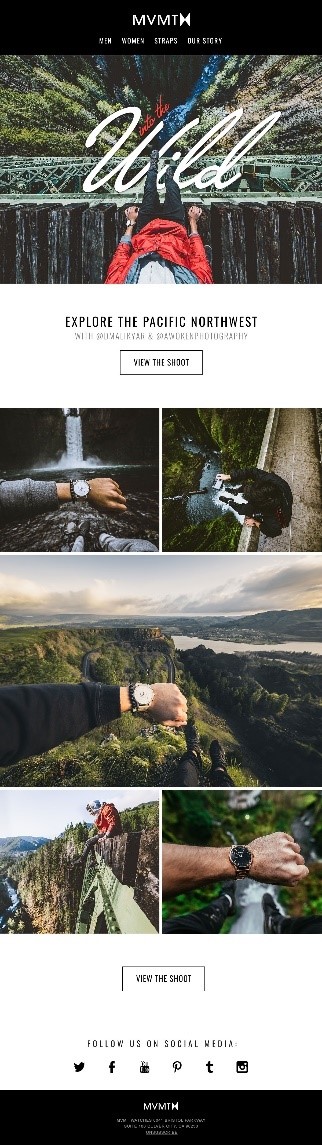
MVMT, a fast-growing watch brand (now full-fledged fashion company), spoke in a MarketingSherpa case study about how the company was facing this struggle in its own email marketing. The emails sent out were infrequent, and for the most part, only sent out for promotional purposes.

MVMT had done most of its early growth on social media to great success. Much of the content on the brand’s social media channel was conversational and relationship building.

Blake Pinsker, Marketing and Brand Director, MVMT, and his team decided to work from their strength and take a social media approach to the email sphere. They began integrating social media posts into email, and with it, a story-telling approach as opposed to a selling one.


The MVMT demographic is younger and “doesn’t want to be sold to,” Blake said.

They diversified email campaigns being sent out into product-focused, versus content-focused, and, currently, the “content-focused emails now sell just as well as the product-focused ones,” he said.


Idea #2. Personalize subject lines

I recently posted a blog about three email marketing habits customers were sick of seeing, and non-relevant, “tricky” subject lines was number one.

It’s often said that subject lines have one job — to get a customer to click onto the email. But that’s not exactly true. Because you can get the click, but what good is it if you lose the clickthrough because the subject line and the email didn’t match up?

If you’re following the first idea and your emails are more personal and relevant, your subject lines need to be too. Set up the expectation from the get-go that subscribers are getting a personal, valuable interaction by opening up your emails, and you’ll see greater success with your ultimate goal of having subscribers click through.

One of Dale Carnegie’s tips for winning friends and influencing people was to “remember that a person’s name is to that person the sweetest and most important sound in any language.”
Now, you don’t have to take that literally and always include the person’s name in a subject line, but maybe some fact driven by behavioral data — “We noticed you liked [x product], so you may enjoy this item too!”


Idea #3. Implement personalized send times

Personalization is the big word in marketing these days — if you made a word cloud of MarketingSherpa’s most-used terms from the past year, “personalization” and “customer-first” would be the biggest.

So, it makes sense that our biggest key word would collide with our most-asked question — when should I send my emails out?

First of all, always test. Send times are personal to your customers, and they need to be tested so that marketers know when the sweet spot is. If possible, test for different customer personas — for example, one send time might work better for @gmail.com, but perform dismally for @company.com.

Also, for certain types of email campaigns, you may want to implement triggered emails that automatically go out after a customer makes a certain action. That way, it’s hitting a specific person’s inbox right at the time they need it.

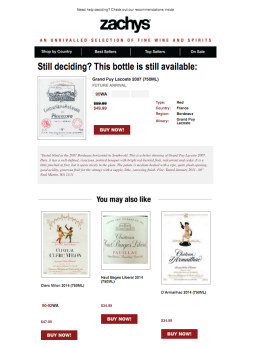
For example, in Zachys Wine & Liquor’s case study, the marketer described how they implemented triggered emails to help reclaim cart, product and search abandoners.

The emails would reach out to the customer while Zachys was still on their mind, so the first email goes out within an hour of the triggering action.


Personalized subject lines, as discussed above, were also a key part of this strategy to reclaim abandoners.

Especially with the product abandonment email, being able to use the product name on the subject line was “a big personalized tease because customers seem to have a really high open rate in that one, because it recognized what they had been looking at not long ago,” said Victor Castro, Director of eCommerce, Zachys Wine & Liquor.


Idea #4. Provide personalized content in purchase confirmation emails

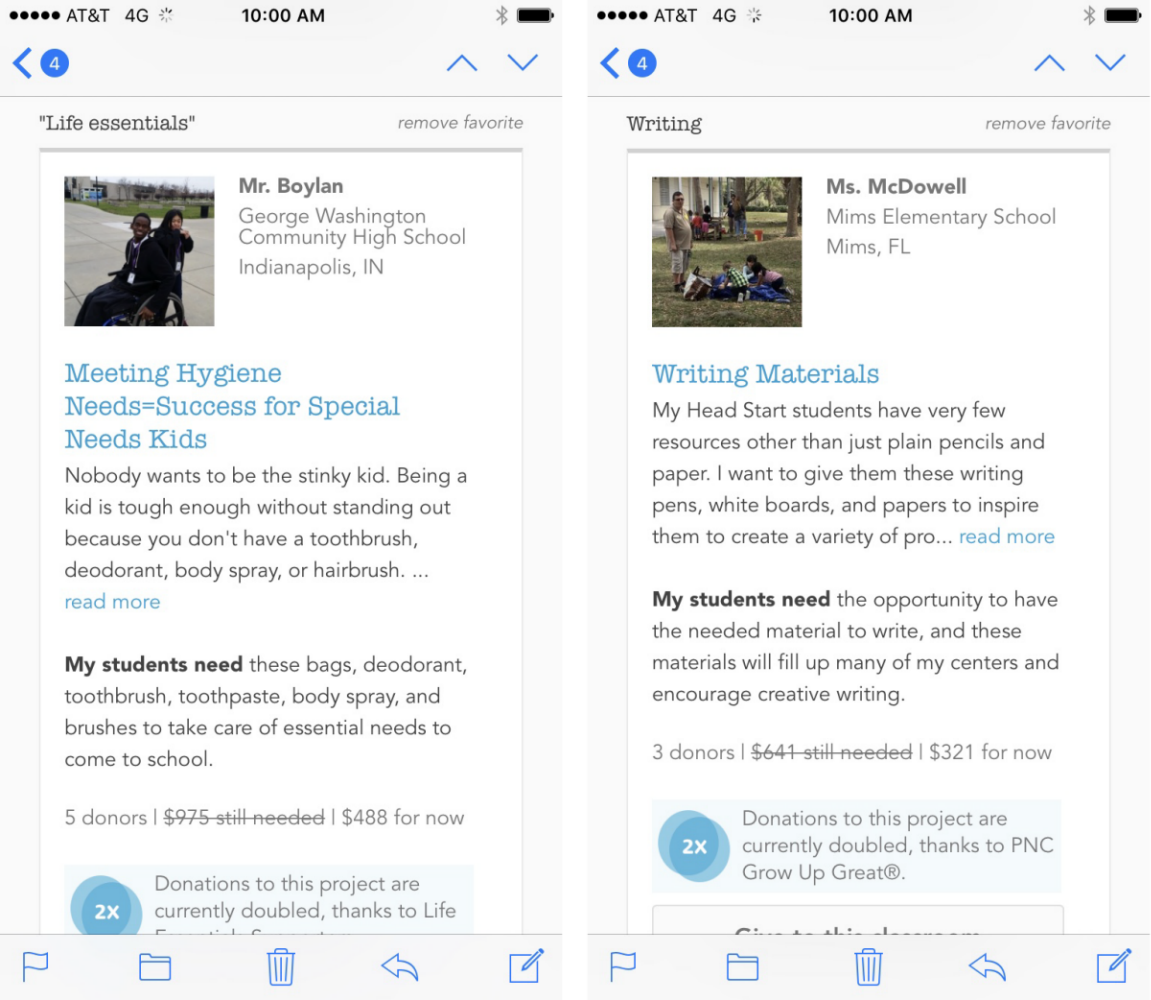
Email marketing is vital for DonorsChoose.Org, a crowdfunding platform where public school teachers can request supplies they need for their students but don’t have the budget for.

“Email is just such a huge driver, such a huge foundation of our business. Our ability to connect to our donors and teachers all happens through email, and … about 25% of the donations we’ll get from individuals this year will be in response to emails we send,” said Katie Bisbee, Chief Marketing Officer, DonorsChoose.org.

A donor being able to hear directly from the classroom and actually see the supplies being used in action leads to a higher level of trust, and it makes donors more likely to come back and support the classroom again, according to Katie.

That’s why in DonorsChoose.org’s purchase confirmation emails, or donation confirmation, the team provides personalized information based on the classroom and project that the donor contributed to. Also, the donor may receive information on another project that is similar to the one that they gave to.


Every month, the team sends an email that recommends classroom projects that they believe a donor will care about, based on giving history. For example, if someone had given to that teacher before or made a donation to a similar project in the same area.


Idea #5. Write copy that connects to a customer problem

This is a tried-and-true, easy way to create real customer value. Start mining different team members, especially on customer support teams, for information on what customers are asking or searching for.
If you understand what they are struggling with, or need to know, you can easily fill that gap with email content.

In its case study, The Entertainer Toy Shop displayed an understanding of the relationship between solving problems and value in email marketing, and the team used it to optimize and capitalize on the busiest times of the year — birthdays and Christmas.

For instance, the company utilized data — like when a child’s birthday was and if the child was a boy or girl — to help adults avoid the issue of a last-minute rush to get a present.

The team would send out an email four weeks ahead of the birthday, with three emails sent running right up until the child’s birthday. The email content includes suggested presents based on what has been recently popular with either boys or girls of a similar age.

People who are in The Entertainer’s database spend twice as much every year as someone who isn’t in it, according to Rob Wood, Head of Online and Digital, The Entertainer.

The emails also highlight a value of the brand, which is the ability to purchase online, and then pick up the present in-store.


Source

Sunday, 15 October 2017

Reasons to Ditch “Batch and Blast” and Get Started with Email Marketing Personalization


We all like to believe we’re special. Or as anthropologist Margaret Mead wryly put it, “Always remember that you are absolutely unique — just like everyone else.”  
That belief (or state of denial) is why so-called “batch and blast” email is usually less effective than email campaigns customized to your unique market. In a recent study of marketing professionals by Experian Marketing Services, 62 percent said a personalized email subject line is crucial.
The study also revealed that personalized promotional emails generated transaction rates and revenue per email six times higher than non-personalized emails. The personalized mailings had 29 percent higher unique open rates and 41 percent higher unique click rates. For triggered email campaigns (in which emails are triggered by a calendar event, a business action or an action taken by a website visitor), personalization doubled transaction rates.
Because today’s email marketing services allow for more detailed data about customers, users can implement some pretty impressive personalization that likely wouldn’t have been possible a couple of decades ago. Logistics like fully optimized mobile applications and time-delayed messaging are now par for the course, as is message micro-customization based on consumer behavior.  
“With so many available tools, businesses of all sizes can now employ the best email strategies for reaching customers,” writes Jayson DeMers in the Huffington Post. “When used correctly, these tools let businesses of all sizes compete with even the largest corporations. As more marketers discover the value of personalized marketing, businesses that don’t personalize their efforts will likely find their campaigns are largely unsuccessful.”

Reasons to Ditch "Batch and Blast" and Get Started with Email Marketing Personalization

“To get started with such customization, conducting customer research is imperative,” explains Vertical Response Senior Content Marketing Manager, Linzi Breckenridge. “Your success with email marketing lies in understanding as much as you can about your contacts so you can better communicate with the groups of people likely to find your message relevant,” she says.  
Since personalizing messages for a world’s worth of potential customers is probably still out of technology’s reach, here are tips for identifying whom to target in your next campaign.  
  • Identify your target market(s), segmenting the groups of customers most likely to buy your goods and services. Think about which segment of the population has a problem your product is able to solve. Narrowing that down keeps you from wasting time and energy, and maximizes your chance of gaining and keeping customers, growing profits and expanding market share.
  • The most common ways to segment are by demographics, geographic location, purchasing behavior and/or psychographic segmentation (interests, hobbies, lifestyles, values and attitudes). The most common demographics used are age, gender and income level, notes social media blogger Lisa Furgison, all of which can be collected from your customers and embedded for reference onto your website or blog platform.
  • To help you form your messages, some marketing professionals recommend identifying common themes among your best customers and conceiving of actual “personas” that represent them in their various forms — including their shopping objectives and possible objections to buying.
  • Further fine-tune your target market by analyzing email data to identify customers who answered calls to action, like clicking to open windows announcing new product arrivals. “Knowing if, when and how contacts engage with your email is useful in determining which contacts find the message relevant,” notes Breckenridge. “You can continue the communication with those who respond, and tweak or completely change the message for those who don’t.”
  • Limit your target market to a manageable size. Warns Furgison: “If you overdose on segmentation, you could get frustrated and make your email marketing strategy more complicated than it needs to be.”
  • Consider rewarding loyal customers with discounts or special sneak peeks of products. “With a marketplace overflowing with options, repeat buyers are a much smaller segment than they once were,” Furgison notes.
  • Identify, target, and maybe reward brand advocates — customers who praise your products on social media or provide you positive feedback.  
  • Make an effort to bring back inactive customers, possibly with a promo. Such emails have titles like “We miss you!” or “It’s been a while,” notes Furgison, who also advises that surveys should find out why customers have strayed.  
  • Place the customer’s first name or user ID at the top of the message to quickly capture attention, advises Kevin Gao on targetmarketingmag.com. “If the user took the time to register with your business, then there is some implicit trust between both of you,” he says. “Remind them of your relationship by promptly showing their names. This tactic is especially important for consumers on mobile devices as the limited space means brands need logical personalization right away.”
  • Ask customers for information so you can provide even more apt customization in the future. “But avoid being greedy,” warns Gao. “Customers don’t want to spend time with a detailed registration page that asks for demographic data or other personal information. Ask for the minimum, use that in personalized emails, and expand your data as the relationship grows.”
  • Messages to customers triggered by real-time behaviors — such as reminders that items have been left in a “shopping cart” — can be very effective. “Even if the visitor receives it minutes after leaving the site, it does help the brand to stick in their mind,” states Gao. “Personalization should also be included in standard messages, such as shipment confirmations, where companies can suggest additional products or services, perhaps at a discount.”
  • Consider customizing email messages to arrive at the optimal times for your customers depending on demographics and time zone. For example, emails to student customers could arrive in the evenings when they’re most likely to be browsing via computer.
Lastly, always test your email campaign before sending. Having more than one pair of eyes review the email reduces the chance of suffering from an error. After making the effort to boost open and click rates with personalization and segmentation, the last thing you want is to waste it on a typo.

Conclusion:  Move beyond the old-fashioned and ineffective approach of “batch and blast” to get the best results with email marketing.

Source

Friday, 22 September 2017

The Biggest Email Marketing Trends in 2017 Will Be…


 Well, we weren’t really sure. So we asked more than 1,200 email marketers, letting them choose between six promising email marketing trends in 2017:


  • Automated emails
  • Big Data personalization in emails
  • Email encryption
  • HTML5 video in email
  • Interactive emails
  • Omnichannel email experiences
None of those trends got the majority of respondents excited, but a few saw sizable interest.

Without a single mega trend to rally around, we thought we’d explore all six of those trends. In addition to sharing our own thoughts, we’ll add in the opinions of some of our Email Marketing in 2020 ebook contributors, giving you even more reasons to be excited about these email marketing trends in 2017, all of which we think will be impactful.

INTERACTIVE EMAILS

With more than a quarter of marketers saying, “2017 will be the year of interactive emails,” this was our top trend. We like Rebelmail’s definition of email interactivity:
AN ACTION TAKEN IN AN EMAIL THAT TRIGGERS AN EVENT WITHIN THE SAME EMAIL.
Interactive email elements can take many forms, including:
Email interactivity brings some of the interactions that would normally take place on the landing page and pulls them into the email. By allowing more to happen inside an email, it reduces barriers to engagement and makes clickers have even higher intent.

The two biggest issues that hold back adoption are:
  1. Tracking and attribution changes. Since interactivity pulls action from the landing page into the email, click rates become a little less important and in-email engagement becomes more important. And you need to measure that in-email engagement using new metrics like email interactions, which are special opens that are triggered by engaging with interactive email elements. This change in email success measurement can be the trickiest issue when trying to get buy-in from executives to do interactive emails.
But no matter how uncomfortable these changes make email marketers, this change is coming all the same because it improves the subscriber experience.

BIG DATA PERSONALIZATION IN EMAILS

The “right content” portion of the “right content to the right person at the right time” equation for email marketing in many cases equals personalization. Translating the Big Data trend into actionable signals for email marketers starts with breaking down silos and integrating data across channels, which many large brands have been focused on in recent years.


Once all the data is pooled and the dots are connected—which is no small technological or political feat—brands can build the most detailed views of individual customers that they’ve had to date, using a wide range of reinforcing data points to inform messaging.

Marketers have largely embraced the inevitability of personalization driving most of the content in emails. However, the process of enabling Big Data personalization is so complex and involved that it’s never likely to be a huge trend in any particular year. Instead, it’s probably truer to say that we’re in the half-decade of Big Data personalization.

HTML5 VIDEO IN EMAIL

In January 2013, I made what seemed like a not very radical prediction at the time: “Video in email will finally take off.” Then Apple dropped support for HTML5 video in all of its email clients, slamming the brakes on this promising trend.
Now, with the launch of iOS 10, HTML5 video support is back! As of November, more than 53% of emails were opened in Apple email apps, which is more than enough to justify trying it. Just be sure to build in a fallback for subscribers using email clients that don’t support HTML5 video.
While the marketers we polled were more excited about interactive emails, it’s hard for us here at Litmus to not see HTML5 video as a form of interactivity. Moreover, video in email is straightforward and easy for subscribers to understand—and for that reason is likely to be a catalyst in making both marketers and email users more receptive to other forms of interactivity.

AUTOMATED EMAILS

Even if this isn’t the year of automated emails, marketers clearly know the importance of this trend. Triggered emails, like welcome emails and cart abandonment emails, already generate the majority of email marketing revenue at some brands, even though triggered email volume typically comprises about 5% of overall email volume.
The outsized productivity of such a small percentage of email volume presents huge opportunities for brands to better engage subscribers. It also calls into question all the time and resources that are currently spent on broadcast emails, the volume of which continues to climb every year.

OMNICHANNEL EMAIL EXPERIENCES

Consumers expect brands to recognize them across channels and to treat them consistently. Brands are racing to catch up to consumer expectations.

Piecing all of a consumer’s interactions together to create a single view of the customer is the holy grail…and is difficult. Equally difficult is then acting on that single view. Being able to nimbly send the right messages to each consumer via the individually appropriate channel will require major integration. It will also require a lot of machine intelligence.

EMAIL ENCRYPTION

While encryption wouldn’t have prevented the hacks at Yahoo or the DNC, email security is top of mind for many right now. With emails becoming more personalized and powered by data from many channels and Internet of Things devices, the call for greater security to ensure privacy will only grow.

Gmail already highlights which emails are encrypted, using a little lock icon to flag which were sent using transport layer security (TLS). If another major inbox provider follows Gmail’s lead, then encryption will gain serious momentum toward becoming a best practice.
While it’s unclear which trend or trends will dominate the year, it’s guaranteed that 2017 will be the year of email marketing change. It always is.