Showing posts with label social media. Show all posts

Wednesday, 3 July 2019

Growing and Nurturing Your Email List


Every now and then, I see an article that suggests email marketing is dead; however, this is far from the truth.  I’ve met many home business owners who say the majority of their income comes from their email subscriber list. If your list isn’t producing results, it may not be because email is dead. It’s more likely that you’re using it wrong. Here are tips to growing and nurturing your email to increase profits.

Growing Your List

Part of the success in email marketing is to have a list that is growing. Many people I’ve met who are struggling with email marketing have a stagnant or shrinking list. Here are some tips for growing your list:

1) Have opt-in forms on every page of your site. For example, if you have a WordPress blog, have an opt-in list sign-up form in your sidebar. You might consider having one at the end of your content as well.

2) Entice them to sign up. Offer a freebie such as a report or video for signing up for your list. Let visitors to your site know what the freebie will do for them. So many online businesses simply have a form that says “Sign-Up to Get Updates,” which isn’t a compelling reason to join. Some online business owners indicate what their incentive is, but not in a way that entices people to join. Instead of saying, “Get my free report on how to lose weight,” say, “Start losing weight today!
My free report will tell you how!”.
3) Promote your incentive on social media. Most social media platforms have areas you can include information about your list and offer in the profile. You can promote the list itself, but you’re more likely to get results by promoting the free offer. Which would you respond to: “Join my list to learn about saving money!” or “Get ‘52 ways to save $1,000 a Month’ free.”

4) Include information about your incentive in your bios and emails. If you guest blog or appear on someone’s podcast or website, make sure your bio includes information about your incentive. Every email you send should mention your free report in the signature line.

Nurturing Your List

Growing the list is only one aspect of email marketing. Once they subscribe you need to provide value or they’ll unsubscribe. Nurturing an email list is a delicate balance of staying connected without overwhelming subscriber’s inboxes. Even more important than keeping on the list, is having them eager to open the email to see what you have to share. Here are tips for making your list an effective marketing tool:

1) Email often enough that subscribers remember you, but not so often you annoy them. This number depends a great deal on your home business. Most successful email marketers I know email two to three times a week. Emailing even just once a week, may not be enough.

2) Be you. The most successful marketers know that their effectiveness comes from selling themselves first.
Put another way, people will connect with and want to buy from you because of who you are. Your subscribers have many options for who to do business with, but if you can make a connection, build rapport and trust, they’ll choose you. So don’t be afraid to share stories and true-life anecdotes.
3) Give value. Whatever you email to your subscribers should enhance their lives. Money always follows value.

4) Make list members feel special. People who give you their name and email should be treated with the respect they deserve. Make sure they know it by thanking them as well as giving them things that no one else gets. For example, I provide a freebie every Friday that only my subscribers receive. It’s my way of thanking them and acknowledging that having their email is a big deal. 


Tuesday, 25 June 2019

Facebook is dead...let’s talk about it.


Have you ever heard that Facebook is dead?
That you can’t make money with Facebook?
Or your target market is somewhere else?

Yeah, me too.

But here’s the deal - Facebook is dead for SOME people.

The ones that don’t understand it…

Or don’t have a step-by-step system to follow.

Now - here’s the good news -

The Grow Your Audience course I’ve been talking about the last few days is EXACTLY what you need to make Facebook profitable for you.

It shows you what to do from 0 - 1,000 Fans -

For those that are just starting out.

Then it takes you through the next stages. 1K - 25K. 25K - 50K, 50K - 100K, and 100K+

Each phase.

Step-by-step.

EXACTLY what to do. AND when to do it.

So that you can Beat Facebook at it’s own Game.

Using the Rules of Facebook to your advantage.

And when you can do that, you actually WANT people to believe Facebook is dead.

Because it removes the wannabe’s and “get rich quick” people from your space.

Want to know more?

Click link to join the Grow Your Audience Course NOW! >>> https://lnkw.co/Moolahcourse <<<
This post contains affiliate links.

Monday, 28 January 2019

Top 7 Trends in Social Media for Marketing Agencies in 2019

Ten years ago, you could’ve successfully marketed your clients’ products without social media. Today, there’s no chance.
Social media is the first place after Google where customers look for products, and, what’s even more important – brand image. 87% of consumers would purchase a product based on values, and the average revenue increase when a brand is presented consistently is 23%.
Even though we love our PPC campaigns, there’s nothing like social media to help the customers get to know your clients and their products. And because technology and customer priorities change from year to year, today we’re taking a look in the future.
Here’s what we can expect in 2019, and how you can use social media as a marketing agency to ensure your clients succeed.

1. The Rise of Social Shopping

Social shopping has become increasingly popular in 2018 and with Instagram’s new shop-on-the-gram features, it’ll become even bigger in 2019.
Users will now be able to find products in images and videos, save them to their collections, and find new products in the Explore section. Even though there have been talks of Instagram creating a separate app, there’s no reason.
Consumers of 2018 love shopping through social media. It comes pre-packed with referrals and comments from other people, and they can see their favorite influencers advocating the products.
In addition to Instagram (which is a visual platform), Facebook took after WeChat’s social retail example and is now working on features that will make it much easier for customers to shop without leaving the app.
Even though we may have to wait sometime before you can integrate your clients’ stores with Facebook, the social shopping trend can still be incredibly beneficial for your clients’ businesses.
Social shopping is fueled by referrals, and with social shopping on the rise, you should consider using satisfied customer testimonials in advertising. Social proof is very important to consumers of 2018, and it’ll encourage them to buy from your clients even more in 2019.

2. Micro-Influencers Driving Macro Sales

Influencers are no longer people; they’ve become walking, talking billboards in the last five years. Their followers (and your customers) quickly realized who actually provides value, and who sells products they don’t believe in.
Social media marketing in 2019 will be value and thought-driven, no doubt about it. And as far as word-of-mouth goes, micro-influencers are the channel you want to use.
They’re typically social media users who have between 1,000 and 20,000 followers and extremely high (real) engagement rates. Their community is tight-knit, which actually means a narrowed-down niche for your clients.
In their study, Mediahub realized that micro-influencers increased their marketing campaign engagement by 50%. And what’s even more interesting is that influencers with around 1,000 followers actually resulted in more success for the brands they worked with, generating 85% higher engagement than regular influencers (with over 100k followers).
Since the main motto behind marketing and shopping in 2018 and 2019 is: value, honesty, and convenience, micro-influencers fit right into that category.
If you want to optimize your clients’ campaigns (and reduce the spend on that area) in 2019 as a marketing agency, start working with micro-influencers.

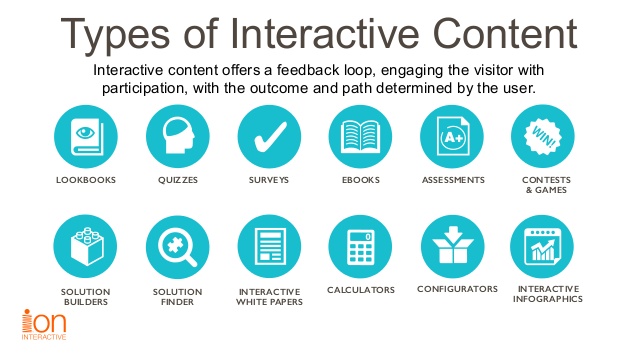
3. Relevant, Interactive Content

Content marketing is here to stay, and it’s the number one way to drive sales through social media. After all, content strategies increase your clients’ ROI: they generate 4x more leads per $1000 within 36 months.
It’s also good for branding and customer communication. Consumers today won’t repeatedly buy from your clients’ brands if they don’t understand them.
So in 2019, make it your priority to include content into your marketing strategy – and not any kind of content. Create content that’s relevant instead of outdated, and increase engagement by making it interactive.
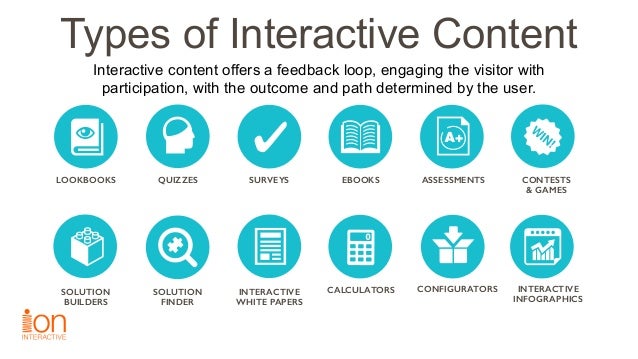
balancing-your-interactive-content-priorities-3-638
With the state of social media features today, it’s not hard to create interactive content.
Interactive content on Twitter:
  • Polls
  • Hashtags
  • Questions
  • Conversational video
  • Partnerships and sponsorships
  • Daily trends (e.g. #MondayMotivation)


Interactive content on Instagram:
  • Questions
  • Polls

  • Shopping features
  • Stories

  • IGTV


  • Polls
  • Stories
  • Facebook Live
  • Messenger chatbots
  • Quizzes


Interactive content on LinkedIn:
  • Storytelling
  • Quick, relevant status updates
  • Questions as a driver for white papers
  • Advice (how-to posts)


Consumers in 2019 won’t be happy if they can just observe your clients’ social media. They have to actively interact with it in order to find value, and ultimately make the purchasing decision.
It’s incredibly important to establish a content calendar that will help you constantly engage your clients’ customers. You don’t have to do it manually, as DrumUp offers content scheduling features (and much more).

4. Social Media Marketing Personalization

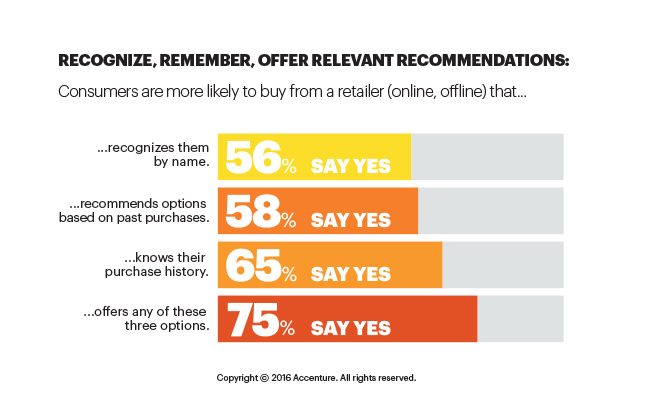
Accurate audience segmenting and targeting has been the number one marketing priority since the dawn of marketing itself. However, when it comes to personalization, it seems like a lot of brands are struggling with it.
The lack of personalization puts off consumers so much that 74% of them feel frustrated when content isn’t personalized. As a counter-point, marketers who use personalized experiences see a 20% increase in sales.
Accenture_news-05-v2

What can you do for your clients as a marketing agency?

The first thing is obvious: gather data. For this, use social listening. Social listening will also help you curate content better, and create a content calendar that perfectly fits the customers’ interests.
DrumUp makes this really easy. Without it, you’d have to go through multiple feeds at once – and still risk not getting the right information. DrumUp’s algorithm will do that for you, and show you exactly what kind of content your audience needs.
The second thing you can do to personalize your marketing efforts is to understand the customers’ motivation for buying the product. This may seem simple on paper, which is exactly why a lot of marketing agencies haven’t had the appropriate amount of success in 2018.
Run an audience analysis and cross-reference it with your social media strategy. No matter which social media you’re using, engagement should be your number one priority. Segment audiences according to channels, and tailor your approach to their personal preferences.
Focus on personal interactions. Even though we’re all looking at screens, don’t take the human touch out of the equation. Facebook Messenger offers innovative chatbot features, Twitter has DMs, and nothing has ever been as effective as LinkedIn outreach.
Speaking of LinkedIn, LinkedIn Dynamic Ads were quite a revolution when the platform announced them. Their significance will grow in 2019, as they’re an incredible way to personalize the experience for your clients’ customers.
Personalizing your social media strategy won’t just help you get new customers; it will help you retain the existing ones, and generate more referrals than ever before.

5. Brand Awareness and Values

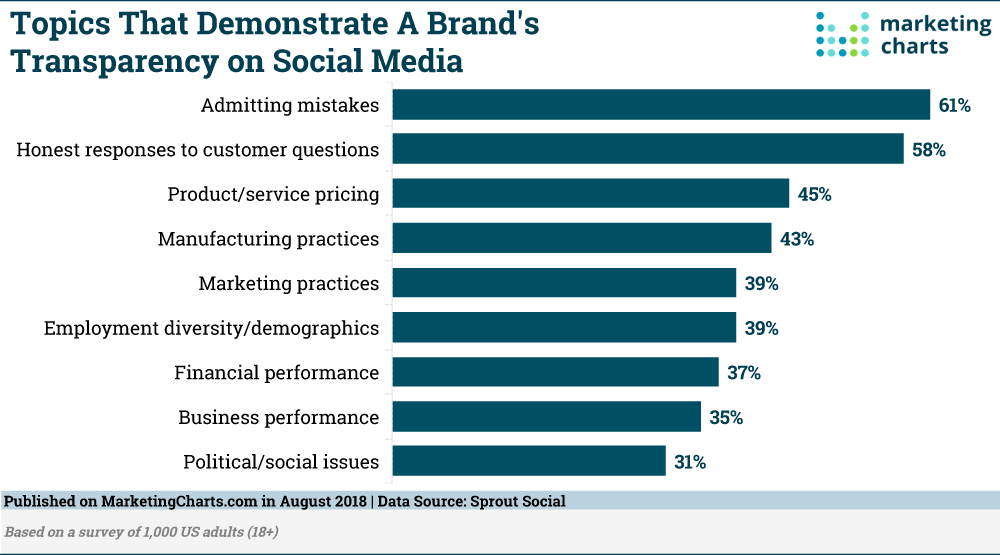
Marketing success is going to be very hard in 2019 without openly stating your client’s brand values. This will be the ultimate way to reach new heights of brand awareness, and create customer loyalty from the very first purchase (while also increasing the value of each purchase).
The goal of social media marketing in 2019 is to sell to customers who feel like your client’s brand is their friend.
While brands traditionally steered clear of stating opinions or standing up for values, this will become indispensable in 2019. While keeping ethics in mind, your brand should stand for similar values to those of your customers.
heinz-lets-eat-delicious-instagram-postsSprout-Topics-Demonstrating-Brand-Transparency-on-Social-Aug2018
Sponsorships and donations can go a long way when it comes to brand awareness. So does employee advocacy.
Additionally, you can also use user-generated content to show appreciation for your customers. Big brands frequently do this, on a smaller or bigger scale.
For example, hashtag competitions are a big favorite of brands like Nike. Their customers are encouraged to post their own content related to the brand, and then the brand page re-shares it. This can be especially useful for your clients if they’re in the B2B space as it gives the other side more exposure.
It’s no longer enough to talk about what your brand stands for. Action should be following it closely. Especially where customer prioritization is concerned.

6. AI-Powered Customer Service and Marketing

A huge part of user experience has been shaped by instant customer service which SaaS companies like ZenDesk started providing. It’s easier and more pleasant for customers, and it means a lot for the bottom line of your clients.
However, you can use the AI-powered customer service principles for your marketing efforts, as well.
We’ve previously touched on Facebook Messenger chatbots, but while they can be used to respond to customers’ queries, they can also be used for marketing.
For example, if you want to boost the customer response to your client’s marketing campaign, you can contact them directly with the help of chatbots, and present the idea in a more personable way.
Twitter DMs can go a long way if they’re not robotic, as well. If there’s a particular offer that would interest a segment of your customers, you can divide them with Twitter Lists, and message them.
Same goes for LinkedIn: InMail is still the best way to directly reach customers.
Social media marketing in 2019 is going to be big on doing things directly. And great AI tech is going to help you do it without manual work.

7. Content Marketing Will Be a Major Player in 2019 Marketing

You probably noticed that we’ve emphasized the importance of content. However, it’s still one of the main ways to reach (new) customers on social media.
It’s an excellent way of providing additional value, educating prospects, warming up marketing campaign leads, and ultimately, converting them to customers.
You can experiment with different forms and channels, but the more your content stimulates engagement, the better will your results be.
This can be a lot of work if you’re doing it on your own, so try out DrumUp. It takes care of everything for you – from scheduling to finding content to share.
So automate your marketing, and focus on the most important thing: making your client’s business thrive.

Source: 

Thursday, 6 December 2018

Tips to Avoid Wasting your Content Curation Efforts


Nothing has improved promotion and customer relationships as much as content marketing.
Businesses everywhere use content (blogs, social media posts, and other formats) to educate their customers, and improve their products.
But while we are talking about content, which generates 3 times as many leads as traditional marketing, we’re often forgetting one key category: content curation.
Marketing teams can’t handle producing all content on their own, and aggregating and sharing third-party content results in significant boosts to customer satisfaction.
Content curation also helps with:
  • Building authority
  • Improving brand awareness
  • Fostering B2C communication
  • Innovation


Just because you’re “borrowing” content doesn’t mean it can’t help you increase your ROI.

Here’s what you can do to personalize your content curation efforts:

1) Add personal notes instead of only sharing links

Link sharing is the number one way to curate content.
However, if you really want to improve your content curation, add a few personal notes.
While you can quote a sentence or briefly describe what the article is about, your real goal should be to provide perspective on why it matters.
There’s a lot of content being published every day, and it’s becoming impossible for users and potential customers to keep track of everything.
If you really want to establish your business as the industry authority, explain why the content you’ve selected matters to your customers.

2) Monitor trends and curate content accordingly

Evergreen content always works, but trends are just as important.
79% of marketers use social media to find content for their strategy exactly because they want to stay on top of trends.
And if your potential customers see news from you first, they’ll develop loyalty faster.
It also gives you the opportunity to establish yourself as a credible resource they can rely on when they want to get the latest information on the state of industry.

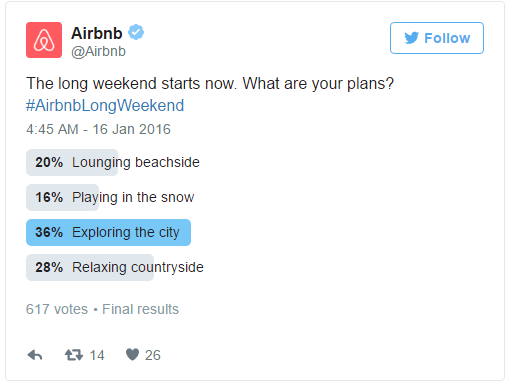
3) Ask

If you want to personalize your content curation efforts, start posing questions.
This can be as simple as offering commentary on a topic your audience is interested in, and asking for their opinion.
Not only will this give you an additional item in your content calendar, but it will also show your customers that you value their input. Today, when customers decide which brands they’ll be loyal to, they pay attention to personalization and the business’ image.
AirBB
Image source: freemansocialmedia.com
Moving forward you can even use the feedback your followers gave you for your content curation efforts, and let it shape your strategy.

4) Connect the curated content to your business

The best content strategy mixes combine directly promotional content with content curation.
However, there’s no reason your curated content can’t be promotional, as well.
Connect the borrowed content you’re sharing to your business.
For example, if you have a customer relationship management software, you may share statistics such as: “87% of businesses use cloud-based CRM systems.”
In order to personalize it, you can connect it to your business by showing how you make cloud-based systems easy for everyone involved.
If you’re sharing an article on industry innovation that you’ve been implementing, why not mention that?
Even though the point of content marketing is to educate your customers before turning them into buyers (increasing the retention rate in the process), there’s no reason not to give credit where credit is due.

5) Include your users (user-generated content)

Users love collaborating with businesses they trust.
Even though the usual content curation procedure includes sourcing articles and re-sharing them on social media, one of the best ways to personalize your content curation strategy is by including your users.
It can also help you acquire more new users, as 76% of people trust content made by individuals more than by brands.
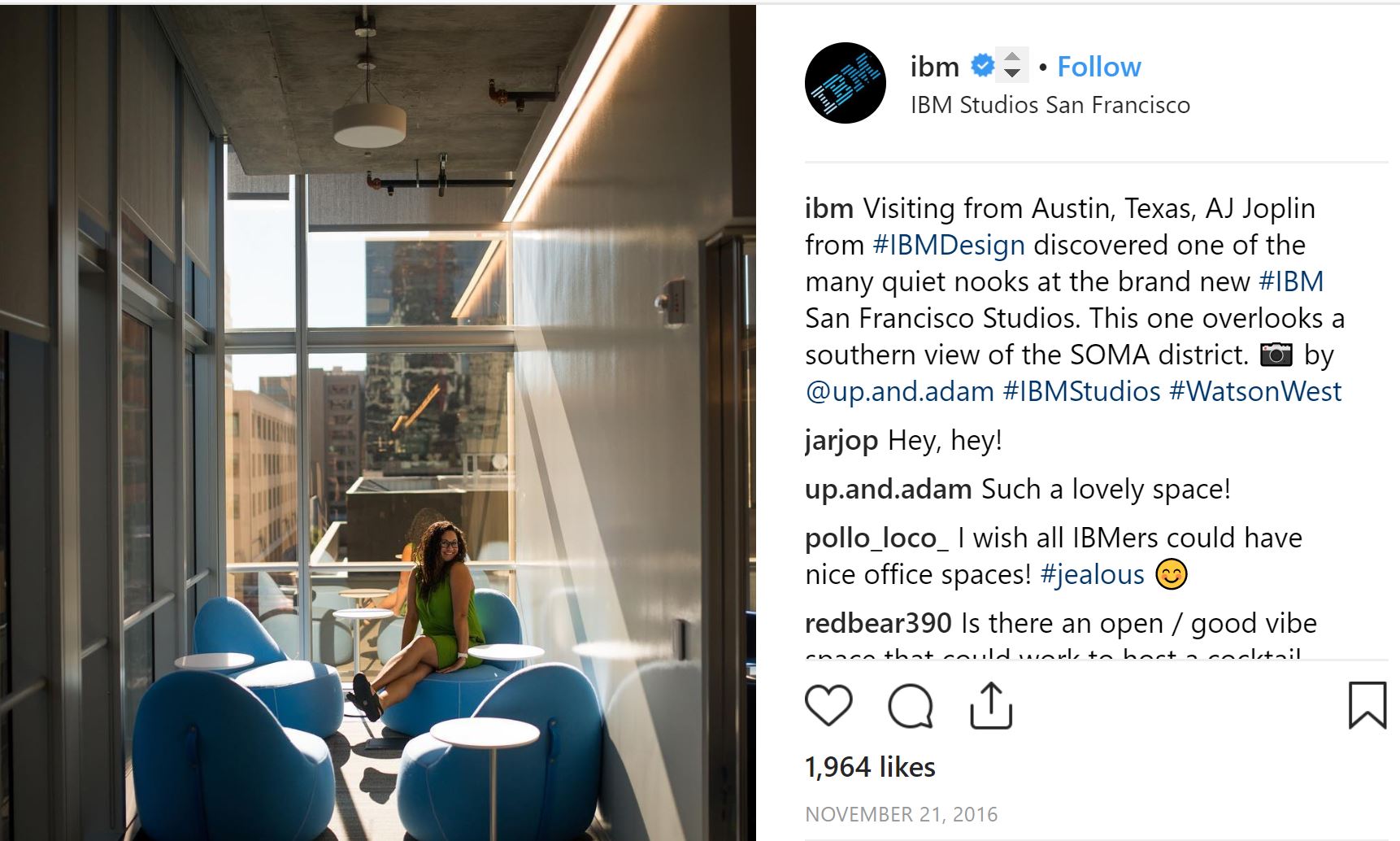
For example, IBM often uses user-generated content as a part of their content curation strategy.
ibm
Source: IBM’s Instagram profile
This works especially well because IBM isn’t a photogenic business, so they’re focusing on showing the people behind the work.
And users appreciate being a part of the business’ strategy.

6) Contrast & compare

If you’re focusing on trends, don’t forget to look back every once in a while.
News travels fast, and we consume it faster today than ever, so retrospective and comparison can be a good way to capture attention – even if you’re using borrowed content.
You can:
  • Analyze different points of view
  • Juxtapose developments in your industry 10 years ago with the current developments
  • Share your personal observations
 This all gives you more authority in customers’ eyes, as you show that you’re not just staying informed about new developments – you are also noticing how the industry has changed, and using that insight to innovate it even more.
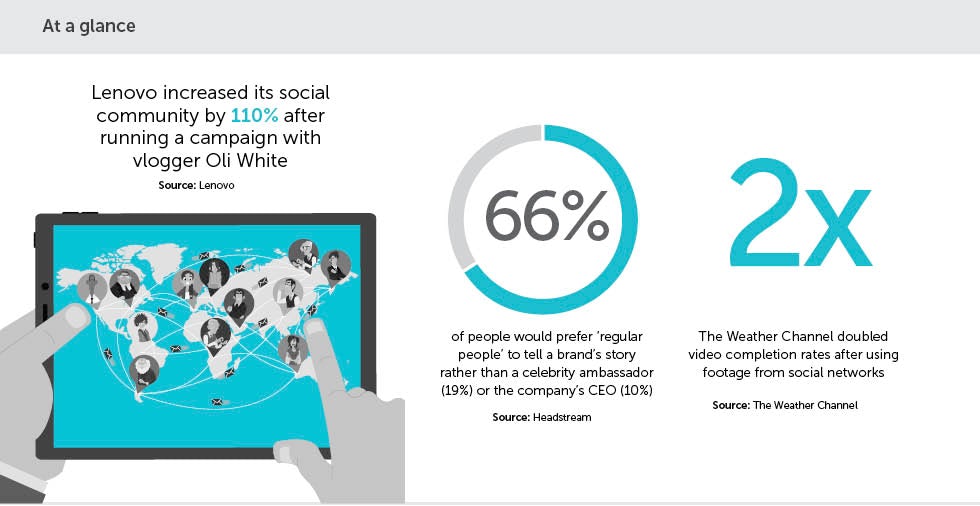
170602-taei-infographic-templates-charts
Infographics work especially well, and they get 650% higher engagement than text-only posts.

7) Curate according to audience segments and channels

Some users love LinkedIn, while others swear by Facebook.
You should know how to use both, especially if significant portions of your (potential) audience are using them.
However, that doesn’t mean that you can use same content and simply re-share it to different channels.
Instead, consider making two separate strategies and measuring and tracking user engagement.
The key factors to look at are:
  • Popular types of consumed content
  • Audience interests
  • Channel purpose

In our Facebook and LinkedIn example, you would be looking at:

1) Types of content:

Facebook – Posts, images and videos
LinkedIn – Status updates and blog posts

2) Audience interests:

Facebook – Heartwarming content that builds relationships, and doesn’t drive immediate sales
LinkedIn – Professional development

3) Channel purpose:

Facebook – Relationship-building
LinkedIn – Immediate sales (as a means of obtaining competitive advantage)
Certain audience segments will naturally gravitate towards one channel or the other, so it’s important to understand which channel they use – and how they use it.

8) Empower partners and customers

Most customers want brands to sound like people, not businesses. And while that can seem tricky while keeping your revenue in mind, it’s important to show the human side (just like IBM does).
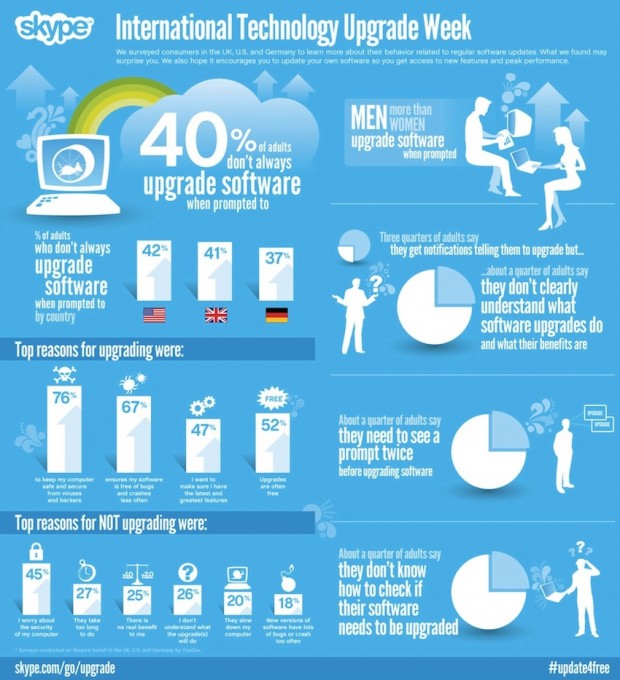
WEB_240915_SpecialReport_AAG
Image Source: Marketing Week
One of the best ways to personalize content curation is by empowering your partners and your customers.
For example, if your business partners recently launched a new feature, or offer a feature complimentary to your business, you can share it. It not only creates very positive brand image, but it also provides your customers with additional value.
You can use the same tactic to empower your customers, as well.
User-generated content is one way of using it for content curation, but you can also include your customers in surveys and case studies.

Tools for personalizing content curation

Monitoring trends in order to personalize content curation can take a lot of time. A lot of marketers use a combination of RSS feeds, Twitter lists, and a plethora of other sources.
However, marketers who want to save their time use DrumUp.
DrumUp does your content source research for you. There’s no need to spend hours finding information your customers will appreciate. Our algorithms recommend the best stories.
You can also cut your content curation management time to a bare minimum after setting up a workflow and periodically reviewing it.
And while personalizing content curation is a great way to improve your overall content strategy, it’s important to use the right tools.
With them, you can focus on what matters: your customers, and content that brings results.

“Theory by Simon Sinek” | Image by themarketingsage.com