

It’s a small margin of people who seek out your page to interact with it on Facebook. Most of those who do probably come from your current customer base or from the Facebook plug-in on your website. So most of your activity that people see is actually what ends up on their news feeds. Focus on optimizing that presence and that category of opportunities for visibility and you’ll get the most of Facebook. As a small business, your budget for marketing may not stand to compete with that of larger companies, but the good news is that there are effective and budget-friendly strategies that you can use.
With the right social media management tool and ideas, you can make an impact on Facebook.
Here are 9 tips to help you up your Facebook marketing game:
1. Kill it with your cover photo
In the event that people do land on your Facebook company page through links, redirects or piqued interest from one of your great posts, you have got to be ready! This is your one chance to make followers out of them and you’d be smart to use it well.
Your cover photo is prime property for 3 reasons –
It’s the first thing that people see, a visual is one of the best marketing tools you can have, and it’s free.
So tell a story with it, make it intriguing, create it so your viewers go “Wow”.
Also, one of Facebook’s features is showcasing cover photo updates on timelines of friends of fans. So if someone were to become your fan, your company’s profile picture and cover photo would be displayed on that new fan’s friends’ timelines.
Boom! You’ve got instant, free, visibility. And it’s an image. According to a study visuals get 53% more likes, 104% more comments and 84% more click-throughs.
Try and connect your Unique Selling Point, your brand’s services, or your story to that cover photo. People love stories, and people love pictures.
Here’s an interesting example of a smart image with a strong selling point:

2. DrumUp some smart content
If you haven’t capitalized on the currency that is content curation yet, you’re missing out on some real action! Content curation lets you appear active on social media with the least of efforts, build relationships with the people whose content you share, and position yourself as an expert in the eyes of potential and current customers; provided your curate the right kind of content!
How do you curate the best possible content for your industry? You could spend hours reading through multiple sources on the internet to identify the influencers or leaders in your industry, or, you could get an app to do that for you!
Apps like DrumUp have been designed using intelligent machine learning and Natural Language Processing algorithms. What do they do? They understand your needs, and find you relevant and fresh content based on keywords that you set, from 100,000s of sources all over the internet.
The ultimate goal of content curation is to be the one-stop destination for information for your target audience. Be exhaustive, cover possible current concerns that your audience might have. Giev them everything in one place so they don’t have to go looking for it. Do that with interesting, useful and current information, and you’re easily one of the guys to watch out for on social. The best part of this strategy is that it can be done easily and with minimal time investment.
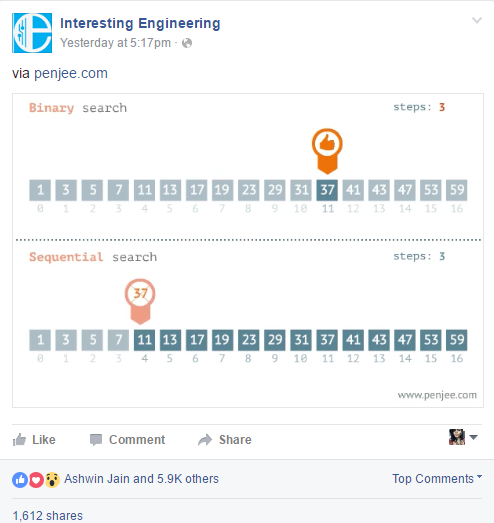
Here’s an example of a brand that’s pro at curating content:
3. Go Live
The beauty about live streaming on Facebook and other platforms like Periscope, Meerkat and Hangouts, is that is comes so close to actual face-to-face interactions. If you want to connect with your fans, Facebook Live can drive real results.
When planning a live broadcast, choose a focus in advance. Choose your title carefully, because it’s what people will see as a notification when you’re live.
Pick a device with great audio setup – mic, so your fans can hear you clearly. Always end with a call-to action, like Shop Now, Learn More or Sign Up.
There are plenty of ways you can engage your audience using live video. You could:
- Create a behind the scenes adventure, and take your fans to an exciting place to discover together. This could be your office, store or an exploring-worthy place related to your brand.

- Broadcast a Q&A session, answering questions that concern your fans most.
- Plan a How-To video, with insightful advice to further your fans’ goals.
4. Be a friend, and a good one
A lot of social media marketers have spoken about the power of humanizing marketing. It isn’t just enough to have a company page on Facebook, an interesting way of meeting your target audience is by interacting with them like their friends would. This also opens the social media platform up for so much more interaction with your audience than you can do by maintaining a purely official front. People on Facebook interact with more people than brands and humanizing your brand is one of the best ways to connect with your audience.
Reach out to your fans occasionally with no agenda in mind. A simple “Hi there! We’re just writing to check on you. Is the product treating you okay?” Or “Hi! Here’s an inspiring write up that we thought would really brighten your day,” could do wonders. Giving away value without expecting anything in return is part of how you build lasting relationship with customers. It is really hard to be promotional all the time and still have people like you. Do you like the guy who’s always talking about himself and who approaches you only when he needs something?
Also, encourage your marketing team to read every comment and reply ASAP, comprehensively and with warmth. It is also a good idea to have them sign off each of the replies with their first names.
One of the best ways to humanize your brand is to post with faces once in a while – like your team’s or your customers’.
Do you know any questions related to your industry that your audience might have at this very moment?
These are gold. If you’ve let these go, you’ve lost valuable social capital. If your posts could be direct answers to any of these questions, you’re being very useful to your audience, and they are more likely to stick with you for a long while.
5. Get your customers to do the talking
Ever looked closely at a successful social media brand page? It has tons of engagement and conversations initiate from both sides – the brands and the audiences.
One great way of getting your audience to communicate with you is handling customer service via social media. By the way, there are more reasons for you to do that – social media is quick and you can quick-fix issues here before they blow up, and there are people voicing their grievances about products on social media anyway, so best get ahead of it and be there with a page dedicated to customer service.
The best part about using social media for customer service however is this – Your audience will tell you exactly what they think about the product. What they like, don’t like and what they wish you had. This again is gold. How you use this information is up to you, but there is tremendous value in it.
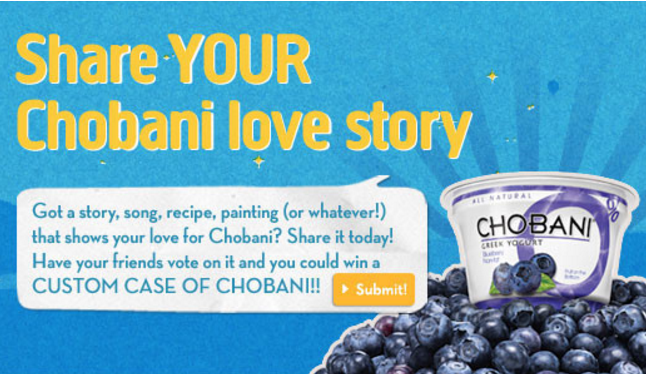
Yet another great way of getting your audience to talk to you is through contents and questions. Do quick, cool contests – quizzes, captioning contests, tweeting contests; Don’t let your imagination limit you. Don’t be afraid to borrow ideas from the rock-stars. Give away exciting prizes – they needn’t be big, or expensive. You could give a discount on a product. Ask them to vote for a favorite design and give discounts on the design that gets most votes.
Ask your audience what they like, get them involved in planning your events, ask them for opinions, everyone loves feeling like a part of something bigger.
Lastly, do story swaps. Share your stories – what happens behind your business front, celebrate your milestones with your audience. Humanize yourself. And encourage them to share their stories. A great story surrounding your product/service is definitely one of the most powerful ways to market it. If it goes with a great image of a happy customer with your product in a picture, even better.
6. Stop by and say hi
Social is just the entire world online. It functions pretty much the same. You still have to make friends, build relationships and “network” to run a successful business. It is ironic how so little of traditional marketing’s relationship building values go into online marketing.
Don’t feel shy to reach out to people on social. Look at social media platforms as if they were tools, tools to make relationship building so much easier.
For instance, in the past you’d have to physically stop by someone’s office or pick up a telephone and give them a ring in order to touch base. Now, all you have to do is move a finger to “Like” a picture of their on Facebook, or type a few characters to “Comment”. Do this often and you have a cordial relationship.
Of course, you have to be genuine. Keep in tune with what’s happening and be genuine when you react. The great part about networking on social is how easy it is to find people. If you’re looking for potential customers, reach out to them on any of the millions of focused groups on Facebook. You can easily locate groups formed around topics related to your industry.
Who should you ideally network with? Potential and current clients, industry experts and influencers and possible partners who you can work together with for mutual growth.
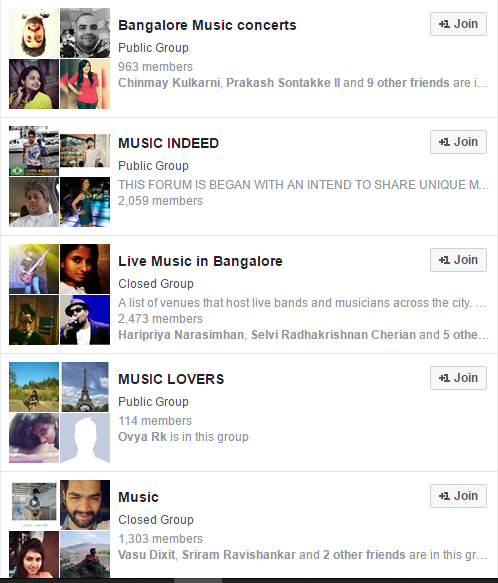
Suppose you are a band looking for gigs in Bangalore, these are the communities you’d want to be an active part of.
7. Put yourself on Facebook’s maps
Facebook uses a Google API that lets you mark yourself at places you’ve visited. You know this one, yes, it’s the “Check-in”. You’ve probably used it many times yourself, but you may not have considered what this can do for your business.
If your business is mainly local, this feature becomes especially useful. Each time a customer “checks-in”, their timelines displays the both the check-in and a link to your Facebook brand page. The check-in feature, by the way, works only for businesses listed under the ‘Local Business or Place’ category.
You could encourage customers to do this with discounts or points for checking in each time they visit. If your customers have an average of 500 friends on Facebook and at least half of them are locals, you have instant and targeted visibility for your brand!
Plus, people trust people and many times behavior of people is influenced by behavior of other people, especially friends. Check-ins are effective for this very reason, they encourage friends of friends to visit your store.
8. Go visual and get it right
The brain processes images 60,000 times faster than it does text. Images also have the ability to influence human emotions. With the 6 second window you have to capture your audience’s attention on social, you have to bring the big guns. Do it with stunning images.
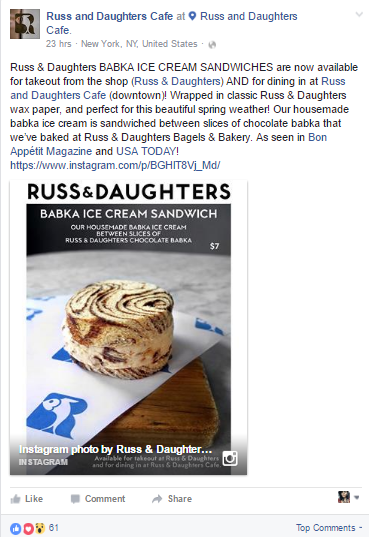
Visual content can be really fun. This is has been reiterated by every social media marketer on the internet. But what hasn’t been impressed upon is the need to hit that idea on the nail. The visuals you share have to be pleasing, interesting and varied. There is such a thing as a boring image. There is also such a thing as a sloppy image.
You can pull in stills, collages, graphs, infographics, gifs, comics, videos – anything you think best represents your topic of discussion visually and tonally. This could help you stay new with images. Although, if you find one particular format to work better than images – say quote overlays for example, do more of that than the others. Quotes are also very easy to make.
Are you worried about the challenges in creating great images? Put that fear aside and get cracking with tools that can help you do that. There are quite few good ones that are heavily graphic oriented. Using simple buttons and borrowing from already existing libraries, you can effortlessly create your images.
If you still can’t afford to waste time doing that, you could always curate images as long as you provide proper credit to the creators and a link to the original image.
It is very important to be sure of the availability of the image you’re curating. You can only use it if it is intended for sharing, or if it is under the Creative Commons license. There are image libraries online that are present solely to help you find images to fit your requirements. Some good ones with free images listed are – Pixabay and Freepik.
Again, always remember to give credit to whoever has created the images, whether they ask for it or not.
9. Tell stories
Facebook now has its very own version of expiring content which is referred to as Facebook Stories (via Instagram). This feature is great for brands that want to keep in touch with their audience everyday, without seeming promotional or annoying. Stories is that unique feature that can help you build a bond with your audience and stay “top of mind”.
There’s much that a social media manager can do with Facebook stories, from sharing behind-the-scenes content to demonstrating expertise, and sharing UGC (User Generated Content), exclusive offers or even light-hearted jokes and memes.
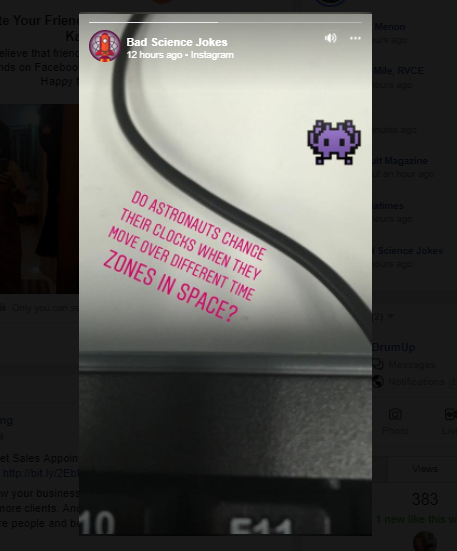
Some brands even use Stories for audience research, through which they ask their audience questions to which they want instant answers. Through Stories, even the most brand-focused questions are forgiven or met with enthusiastically by fans.
Finally, Facebook Stories is excellent for time-sensitive content, so you can use them to run everyday offers, share seasons greetings or conduct daily communication.
That wraps up 9 surprising marketing tips that you can implement to take your Facebook marketing up one notch. Remember to keep your audience in mind when trying any of these ideas, after all, it is them who you’re looking to captivate. If you ever have trouble deciding what you should post, just think like a consumer and share what you’d want to see.


