Showing posts with label digital marketing. Show all posts

Saturday, 30 March 2019

ConvertKit’s 30 Day Landing Page Challenge


This post contains affiliate links.

How big are you dreaming this year?

What are you building to serve your audience? What products or services are on your horizon? What ideas are you ready to make a reality?

Did you ever think those ideas could help you win $5,000?

Now they can.

ConvertKit’s 30 Day Landing Page Challenge

ConvertKit wants to celebrate your big dreams and help you kickstart your next idea with this month-long challenge geared around landing pages.

I love landing pages.

They’re a simple and beautiful way to promote products, webinars, your newsletters...the possibilities are endless. And they’re so easy to set up.

In just 10 minutes you can have a fully designed and branded landing page live and ready to share with the world.

With that in mind, ConvertKit is hosting this challenge to help you get your next idea up and running with a landing page to gain as many new subscribers as you possibly can.

For one creator who can set up a landing page that grows their list by over 100 subscribers in one month, ConvertKit is giving away a grand prize of:
  • $5,000
  • A free year of ConvertKit
  • And a year of coaching with one of their account managers
  • There are also more great prizes for anyone who doesn’t quite reach that level too!

And to help you along the way, ConvertKit will be hosting five live trainings to help you with everything from creating your landing page offer, to figuring out how to share your landing page, to tactics to make that email list grow.

The challenge starts on April 1st!

With 18 chances to win based on the number of subscribers you gain, it’s time to make your next big dream a reality.

I bet you didn’t think April was going to be this fun, right?

Click the Link below to join the challenge today!

Thursday, 7 March 2019

30+ Award-Winning Entrepreneurs Did WHAT?! 😮


Ever wanted to start building an online business, but felt like you didn't have enough time or money?

Or maybe you just felt stuck because you had no clue where to start?

If you said yes, I have some awesome news to share with you...

A bunch of my business mentors have gotten together to organize an exclusive live virtual summit this month [March 25-28, 2019 ] ...

They're planning to reveal their best-kept secrets to building a wildly profitable online business without even needing your own product...

...and even if you have no money, no time, or no clue where to start!

Here are just some of the things you'll learn:
  • How To Find Your Ideal (and Highly Profitable) Niche and discover the products that will easily make you money.
  • How To Start Getting Traffic Now even if you have no audience and aren't yet ready to build one.
  • How To Rapidly Grow a Raving Fanbase That Can't Wait To Buy From You without having to spend a bunch of money you can't afford.
  • How To Create Affiliate Bonuses That Stand Out From The Crowd and make people BEG for your affiliate links!
  • How To Craft Captivating Stories That Easily Sell without coming across as corny, pushy, or spammy.
  • How To Scale Your Income As Much As You Want without losing your sanity in the process.
The speakers include award-winning entrepreneurs like Spencer Mecham, Rachel S. Lee, Jeffery Banek, Liam James Kay, and more...

And the best part?

They're letting me give you a ticket to attend live for FREE!

By the way, it's all online so you don't have to worry about travel or expensive hotels...

I've read some of the reviews from the last time they had this event, and the feedback was amazing.

I don't know how long they'll keep this open for... but I wanted to make sure you can grab your ticket before it's too late!


I'm pretty excited for this. Looking forward to seeing you there! 🙂

Sunday, 13 January 2019

One Funnel Away Challenge [OFA]

Sometimes it gets so easy to complicate your business. ðŸ˜–😩😡
Like you know what's working well...
Yet that little voice in your head convinces you to complicate things and makes things hard. ðŸ‘¹ðŸ‘º
Sometimes you may even hit rock bottom because of bad choices.
The beauty about having your back against the wall, is that it forces you to FOCUS on the right things so you can get the results you want.
This is exactly what the One Funnel Away Challenge [OFA] does.
It forces you to do what's right, so you won't get distracted by what's wrong for your online business.

OFA helps you to get the most out of your business launch by showing you what 30 Multi- Million Dollar Businesses would do to save themselves if they lost it all.

Then let me know what you're trying to launch.
See you in the challenge.

Thursday, 13 December 2018

Affiliate Ninja Virtual Summit

700+ people already registered for this amazing live virtual event! 🎉🔥 

3 full days starting 15th December 2018.
Are you going to join them, or miss out?! 🤔👀

16 Rockstar Entrepreneurs & Dream Car Winners unveiling their secrets to Build a Wildly Profitable Affiliate Business...


...Even if you have No Money, No Time, or No Clue Where to Start! 😮

💥 This is the BIGGEST affiliate marketing virtual event of the year... 💥

...Where you'll get to learn from the BEST of the best... people like Spencer Mecham, Rachel S. Lee, Dan Frigo, Catlin Bettridge , Jeffery M. Banek, Marie Larsen... along with other Dream Car Winners, 2 Comma Club Members, and expert entrepreneurs!

700+ people have already reserved their spot... and I've got a free ticket for YOU too!

Claim your FREE ticket.

All you have to do is click on this link for a free ticket http://lnkw.co/AffiliateNinjaSummit

Thursday, 1 March 2018

5 Digital Marketing Experts Share Views on Predicted Trends for 2018


There’s no certainty that yesterday’s digital and social media marketing strategies will work tomorrow. In fact, in my digital and social media experience, full-blown trends that become mainstream, become ineffective and eventually die just as quickly as they come. To understand what the digital marketing trends you should focus on in 2018, we asked 5 digital marketing experts the following questions.

What are the 3 best digital marketing trends to adopt in 2018?

What is the best way to implement these trends?

How will blockchain affect digital marketing in 2018?

There’s a lot of buzz about blockchain as a payment mechanism and how it might affect the digital marketing scene.
Some of our experts believe that 2018 won’t see much development in that regard, while others on the panel have expressed their excitement for the potential that it holds. Read about this and more on this expert interview series.
Before we go into the answers, here is a short introduction to our expert panel.

Ron Sela

Ron Sela

Digital marketing expert and social media influencer Ron Sela has acted as Director of Marketing for top companies such as Pagewiz, Klear and Dapulse. He now heads his own consultancy (RonSela.com) and has an influence marketing blog which has been named as the second best globally.

Aaron Ginn

Aaron Ginn

A Silicon Valley Tech guru, Aaron Ginn is considered an early influencer in the growth hacking movement. Named in Forbes 30 under 30, Ginn specializes in product development, data science and digital marketing, and currently heads Lincoln Network, a community of like-minded technologists.
Garry-Bizzo

Gary C. Bizzo

Gary C. Bizzo has been an International Business Mentor to over 1000 entrepreneurs, leaders and investors. He’s a published author and has been referred to as one of the 17 masters of Marketing & PR and an incredible resource for entrepreneurs by Entrepreneur Magazine, and is currently Founder/Partner at Kickstart Ventures Inc.

Eric Enge

Eric Enge

Named US Search Personality of the Year and Search Marketer of the Year in 2016, Eric Enge has extraordinary SEO skills and has worked with several Fortune 500 companies. Enge frequently shares his expertise via several prestigious publications, some of which are Forbes, SearchEngineLand and CopyBlogger and is CEO of Stone Temple.

aaron augius

Aaron Agius

With over 14 years of making impact in the digital marketing space, Aaron Agius has worked with high-profile clients such as Coca-Cola, Salesforce and IBM. Agius is an experienced search, content & social marketer who excels at developing enterprise-level digital marketing solutions and is currently Managing Director at Louder.Online.

Ron Sela

1. What are the 3 best digital marketing trends to adopt in 2018?

Chatbots developed using AI technology is one of the top marketing trends in 2018. The chatbots can maintain conversations with customers using machine learning. It gathers information to improve its conversational skills over time. Leading brands like Facebook have already come up with their chatbot platform and chatbot. There are various tools AI based chatbot platforms like ChattyPeople, ManyChat, ChatFuel, and FlowXO which can be used to develop chatbots for websites and mobile apps.
Voice-controlled devices have brought a change to how brands used to develop their content strategy. Leading players like Amazon and Google have introduced their voice-based devices which have sold in millions. This has lead brands to shift their content strategy to include potential customers in this new audio-based channel. Companies are thinking beyond just simple narration and coming up with innovative techniques to engage the audience making it an important trend in 2018.
Predictive lead scoring is another essential trend which has changed the way marketers deal with leads. It produces more value than traditional lead scoring, accurately identifying the potential leads that can be converted to sales. Marketers can now prioritize their leads better and close deals with increased success compared to traditional lead scoring. The system adapts to changing market conditions to provide an accurate result.

2. What is the best way to implement these trends?

The best way to implement the changes is to develop a marketing strategy with timeline, objectives, and goals along with metrics to evaluate success. The company should create a marketing team that gets the responsibility to carry out the marketing project. The need may arise for collaboration with an external marketing partner who can help to implement the strategy and get access to resources. The marketing team should be aware and educated about the strategy and any specific technique that is going to be applied.
Marketing project management software can facilitate the implementation. It can be used to assign duties, manage campaigns, track deadlines, measure success and gather analytics for creating marketing insights. The results of the marketing campaigns can be measured using the metrics you developed like the number of sales or amount of readers who accessed the content. Changes should be made to the strategy based on insights and changing marketing conditions for better success.

3. How will blockchain affect digital marketing in the 2018?

Blockchain has already proved to be a disruptive technology which can enable real-time automation. The feature of smart contracts allows real-time universal updates which are accessible to all parties. The tamper-proof system is suitable for developing an automated process for formal client agreements. It can replace the multi-layer executive approval process to offer instant approvals eliminating any project delays. Blockchain can also be used to record each stage in the supply chain of contracts. The whole contract lifecycle can be accessed and used to automate supply chain processes like sourcing.
The system ensures that all data and transactions are entirely accurate and accountable creating a reliable and innovative way for marketers to engage with customers and provide improved service. It will also be possible to monitor products across their entire lifecycle and track down to the minutest detail. Blockchain automation will impact marketing strategies by providing a new way of company and customer interaction.

Aaron Ginn

What are the 3 best digital marketing trends to adopt in 2018?

  • Movement back towards 1-1 communication
  • Death of the “open platform”
  • Contact book is king again

What is the best way to implement these trends?

The number one priority should be building up your own direct communication with your customers. Social platforms are now unreliable and there is constant pressure to change algos which impacts organic marketing, forcing companies to paid marketing.

How will blockchain affect digital marketing in the 2018?

Probably will have limited to no impact on marketing as it is a means of contract formation and validation and the vision casting about blockchain hasn’t come to pass. Most of marketing has focused on Bitcoin over blockchain but these haven’t been marketing advances per say.

Gary C. Bizzo 

1. What are the 3 best marketing trends to adopt in 2018?

  • Brand marketing will replace Cause marketing. It’s a different way of thinking but brings in the cause and ties it to the corporate vision. Just a different way of seeing it. In the past corporate responsibility to the community was the mantra. Now it’s an executable brand philosophy that is more about how the company manages day-to-day operations.
  • Storytelling will be part of new long term play to keep people engaged. However it is done people want to follow the message. Video will continue to dominate the market.
  • Machine learning. Marketers will have to embrace the d=idea that they need data collection and analytic tools so they can see patterns and trends faster and quicker than the competition. Google is the leader in this.

2. What is the best way to implement these trends?

  • A company wide realignment in thinking
  • Use video to do the storytelling
  • Put some money into the best analytic tools then learn how to analyze the data

3. How will blockchain affect marketing in the 2018?

Marketers need to realize a change is coming in the form of blockchain and be prepared to pivot but I don’t see blockchain making major inroads to the consciousness of marketers until the mass market adopts it. We are still a couple of years before prototypical blockchain will be advanced enough for adoption in everyday work.

Eric Enge

1. What are the 3 best marketing trends to adopt in 2018?

The continuing use of Machine Learning by Google is a big trend. What this is driving is three things:
  • Google is getting much better at understanding a user’s query-intent.
  • Google is getting much better at understanding content depth and quality.
  • Google is getting much better at matching content to user query intent.
These trends mean that your business need to focus on creating content that Google will want to select to match up to your targeted search queries. The best way to do that is to focus on how you create the best user experience for someone who enters that search query. If you fail to match up with that, you’ll have a great deal of difficulty in ranking for those queries. Broadly speaking, you can think of this as “aligning your interests with those of Google.

2. What is the best way to implement these trends?

More and more businesses will create apps for Google Assistant and Amazon Alexa. There are more than 400M active installs of the Google Assistant, and the Smart Speaker category is growing rapidly, with about 44M US households having one. Users are becoming more conditioned to use voice commands with devices as well, and this will drive more adoption of the digital personal assistants. By developing an app, you enable your business to reach large audiences that currently don’t have that much competition as yet.
Feeding into the digital personal assistant (DPA) opportunity, is the role of featured snippets. When using voice commands to conduct searches via a DPA, you typically get only one response. The great majority of the time this result comes from the corresponding featured snippet that you’ll get if you conduct a types in search on your desktop or mobile device.
As a result, learning how to obtain featured snippets is very important for your business. The basics are to map out common user questions related to your business. Then, create content that answers that question in a direct, and concise, manner. Then on the same page, have additional content that answers the related questions that Google may have. Google does value the more in-depth content, and our research shows that these types of pages are far more likely to get and keep featured snippets.

3. How will blockchain affect marketing in the 2018?

It will take time for blockchain to have a major impact on marketing, and this will unfold over time. In 2018, I’d expect that we’ll begin to see some marketing applications that rely on blockchain begin to emerge. In the longer term, what blockchain has the potential to do is to eliminate the need for intermediaries in advertising. For example, programs like Google’s AdSense program could get replaced, as advertisers will be able to deal directly with the web sites themselves, and the blockchain will provide them with the security needed to be confident in placing those ads.

Aaron Agius

1. What are the 3 best digital marketing trends to adopt in 2018?

The three I’m focusing on most in 2018 are content marketing for thought leadership, customer experience as marketing, and personalisation in marketing.

2. What is the best way to implement these trends?

For content marketing as thought leadership, I’m continuing to invest in blogging, guest posting and speaking. I’m also advising Louder’s clients to think of marketing from the broader perspective of the full customer experience. As marketing gets more complex, it’s not enough to think in channel-specific terms. Your SEO, content and PPC ads don’t matter if your product isn’t good or if you’re letting new buyers down during the onboarding and activation processes. Marketing has to start thinking bigger.
Personalisation will continue to grow in importance as well, though implementing it can look very different, depending on your company and how you connect with customers. Personalisation might be as simple as incorporating better merge fields into your marketing emails. But it’s also about better segmentation, CTAs that are hyper-targeted to specific pain points and even building out product features for a niched-down audience. There’s no “one size fits all” anymore, whether you’re talking about marketing or the broader question of product development.

3. How will blockchain affect digital marketing in the 2018?

Honestly, I don’t think it’s going to have that much of an impact in 2018. I think we’ll start to see it in the future – in the way PPC ads are bought and sold, in particular. But I don’t think adoption has been widespread enough yet to really affect marketing this year.

Monday, 12 February 2018

The 6 Critical Chatbot Statistics for 2018


Although they’ve technically been around since the 1950s, virtual chatbots only recently became popularized, as brands implement them to reach more customers with greater efficiency.
KLM Royal Dutch Airlines, for example, launched a chatbot via Facebook Messenger called “BB” (stands for BlueBot). The primary function of BB is to help passengers book tickets and keep them up to date on flight status, gate changes, and similar data-driven functions.
The company built the chatbot to assist its human support team, which handles more than 16,000 customer interactions weekly, according to coverage on the MarTech Today blog. In just the first six months of operation, BB sent nearly two million messages to more than 500,000 customers. Recently, KLM expanded the reach of the chatbot by hooking it up to Google Home, adding an audio/voice layer—an interesting augmentation.
I wrote about the rise of chatbots in my book, Hug Your Haters, and since then the rollout of chatbots has become even more extensive. But as I wrote about recently here at Convince & Convert, the truth is that a lot of chatbots (and live chat technologies) frustrate and disappoint customers, the very group they are supposed to aid.
Despite the missteps in execution, most consumers (in all generational categories) are relatively bullish on what chatbots can do, when, and how.
This became clear in a 2018 research project that surveyed more than 1000 adults in the USA, aged 18 to 64, balanced by age and gender. The survey sampling was provided by SurveyMonkey Audience, and the study itself was written and conducted by Drift, Salesforce (disclosure: Salesforce is a sponsor of my podcast, SocialPros), and myclever.
You may download a copy of the entire study here—no email address required. I have summarized the findings for you in this post, the 6 Critical Chatbot Statistics for 2018.

Chatbots and Amazon Alexa Are Equally Popular

Certainly, as we found in the Hug Your Haters research, telephone and email are still the most common forms of interaction between customers and companies.
60 percent of survey respondents say they have used these mechanisms to interact with a business in the past 12 months.
38 percent say they have used online chat in the prior year.
30 percent indicate they’ve used a company’s mobile app to interact.
28 percent have engaged with a business in social media.
As of 2018, 15 percent of American adults (per this survey) say they have used a chatbot to interact with a company in the prior 12 months. This is almost precisely the same percentage of Americans who own a smart speaker (Amazon Alexa, Google Home, et al.) as of January, 2018 per research from our friends at Edison.

37 Percent of Americans Would Use a Chatbot in an Emergency

The survey respondents were asked what they would use a chatbot for, if available.
Interestingly, the most common use case for chatbots is “getting a quick answer in an emergency” at 37 percent. Personally, if I have an emergency, I’m not sure THAT’s the time I’m likely to turn to a robot for fast and accurate guidance.
The second-most-common use case is “resolving a complaint or problem” at 35 percent. This makes a ton of sense, and I profiled several companies (most notably, HP) in the Hug Your Haters book that are using chatbots to augment customer service, like KLM above.
Getting detailed answers or explanations is how 35 percent of respondents might use a chatbot. This is problematic today, as many of the circumstances where early-stage chatbots fall apart is in nuanced, specific requests from customers. Because chatbots—even with artificial intelligence—can only respond to what they are programmed to respond to, detailed answers are not where they tend to shine.
34 percent of respondents say they would use a chatbot to find a human customer service assistant. This one is pretty meta. If we have to use a robot to find a real person, that doesn’t say much for the capabilities of the robot, does it?
Other uses of chatbots make more sense (at least to me). They include:
  • Making a reservation: 33 percent
  • Paying a bill: 29 percent
  • Adding yourself to a mailing list: 22 percent

24-Hour Service Is the Number One Chatbot Benefit

Participants in this survey were also asked about the primary benefits of chatbots, provided they were available and working for the online services these Americans used most.
Speed and availability are where chatbots are perceived to provide the most value to consumers.
Specifically, 64 percent of respondents said “24-hour service” is a benefit of chatbots.
The second most mentioned benefit is “getting an instant response,” mentioned by 55 percent of the participants.
“Getting answers to simple questions” (55 percent) and “easy communication” (51 percent) were also mentioned by more than half of respondents.
Perhaps unsurprisingly, “friendliness and approachability” (32 percent) are not areas where consumers believe chatbots are particularly strong. This is despite the manifest efforts of many brands to make their chatbots more “human.” Plenty of work to do in this regard, it appears.

Chatbots Are Equally Popular Among Millennials and Baby Boomers

This finding surprised me somewhat. The research discovered that the perceived benefits of chatbots are roughly equivalent among younger Millennials consumers and older Baby Boomer Americans. In fact, in several areas, Boomers are actually MORE bullish about chatbots’ potential that are members of the younger cohort.
For example, 61 percent of participating Baby Boomers say a potential chatbot benefit is “getting an instant response,” while just 51 percent of Millennials say the same.
Let’s recognize that “potential benefits” do not equal “usage,” but these findings indicate that older Americans are at least open to the premise of useful chatbots.

Nearly Half of American Adults Would Prefer to Deal with a Human

In the survey, participants were asked a simple and important question: “What would STOP you from using a chatbot?”
The number one answer is a tough one for chatbots to overcome, at least for a while: our innate desire to interact with other humans.
43 percent of adult Americans say they prefer to deal with a real-life assistant, rather than a chatbot.
I guess you can look at that as a half-full or half-empty statistic. On one hand, nearly half the country would just prefer to handle their business with another person. Fair enough. However, nearly six in 10 Americans do not object to using a chatbot in some circumstances.
As chatbots improve, it will be fascinating to see if this objection fades away.
The second hurdle for chatbot usage is actually related to the first. 30 percent say that they “worry about the chatbot making a mistake.”
Conversely, on the other end of the response scale, 15 percent of survey participants indicate that NOTHING would stop them from using a chatbot. That’s a high level of trust in technology!

Users Prefer Chatbots Over Apps When Communicating with Companies

In almost every case, respondents indicate they believe chatbots offer more benefits when communicating with businesses, in comparison to apps. The biggest difference is in the area of “getting quick answers to simple questions,” where 69 percent of participants say chatbots are up to the task, compared to 51 percent for apps.
Users also believe chatbots to be superior in the areas of “24-hour service” (62 percent versus 54 percent and “ability to easily register a complaint” (33 percent versus 24 percent) among others.
Apps fare better than chatbots in just three categories, but they are all important:
  • Convenience (chatbots, 53 percent versus apps, 57 percent)
  • Ease of communication (chatbots, 35 percent versus apps, 41 percent)
  • A good customer experience (chatbots, 28 percent versus apps, 30 percent)
It’s interesting that in the circumstances where users believe chatbots to be superior, they’re FAR superior. But in the core function of easy, convenient, and customer experience, apps are perceived to be better, for now.
The full study also includes comparisons between chatbots and email, and chatbots and the telephone.

Chatbots are popping up like dandelions, and companies are rolling them out to save money and (in theory) add customer convenience. In 2018, overall consumer reaction to chatbots is positive, but still somewhat wary. This is probably wise, as chatbots will only get better as the artificial intelligence underpinnings improve, and businesses learn lessons (sometimes the hard way) about how best to utilize this new technology.

Source

Saturday, 10 February 2018

6 Incredibly Simple Social Media Marketing Tips for Small Businesses


Even with the high usage of social media these days, there are still a lot of questions being raised about it. The most common one is probably about the whole purpose of it. And you’ve probably asked this misguided question yourself. Hey, this is not a blame game, there are no wrong questions. It’s just that purpose and benefits are plenty and pretty much obvious. The real question, however, should be about how to achieve and use their purpose for success. If you already haven’t given a thought of attending to social media, you definitely should.
If you don’t have the time or resources to manage social media, you could always use a social media management tool like DrumUp to simplify the process.

Yeah, But Why?

If you’re a small business it’s alright to ponder the question. But given the popularity of social media and taking into consideration of how everything is online these days it should be a no brainer. Sure, you may have a successful business without having to use social media. But, what lies beyond is just so good to miss.
This is another big topic to write on, but just for a little heads up, you’ll seriously improve your image, start creating meaningful relationships that can turn into business success stories as quick as that. Everything you do online and on social media makes you so much faster and ahead of the others than in real life.
Of course, there are a number of strategies and tips you can use for your social media marketing activities. However, a whole lot of those online are for businesses that already undertook certain activities and have been present on socials for some time now. This doesn’t mean they are forbidden to use.
However, if you’re a small business looking to get your piece of a pie in a relatively small time frame I recommend concentrating on these six:

#1 – The magic number three

Social media presence is a must for any business these days, but the only way you will benefit from social media is to actually use it. Use it in a smart way, that is. That’s why picking 3 channels and turning your focus to them rather than handling 5-6 at the same time with less focus might be a great thing to do.
The reason is simple, you’re merely experimenting for now and are just making your entrance. If you attend to every social network out there, you’re just going to get lost. No matter how tempted you may be, in this case, less is definitely more.
For all of you who are at a starting point, it’s even better to go with just one social network and you can gradually work your way up. Starting with the one you’re most familiar with may be the best option.
1

And even if you have a lot envisioned and are can’t wait to put all the content you prepared for your social media three channels are really enough. You can even diversify your channels and see how that goes which brings me to the next point.

#2 – Divide and conquer

You can pick the kind of content goes on each social network. What this gives you is a place for every of your diverse ideas. This way you won’t create a clutter that in the end just confuses your audience and sends a wrong message out.
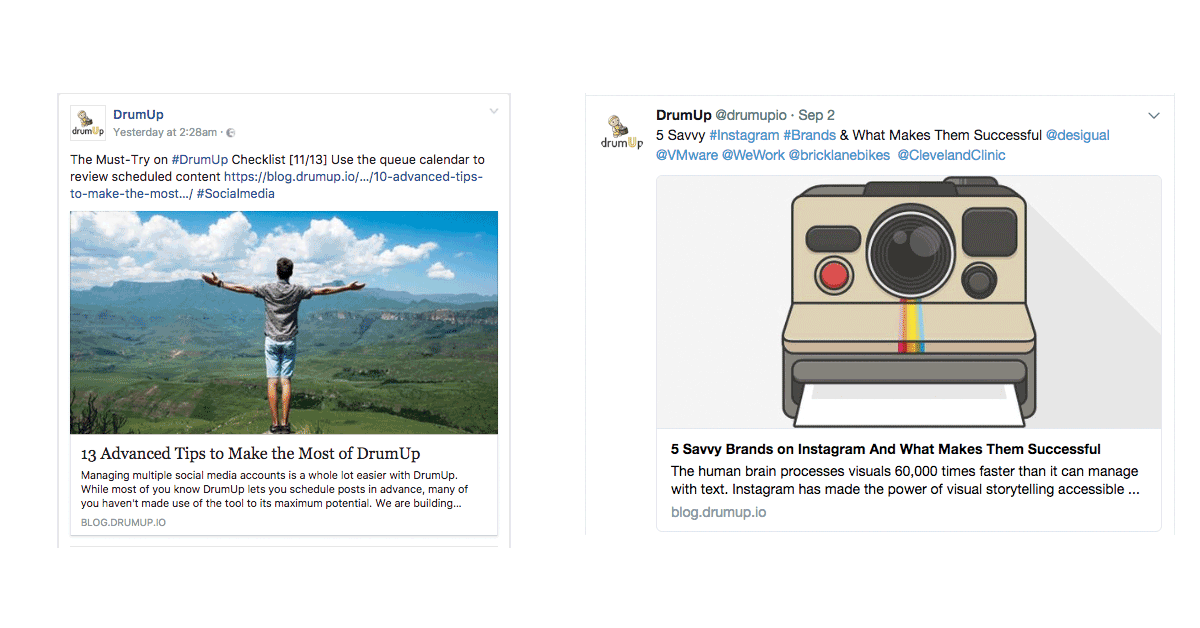
For example, share all your articles and interesting reads on Facebook with a video and photography or a video of everyday office life every now and then while Twitter can be used for discussion provoking content or vice-versa. There are plenty of options and you can always think of what suits the best for you.
The idea is to use every social platform for one main activity. For the latter mentioned magic number three this is what it could look like:
  • Facebook – mostly sharing your own blogs and promo, activities in groups
  • Instagram – everyday happenings at the office and creativity
  • Twitter – short updates, article sharing, networking with other businesses and your followers
2
This will also give the focus channel for each and every follower from your target audience. We’re not saying that manipulation is what you’re seeking to use here. It’s just a good way to imagine each channel to be a group that will reflect a certain part of interest for your audience.

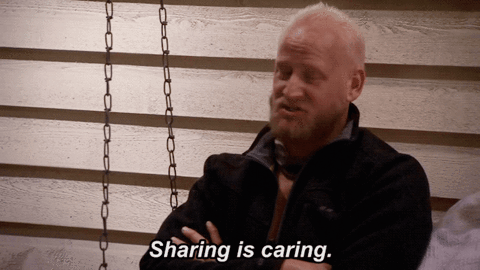
#3 – Sharing is caring

Of course, social media is here to promote yourself and share your own updates but it’s also great for networking and building relationships – both with your customers and other small businesses. Your social feed should include sharing articles from other sites as well as yours, and communication with other businesses.
3

Source: 
giphy.com
You should always care more about the value of the information you’re sharing rather than the source. This will keep your audience engaged and sooner or later will create some serious business contacts. Remember to stay relevant and consistent to your core work and content that goes with it, rather than losing yourself and your brand identity in the stream of non-relatable information. Consider yourself to be a grand promoter of a thing you believe in and you’re bound to make that social master level in no time.

#4 – Why so serious?

Marketing is definitely a serious business, but social media is fun (most of the time). It’s actually a big combination of both. You should be mindful about what your headlines and content are and at the same time be fun-loving and goofy. Sharing and posting some funny updates like gifs, memes and especially emojis and using them is a great way to get attention and to spread a word. They are also a great way to encourage activity and engagement on your socials as people just love tagging and sharing fun things with their friends.
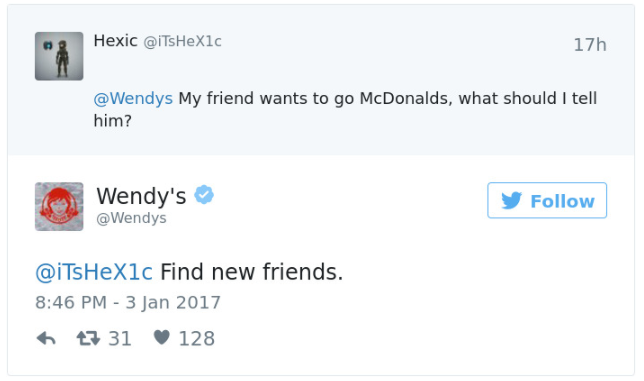
Be brave about your fun side and throw in some jokes when engaging with the audience. People just love this and a good joke won’t hurt anybody. Many brands have already made a social media success through this kind of activity. Be careful, however, your jokes should be finely tempered and well intentioned at all times.
4
Wendy has become an absolute hit.
It just adds to exposing your brand as a tangible and being down-to-earth, rather than having that strictly corporate and business note. You’ll definitely strike a chord with people and they’ll love you more for it. It’s all about your audience having that emotional connection with you, and happiness and fun times are the strongest ones.

#5 – Make a claim – Kick-start a discussion

Don’t forget about the “social” part of social media – engaging your followers in discussions about current topics is one of the most powerful things you can do on your socials. Always seek opinions for your own products/services or even on the latest episode of Game of Thrones. Or make a connection between the two, and compare. Now, that’s where the imagination and creativity will come in handy. Using them will just spark endless comment notifications. There are lots of examples out there and you don’t have to be as extravagant. But doing something unusual and creative with which your audience can relate will come a long way.
 

Things just don’t stop there as that number of comment you just got isn’t only a pretty accomplishment on your page. Lots of possibilities come from this kind of activity. My favorite one is that it’s an awesome way to use those conversations as future content ideas. What’s more rewarding than using the voice of your audience in creating that new content piece? It just strengthens the connection and roots your brand closer to their heart.

#6 – Don’t forget about “media”

Just like the social part, keep the “media” one in your plans as well. People just love multimedia, visuals, videos, gifs – you name it. Add images and videos to your daily social media schedule. If it’s funny or interesting then it’s shareable, if it’s shareable then it will attract more and more people. You should always have fresh materials in stock if you decide to use this kind of activity as people will start to expect them. Especially if they’re catchy and good.
Consider the use of live videos as well. These are just great, and again go a level deeper into connecting with the audience. It’s sharing a piece of your daily life and this is what counts and shows openness to hang and have a good time. After all, 69% of the online present companies invest in their video content so you might consider getting in on the ride. Remember to keep them interesting and not to do them for the sake of it as this will only get the people bored instead of eagerly awaiting your next creative piece.

#7 – Bonus tip

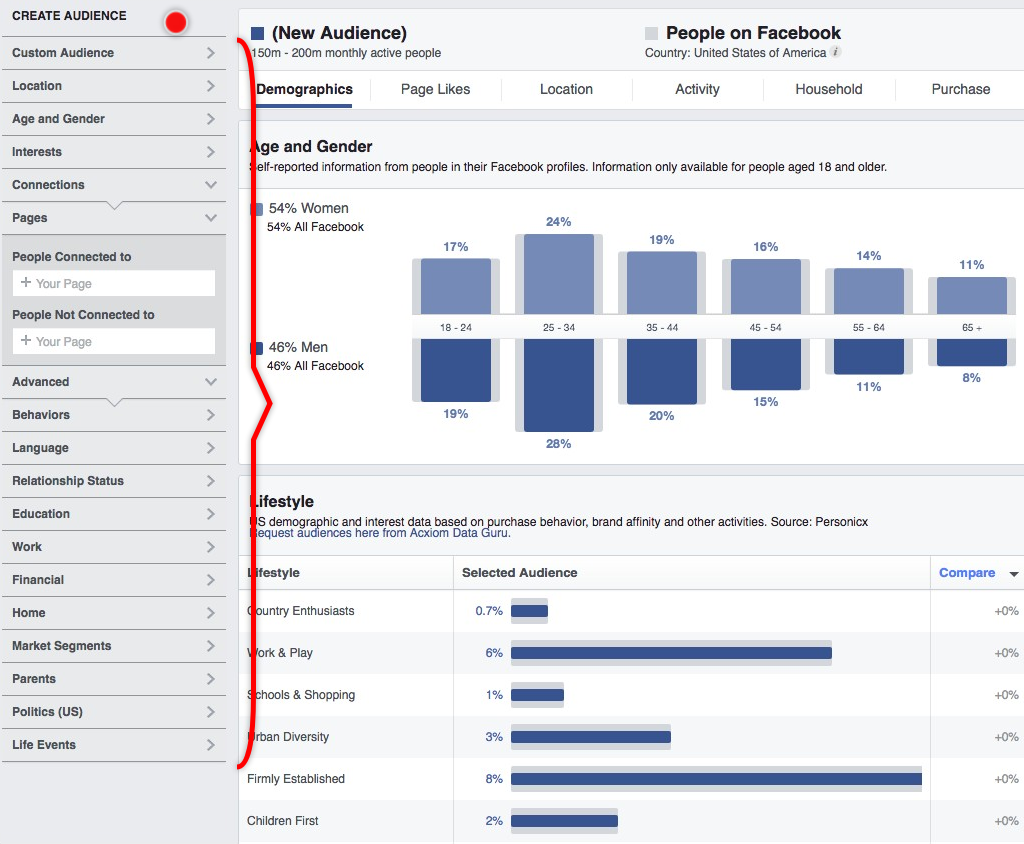
Don’t forget or ignore the fact that the advertising through social channels is a must these days. Not just because of the lower price than through the Google Adwords, but also the fact that there are numerous options to segment and reach to your target audience.
For example, the image below shows just the top level of segmentation criteria available on Facebook Ads platform.
5

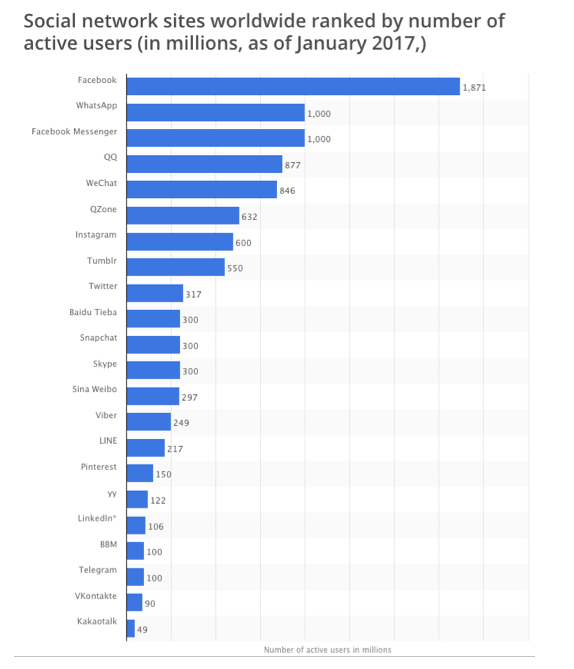
Many marketers would highly recommend using ads on at least one of social channels (for example Facebook as it’s the biggest one).
6

Social network users, Source: SmartInsights
Advertising on social media has become so popular that most of the businesses are now using it. The idea behind it should not be aggressive selling, but doing same things you’re already doing with existing fans and audience. Except now you’re not targeting just your existing audience, but the one you’ve segmented and consider possible future customers. This is where the magic happens. You’re getting a percentage of genuinely interested and attracted people who’ll love to see what you have to offer and this is where you are using your social media’s full potential.