Showing posts with label niche. Show all posts

Friday, 5 January 2018

Affiliate Marketing in 2018, What You Need to Know


Affiliate marketing is constantly changing and evolving and 2018 is going to be another year when we can expect some incremental shifts and some more radical shifts. I am going to spend a bit here explaining where I see affiliate marketing in 2018 heading and hopefully shed some light on the industry as a whole.Before I get started, I want to clear your mind of ONE thing. Affiliate Marketing is not going anywhere. The opportunity to build a full-time business through affiliate marketing is still as possible as it has ever been.
In fact, there is becoming a greater shift of investment by large companies into their affiliate programs and their affiliates. You can expect more of this in the year ahead.
There are 5 main shifts/changes that you can expect in the year ahead within the AM world.

1. Affiliate Programs Need Affiliates More Than Ever.

I am sensing a bit of desperation in the commerce world. Very successful retailers of the "offline" world are losing their grasp of their overall market because of the "progressive online" companies that have focused primarily in the online retail space.
You have the likes of Etsy, EBay, Amazon, AliExpress that have truly invested a great deal of their energies into affiliates and their online retail experience. They are continuing to thrive and grow and will do so in 2018.
Then you have companies like Sears, Toys R Us (as well as several others) that are going completely out of business because they didn't focus on affiliates and their overall online retail experience.
We are going to see more of this. There will be more retailers that will go bankrupt in 2018. There will be a much greater focus by existing retailers in their online experience, affiliate programs, and working at a higher rate with affiliate marketers.
Those that continue to invest in this manner will see positive growth in their businesses in 2018. Those that don't, are unfortunately going to experience the same demise as many other "offline focused" retailers that simply do not get the new economy.

2. Authority Bloggers Will Continue to Reap the Rewards.

One thing that you can be assured about is that those that focus on OWNING their niche in 2018, are going to continue to attract the attention of larger affiliate marketing agencies, networks, and affiliate programs.
As an affiliate, you have a lot of power as you start to accrue a brand in the industry. The same way celebrities attract huge contracts for selling contracts through commercials if you focus on building your brand in your given niche/industry you are going to continue to attract these types of partnerships.
Often times as you gain true branding in your niche. Affiliate programs consider offering you more incentives or better commission (like our all-expense-paid Super Affiliate Conference).
So embrace your niche, work to become the best within it, and don't try to diversify and wear too many hats within the online world. It only takes ONE niche to be very successful online (as in millions in revenue per year).
Also, help as many people as you can in your niche. Make it a goal of 2018. If you can help 100% more people this year, you can expect 100% growth. If you can help 500% more people this year, you can expect 500% growth in your affiliate revenues.
If you haven't already had the opportunity to check out my Live Class on "Insights into Efficiently Becoming an Expert in 2018", I recommend you do so. All Premium members have access and it is going to give you some unique perspective on building a brand through the course of a year. It CAN be done.

Kyle, Live Class - Affiliate Marketing in 2018

WATCH LIVE CLASS: Insights into Efficiently Becoming an Expert in 2018

3. More People Online = More Affiliate Marketing Opportunity

Every year the world population grows. Ever year access to the Internet continues to grow. Every year more people are more active on the Internet than ever, through more devices.
There was a point in time when people were fearing the demise of desktop computing and people actually using anything but a mobile device. It was a big fear, in particular in the SEO space and with affiliate marketers.
What has happened though is that people now are online more than ever, people often times have 3-4 devices they can connect to the internet with and consume information with (desktop, laptop, iPad, smartphone, now home enabled devices), and people are now spending more money than ever as a result.
People also have ramped up their search habits.
Offline constructs like libraries, books, newspapers and offline retailers are continuing to become obsolete, meanwhile, anything online is only gaining more popularity.
This is a good thing for affiliate marketers. In fact, the opportunity has never been so big and the affiliate marketing snowball is going to continue to grow in size in 2018.

4. E-commerce is Thriving, More Hybrid Opportunities

Affiliate marketing is great. But it certainly is not the only way to monetize website traffic and if there are greater profits outside of affiliate marketing within certain pages on your website, then authority sites are going to continue to leverage these.
For example, if you are selling something that is not branded (a wooden clock), there are many opportunities to drop ship through companies like AliExpress where you can ship products at a much lower cost than you can charge for them, sometimes you can make 100% plus on the actual price of the product.

Wooden Clocks AliExpress
If you take a $15 clock like the one above, you sell it for $30, you double your money. This is a logic that has been in place, but where the "brand" isn't as sensitive (like a generic clock), you are going to see more opportunities in this space. There is much more administration and costs associated with accepting payment, dealing with returns, and managing product support. But accepting payment and hosting a store on your website through plugins like WooCommerce can be a great opportunity.
We have some existing training on this, but we are going to be exploring facets in the direct "e-commerce" space through more live classes and training in 2018.
Affiliate marketing is definitely going to remain our focus with the largest share of our training, but we also feel there are going to be new opportunities arising out of the e-commerce side of things that conventional affiliate-based sites will be able to leverage (as technology continues to improve).
The ability to operate a hybrid website where you recommend products through affiliate programs, as well as other means like drop shipping, and owning your own products/services are going to become more of a reality in 2018 and beyond.

5. Lots of Opportunity Outside of Amazon

Amazon is eating a disproportionate piece of the pie, the most we have ever seen. They are blowing away sales records and one thing that can be said about Amazon in the last 10 years is that they have invested in their affiliate program, their affiliates (associates) and maximizing revenue.
During Black Friday of 2017 it was stated that Amazon took anywhere between 45-50% of all online sales. That is a big deal, but this certainly does not mean that Amazon should be viewed as your only option. Online sales broke records once again in 2017, and will do so again in 2018.

Amazon Black Friday Sales
Affiliate programs are going to continue to pop up. Networks continue to recruit brand new merchants and continue to expand their offerings. And often times you can find much better commission share (% wise) outside of Amazon.
There are 100,000's of affiliate programs out there across every industry offering a wide range of commission rates (1-75%), so explore your options and be strategic about what you promote on your sites. There is likely a greater windfall of revenue if you do your due diligence and you seek affiliate programs outside of just Amazon's.
Cookie life (the time in which you get credit for an affiliate commission) are typically better than Amazon as well through other affiliate programs and networks. Some like Wealthy Affiliate, offer affiliates LIFETIME cookies, meaning you get a commission if someone goes through your affiliate link and joins at any time, forever. Compare this to shorter cycle cookies like Amazon (which are only 24 hours).
Successful merchants on Amazon and other mass shopping agencies are going to become more privy to the benefits of having their own independent affiliate programs and either join affiliate networks or set-up their own independent affiliate programs. They will earn the merchants larger profit margins this way and they will also be able to pay affiliate more than commissions. A win/win.


There you have it.
Those are some trends I see either taking place or evolving in 2018. The affiliate marketing industry has never been more exciting in my opinion and you can expect the most affiliate opportunities we have ever seen in the year ahead.
I would love to hear your feedback though. Where do you see the affiliate marketing industry heading in 2018? What are some trends you have noticed in your own niches? Do you have any questions or personal feedback? Drop a comment below!
Here is to a successful a brilliant 2018 ahead!


Source

Monday, 27 November 2017

How To Write Email Newsletters That People Actually Want To Read

 
A few weeks ago, the CEO of GMB Fitness, Andy Fossett, looked out at a crowd of marketers and said, “Don’t. ever. blast. your. list.”
We all know this. But Andy’s eyes said what we were all thinking, “I cannot believe I still have to say this to a group of marketers. You people should know better.”
And we should. “Blasting” your list is one of those foundational email marketing violations that can get you banished for life from advanced marketing circles. Other violations include: using the greeting “Hi Friend,” not segmenting your list, and “pushing” content to “get the word out.”
Each of these violations makes up a core element of the infamous “Email Newsletter.” You might know them better as the things in your inbox you “Mark as read.”

Click here to download our free beginner's guide to email marketing.

Self-respecting email-marketers scoff at email newsletters.

And yet…we’re seeing a resurgence of (dare I say it) GREAT email newsletters cropping up everywhere.

If you don’t believe me, check your own inbox. How many of you look forward to Tim Ferriss’ 5-Bullet Friday (and copied it yourself with a not-so-clever, “Friday’s Top Hits” or some other knock off)? Or Austin Kleon’s famous “10 Things Worth Sharing” Newsletter. Or Ann Friedman’s “The Ann Friedman Weekly,” also sent on Fridays.
Yeah, that’s what I thought. The newsletter is having it’s moment, which begs the question: Why on Earth are these working?!
Every company with internet access has attempted the newsletter and failed miserably, boasting open rates that are lucky to hit 17%.
The vast majority of newsletters get struck by the email-marketer’s-kiss-of-death: “Mark As Read.”
What are these newsletters doing that’s making them work??
I decided to investigate. Spoiler alert: the answers will (not) surprise you. In fact, they’re so #facepalm obvious you’re going to kick yourself for not seeing it. I certainly did.
Here is why the email newsletters don’t suck and how you can make sure yours don’t either:

💌 They’re super niche.

If you work in a traditional company, odds are the email newsletter is your way of satisfying the CMO’s frantic need to “get the word out” whenever he randomly decides he needs to because he didn’t do the hard work of planning a proper launch or promotion strategy.
That is the wrong way to do this.
The right way is to focus exclusively on the kind of people who make up your specific audience and deliver content that only they will appreciate.
Again for emphasis:
Deliver content that only a specific audience will appreciate
You don’t want everyone: just the right people. (Kinda like having product/market fit) This is why they don’t have to segment and can send ONE email to everyone. Their lists are niche and specific.
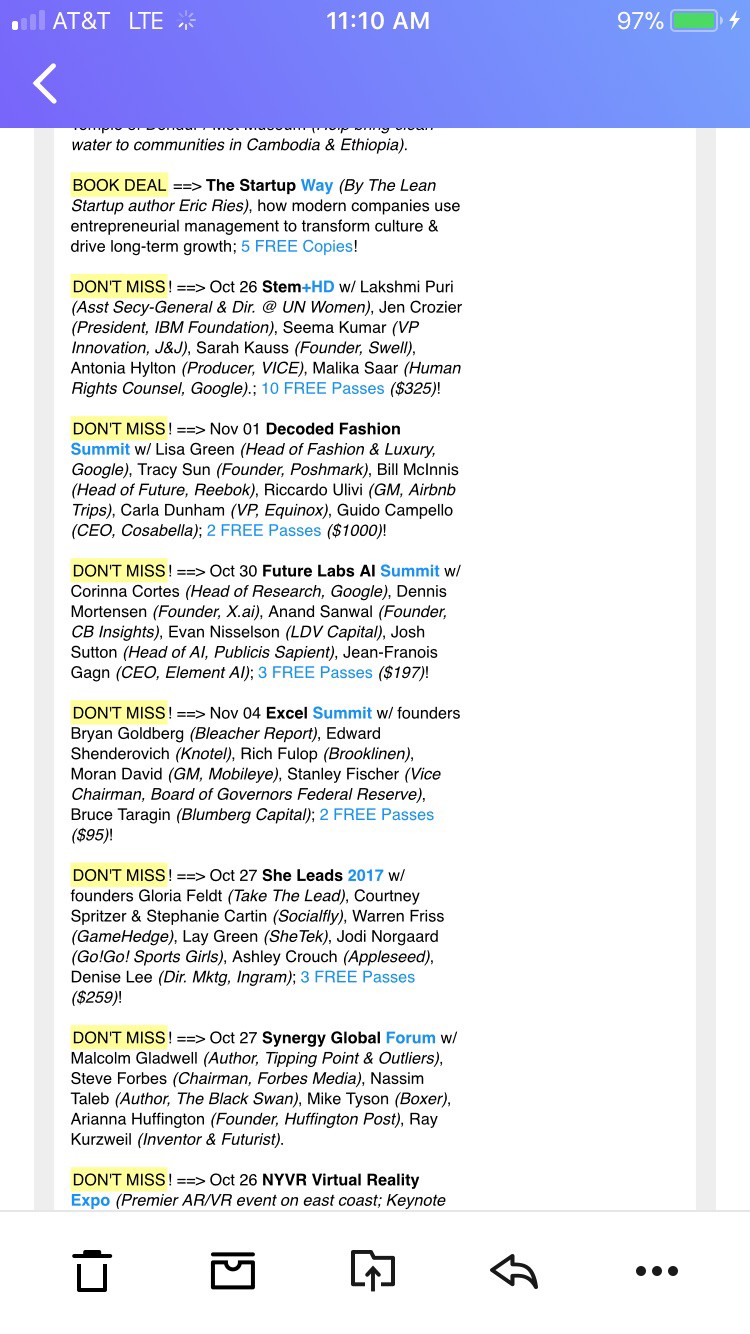
My favorite example of this is Gary’s Guide -- a New York specific “digest” of what’s happening in the NYC tech scene. It has the most comprehensive list of events, classes, series A/B/Whatever funding updates, and job listings of anything on the internet. The best part? It looks like it hasn’t been updated since 1992.

email-tg-01
And, yet, it’s considered one of the best go-to sources for what’s happening in the NYC startup scene. That’s because it’s not trying to be everything to everyone.
Gary’s Guide is just for startups and people wanting to break into the tech scene in Manhattan. In other words: It’s niche AF.
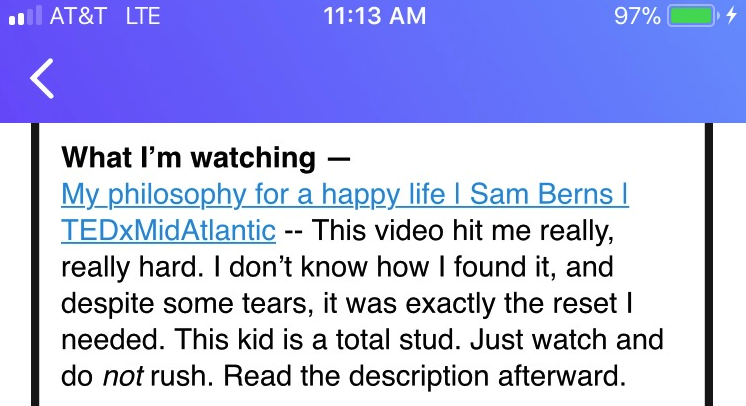
Tim Ferriss is also very niche, despite his famously massive subscriber numbers. His audience is made up of bio-hackers and aspiring digital nomads and Tim delivers exactly what they want: latest “hacks,” supplements, gadgets, and, of course, stoicism!!! It’s got wonderfully nerdy book and documentary recommendations too.
If you’re not interested in those topics, you won’t appreciate his bullets:
email-tg-02
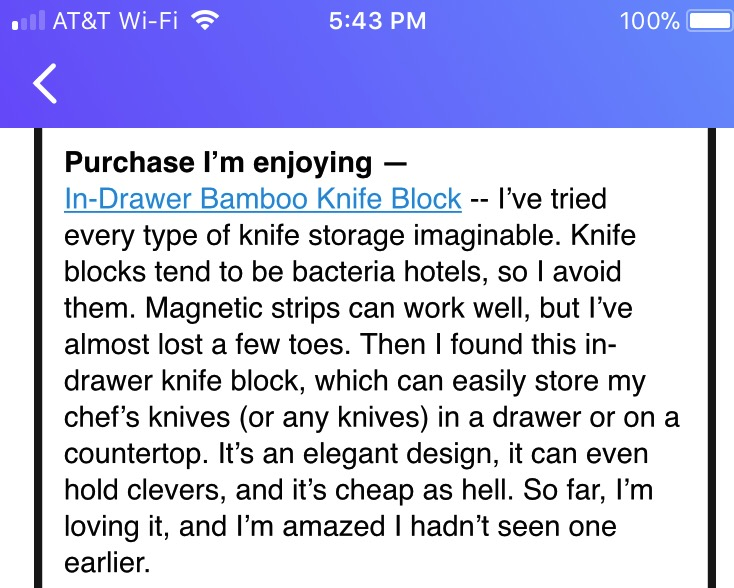
What’s more is these bullets feel personal (we’ll get to that in #3). Like he’s your friend telling you what he’s reading, watching, and listening to. His readers don’t even care that these are mostly affiliate links because it’s so relevant and valuable to them.
Look:
email-tg-03
Again, this feels like he’s your friend, casually sending you an email. And it’s niche becuase he knows his readers are aspiring top performers and watching TED Talks at double speed, so he includes the detail, “Watch and do not rush.” It’s like he’s looking out for you.
These newsletters work because they cater to a small, specific group of people. Tim and Gary are not trying to please everyone -- in fact, they’re actively trying to turn people off.
For example, if you get excited from reading this article and subscribe to the newsletters I’m profiling here, you’ll likely be disappointed because they’re not interested in pleasing you. They’re interested in pleasing their people.

💌 The content is actually good.

I told you this would be obvious. You can’t skimp on this one and yet everyone tries to. That’s how “roundup” became such a dirty word. Paper.li, Refind, and other tools started automating curation and sending you pure crap (or simply too much). Newsletters started white labeling those automation services and claiming they were “curating,” but that is not curating.
Curating is hand picking. If you’re the curator of an art gallery you’re not going, “Eh f*ck it,” and just slapping something random on the wall to meet your weekly quota.
To curate is to be discerning. Careful. Methodical. Thoughtful.

email-tg-04
For example, this is a poorly curated photo. It makes no sense right here.
Austin Kleon is the master of this. His links are thoughtful and relevant. You can tell he’s actually read what he recommends and isn’t siphoning the hard work of curation to his latest content manager hire (I’m assuming he has one, but you’d never know by reading the newsletter).
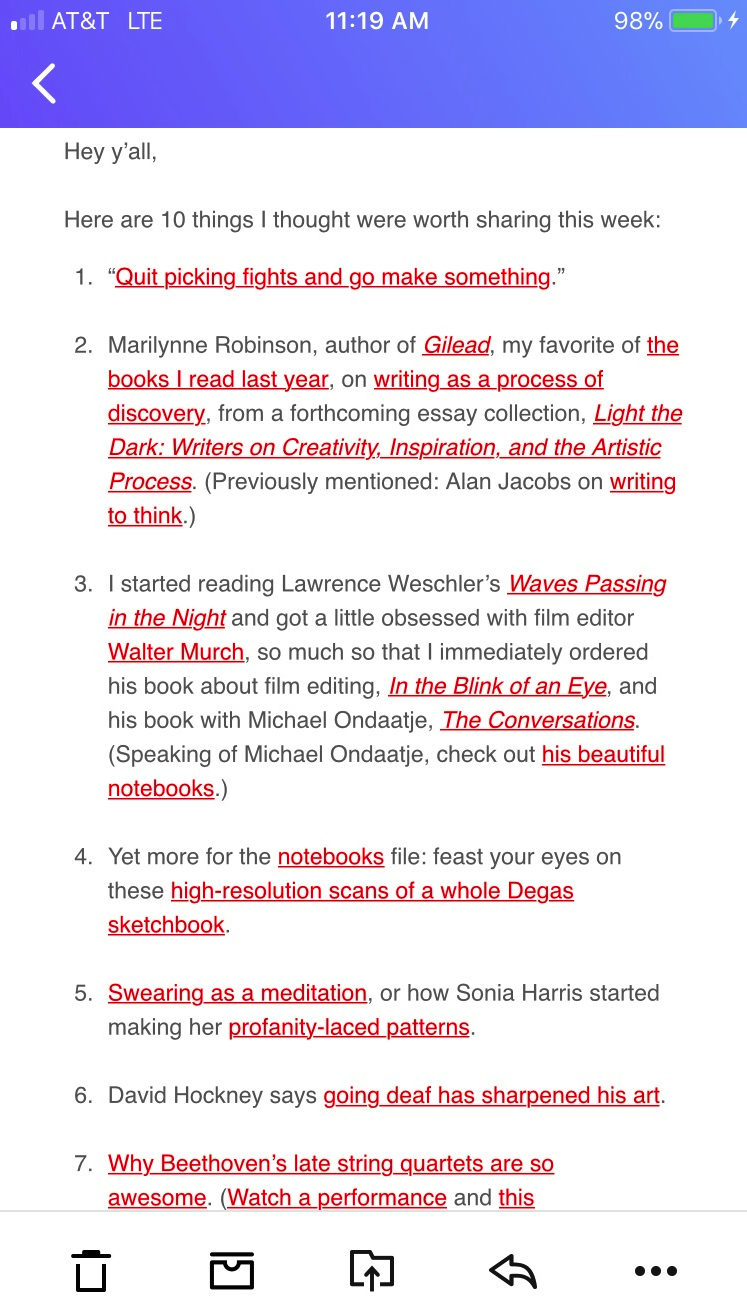
Here’s an example of how he delivers quality curated content:

email-tg-05
This takes clickbait to a whole new level. Instead of using a baited headline, he hyperlinks the hook: “Which contains his funny rant about the Broadway musical, Rent.” Who doesn’t want to read that?!?! (ok unless you’re his niche, you probably don’t, but the point still stands)
Kleon knows what his audience cares about because it’s what he cares about. He’s built a career and a brand around creativity and the arts. And funny drawings. And he delivers.
To nail this requirement you need a deep understanding of your audience and what they care about.
If you’re asking, “How am I supposed to know what people care about?” Do yourself a favor and get a degree in accounting and call it a day. I’m not sure you can be saved.
TL;DR: Don’t be lazy. Your audience is trusting that you’re doing the hard work of finding the diamonds in the rough. And they will reward you by coming back, week after week.
If you fail to deliver, (say it with me): “Mark as read.”

💌 Context. Context. Context. And personality. But mostly context.

Again, duh. But let me explain before you shut the screen cursing my name for telling you what you already know.
The reason these “roundups” and “blasts” work is because they’re housed within useful context. They’re not actually a long list of boring headlines you skim.
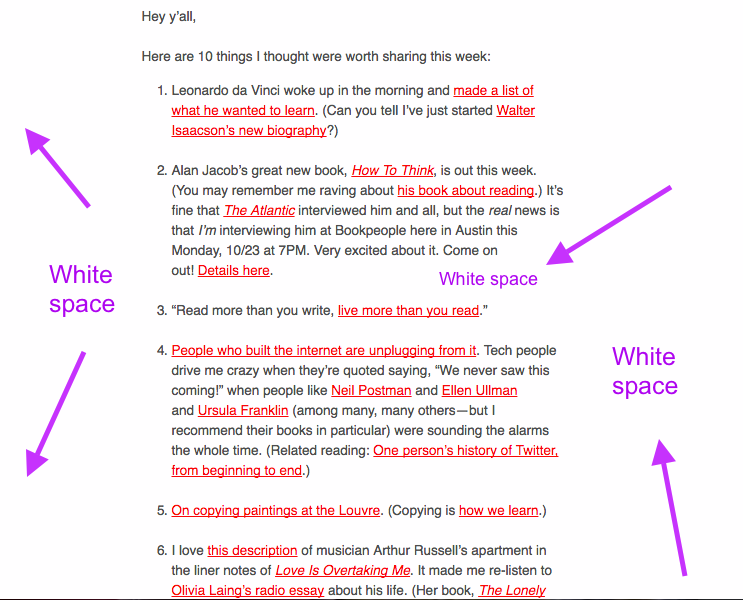
Let’s break down a bit more how Kleon does it:

email-tg-06
  1. It feels like he’s writing this directly to you (“Hey yall”). He’s conversational. Not overly chipper or super buttoned-up (here’s looking at you B2B).
  2. He doesn’t simply hyperlink the headline of an article and move on. He tells you why you should check it out or why he did. By hyperlinking the context he sort of gameifies the content. You don’t know what you’ll get until you click!
  3. He writes in the same pragmatic-and-hilarious tone he uses in his best-selling books (which is how most people discover him) which keeps his core audience happy and feeling connected to him (which is key!).
Ann Friedman is also a master of this. Look how she weaves in a “roundup” of links into a paragraph of context (also a violation of copy-law: never publish a giant unbroken block of text!!!). Yet, she is famous for these giant blocks of relevant articles.
Relevant to her readers. If you’re not a left-leaning progressive hungry for information on current events, women’s issues, race issues you probably won’t enjoy these pieces (see #1).

email-tg-07
She follows the same format as Kleon.
She’s personable, relevant, and gamifying the hyperlinks inside of context. It feels like you’re getting a rant from your best friend.
Since that content can get pretty heavy, she does what your actual besties would do: add a hilarious inside-joke GIF.

email-tg-08
If you’re her market it’s funny.
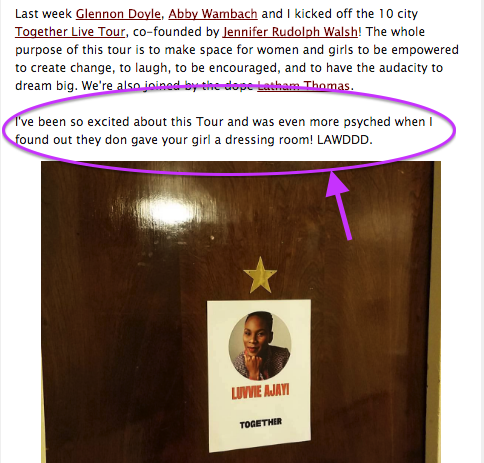
Another master of the email-newsletter-blast-that-sounds-like-it-was-written-by-your-bestie is Luvvie Ajayi, famed blogger and NYT bestsellerwho writes the LuvvLetter. Read this and tell me it doesn’t sound like it’s coming from your bffaeae updating you on her life:

tg-email-09
You can HEAR her saying this to you.
These “blasts” don’t feel like blasts because they’re executed extremely well. They emphasize personality, casualness, and respect the rule of email that says it’s not just a one-way communication. These emails feel like 2-way conversations you’re having with friends updating you on their lives.

💌 They don’t visually assault you.

I’m the last person qualified to talk about design seeing as I’m a copy-centric bafoon who frequently ignores the value of good design (I have been proven wrong. many. many times), but here we are.
Newsletters that look like you repurposed a template from MailChimp are part of why people don’t read them. (I know, I am sorry MailChimp. There was a time for those.)
Design exists to serve content. Design showcases content, it is not the star.
You should never say, “Wow, this was well formatted.” You should say, “Damn, I love reading this.”
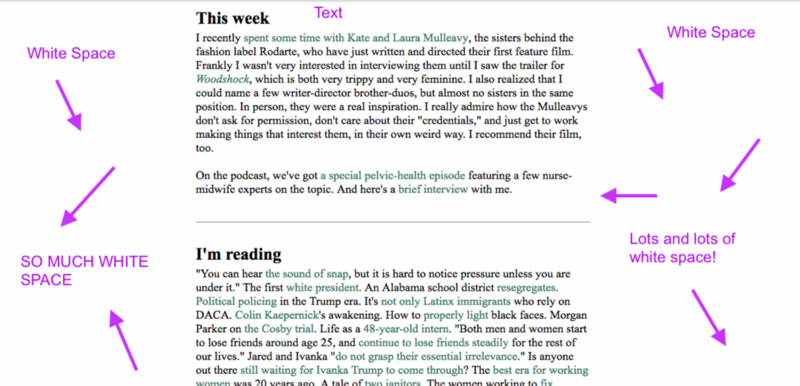
Even Ann’s “giant block of text” is housed in a sea of whitespace so it’s not competing with colors and fonts and buttons and other noise.
tg-email-10
Same with Austin Kleon’s:

tg-email-11
The banners are visually appealing too, without feeling like you’re getting a Well+Good digest (aka: digital newspaper…that’s a whole ‘nother post).

tg-email-12
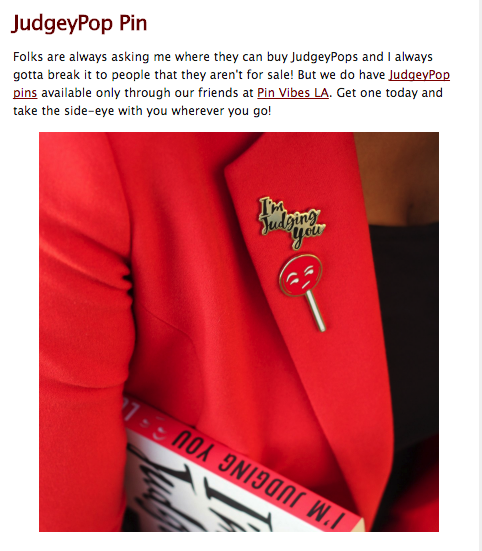
Luvvie is also clean, despite having a lot more content than the other examples. Her newsletter doesn’t read like a digital newspaper bombarding you with stories. Her formatting is simple and (dare I say it) dated, but her audience doesn’t seem to care.
These newsletters are consistent in that they showcase one content block at a time, making it easier on the reader to skim and get downloaded on the content they’re looking forward too (instead of being visually assaulted). Look how clean this is:

tg-email-13

This isn’t rocket science.

…And yet the majority of marketing departments get it wrong. Newsletters are not a convenient tool for getting your company-specific information to your customers. They are a vehicle for communicating with your audience — just like all email is.
Listen, I’m as shocked as anyone that one-way communication “blasts” are working, but they are. And after closely examining why, it turns out these newsletters aren’t *totally* violating email marketing laws since they’re upholding the important ones:
  • Don’t “throw” offers at people (don’t throw anything at people).
  • Act like a person. Don’t be weird (like overly chipper or too buttoned up).
  • Write to your readers, not your colleagues, your boss, or your phantom Gary Vaynerchuck.
  • Be divisive. Not the in Trump-V-Hilz way, but in the “this is for people like me” or “this is not for people like me” way. It should be clear immediately who your newsletter is for and who it’s not for.
  • Keep doing what works, stop doing what doesn’t.
If we have any chance at clearing the internet (and certainly my inbox) of clutter, than we need to get this right. It’s not rocket science, but it does require some hard work and legitimate caring about your audience (I mean it. None of that pretending crap. Your readers always know).


Sunday, 29 October 2017

Affiliate Marketing for Beginners: How to Make Your First Affiliate Marketing Sale in 7 Steps


 The lure of affiliate marketing is undeniable; who can resist passive income?
But to make that passive income happen, you have got to put in some work first. 
To succeed in affiliate marketing, there are a number of crucial steps you must take before you earn that first affiliate profits. And these steps are, well … not passive.
The good news is that if you’re determined to make this work and are willing to put in the time and effort, you’re already well on your way to affiliate marketing success.
All the work you put in is to help you make your first affiliate marketing sale. There is nothing like a first sale to motivate you and make you keep at it. 
So, what do you need to do to get started?

7 Steps to Earning Your First Affiliate Commission

We've broken down the process into seven steps for affiliate marketing beginners. Following this guide will set you on the right course and have you earning your first commission in no time.

1. Choose a Niche

Before you even begin building your first site, you’ll need to decide which niche you’re going to target.
Obviously, if you don't know what your site is about or who you're going to target with it, you can't really build a site around it...can you? 
If you’ve already figured this one out, way to go! This is undoubtedly one of the most difficult and overwhelming steps.
If you don't quite know what your niche is yet, here's some advice that you might find useful. 
Some key questions to ask yourself when determining your niche are:
  • What topics am I already passionate about?
It's much easier to work on something if you're passionate about it. Plus, when you have a passion, you're usually quite knowledgeable about it too, so that definitely helps. For example if you have a passion about about makeup, your niche of choice might be makeup related, too. 
  • Is there money in this niche?
While following your passion is definitely the recommended option, sometimes the possibility of making money in a profitable niche trumps passion. So, you might not necessarily know much about your niche, but if it's likely to make you money, you can always learn more about it, right? 
For example, KitchenFaucetDivas is clearly a site that was built for profit, not passion. Unless of course there is someone out there with a serious passion for kitchen faucets! ;-) 
kitchen faucet divas affiliate site
  • What topic could I see myself easily writing 25, 50, or 100 blog posts about?
The topic you choose must have enough depth that you can create a lot of content for it. This is important for building an authoritative site, for search engine optimization, and most importantly, for the end user. If you don't have enough content about a topic, you're not going to be taken very seriously as an authority on the topic and it's unlikely you can convince someone to make a purchase from you. 
MoneySavingExpert is a great example of a site with a topic for which you would have a never ending supply of content ideas. 
money saving expert
  • Is there room in this niche for another affiliate marketer?
There are several profitable niches that are also very popular among affiliate markets (e.g., weight loss). Before jumping on board with a hugely popular niche, make sure there's enough room for you. That is — will you be able to make money and compete with already established marketers? If not, keep looking. 
  • Is there enough interest in/demand for products in this niche?
The niche you choose might draw enough interest from your audience when it comes to reading and acquiring knowledge, but are they willing to buy relevant products too? Without consumer interest in products, your niche isn't going to make you much money. 
  • Are there affiliate programs available in this niche?
This is obviously a crucial factor to consider. You might come up with an idea for a niche you know a lot about, but are there affiliate programs for the niche? No affiliate program = no sales. Time to look for a different niche. 

Additional Resources for Choosing a Niche

Want to learn more about choosing a profitable niche? Here are some excellent resources we recommend for further reading:

2. Research Affiliate Programs

Once you've decided on a niche, it’s time to find out what’s out there in terms of programs and products to promote. You've probably already done a bit of research for this while researching your niche — now you need to dig deeper. 
Choosing an affiliate program will take some work, but don’t be afraid to invest a significant amount of time into it because this is, of course, where your income will come from. Choosing the right program will make it well worth your while!
clickbank
When choosing an affiliate program, keep these key points in mind:
  • What type of merchants use the program/ affiliate network? 
You want to make sure other similar sellers are also using the network, as this can help you gauge your likelihood of success with the particular program.
  • How much commission are you likely to make from the products?
Make sure you sign up for programs that are profitable and generate a sufficient return in on investment. Some tips:
  • If using ClickBank, products should have over a 50% commission (preferably 60%), and have a high gravity rating (meaning they’re in demand).
  • For CPA (cost-per-action) programs, commissions should be over $1, and products shouldn't be overly restrictive in how you can promote them.
  • For physical products, look for commissions over $40.
     
  • Do you want to be associated with the products and services?
The products and services you will be promoting to your audience must be relevant and good quality. Make sure you believe in them and know everything about them, because this will be crucial to you delivering the sales pitch to your audience. You need to build trust with your audience so make sure the products and services you choose to promote are trustworthy enough. 
Ads like the one below often lead to sketchy products — do you want to be associated with a product that promises results that may or may not be true?
1 weird trick
  • What kind of support does the program provide?
Be sure to check what kind of customer support you can expect from your affiliate program once you have signed up. Do your research online and if possible, speak to other sellers using the program to get their thoughts. Can you speak to someone via phone or Skype or do you have to wait 72 hours for email responses? Be clear on this because trust me, you will need support at one point or another. 

Additional Resources to Find the Right Affiliate Program

We've given you a few quick tips to help you choose an affiliate program that is right for you. For more information, be sure to check out the following: 

3. Build a Site

Steps 1 and 2 are all about research  and figuring out what's possible and profitable. Now, it's time to start putting your research into action. 
Assuming you don’t already have a website built, this will be the next step. Fortunately, building a site isn’t as complicated or labor-intensive as it was in the past.
wordpress
If you're a newbie to building sites, the easiest way to set up a site is by using WordPress. The WordPress CMS is very easy to use and while coding skills can come in handy, for the most part you will not require any tech knowledge to set up your site. 
You need to follow a few steps to have your site up and running:
  • Buy a domain.
Your domain is the address for your website (e.g., www.affilorama.com) so this is the first thing you will need to do when setting up your site. Considering there are millions of websites on the internet, it's possible that the domain name you want may already be taken by someone else. So make sure you have several options in mind. Be sure to read our advice on how to choose a good domain name
There are several places you can buy a domain, including our very own Affilorama Domain service. Other well known options are: GoDaddy and NameCheap
  • Purchase and set up hosting. 
If your domain is your address, hosting is like the actual house within which your site will live. It's your own little slice of the internet — the place where all your website files live. Hosting is very affordable these days, so don't unnecessarily scrimp on costs. Go with a reputable, reliable provider because your affiliate marketing business depends on it. 
godaddy hosting
For more details on how to choose a reliable host, make sure to read our free lesson on What to Look for in a Hosting Provider. Some affordable and reliable hosting providers we recommend are GoDaddyHostGator and BlueHost
If you purchase your domain and hosting from different companies, you will need to link the two together. Don't panic, it's a simple process. Check out our lesson: Linking your Domain with Your Hosting.
  • Install WordPress.
Once your hosting is set up, you need to install a content management system (CMS) for your site. We recommend WordPress because it is easy to use and a beginner (like you!) can quite quickly figure out how it works. Most good hosting providers will have a one-click install option for WordPress, which means it will only take you a couple of minutes and you will have WordPress installed on your site. 
  • Install your theme.
A WordPress theme provides all the styling of a site that you (and your audience) see on the front end. There are thousands of themes available, so choosing one might seem daunting at start. Our advice: go with something simple and easy to customize. You can always change it later. 
The AffiloTheme is a great option. Completely customizable, and built specifically for affiliate marketers, you can use this WordPress theme to bypass much of the initial learning curve other affiliate marketers will experience. You can also search for themes on a site like Theme Forest
  • Create content.
Finally, once your site is ready, it's time to create content for it. The content you create must be relevant to your niche but also interesting and engaging enough to keep your audience coming back. You should also ensure the site content is search engine-friendly. More details about content creation in Step 4. 

Additional Resources for Building Your Site

For more information on building your first affiliate marketing website, we recommend the following resources:

4. Produce Excellent Content

Now that your site is set up and you’ve joined an affiliate program, you’re ready to begin perhaps the most time-consuming (but potentially rewarding) part of the affiliate business: Producing content.
This is where the overused but truer-than-ever phrase “content is king” comes into play.
Your goal for your site will be to establish it as an authority site in your niche, and the main way to do this is to consistently produce unique, high-quality content.
This could consist of:
  • Product reviews.
Your affiliate site model could be based off writing reviews about different products or services. This is a common model and if done well, can prove very useful in generating affiliate income.
wirecutter
For example, The Wire Cutter is focused on writing reviews of several different kinds of products and helping their readers make the best decision about the product they want to buy. After reading a review on their site, if the user clicks through to the product/service using the affiliate link, The Wire Cutter will earn a commission from. 
  • Blog posts that address common problems, questions or issues relevant to your target market.
Creating blog content is a very useful and effective way of consistently building content on a site. When creating blog posts, it's a good idea to do some keyword research to figure out what it is that your audience is interested in and searching for online. Also, be sure to research competitors, forums and social media to narrow down on topics for your blog. 
For example, Security Guard Training HQ has a very extensive blog on a variety of topics relevant for anyone interested in security guard training, jobs and more. 
securtiy guard training hq
  • Evergreen content.
If you are building a site that has the potential for information that will never age and remain useful for your audience, you have the opportunity to create what is known as evergreen content. It's important to carry out extensive keyword research before planning any evergreen content for a site like this, as your site could hugely benefit from the proper usage of keywords within such content. 
For example, the content on Super Weddings is useful whether you're organizing a wedding today or next year. All the content on the site is created accordingly. To make things easier for the audience, it is separated into categories to make it very convenient for the reader to find what they're looking for. This, of course, is also very good for SEO. 
super weddings
  • Informational products.
Giving away a free informational product such as an e-book, an email series or a mini course is a popular tactic many affiliate marketers use. Usually, your readers will have to provide their email addresses to receive the product from you. You can then use this to sell to them via email marketing. Additionally, an informational product can generate interest in the actual product you're trying to sell. If your product is popular enough and brings enough traffic to your site, you could also monetize the traffic in other ways, such as AdSense.
A good example is DatingMetrics, where you're tempted with a Free Texting Crash Course in exchange for your email. The real marketing will begin once the user has downloaded this course. 
texting course
The type of content you create for your website will largely depend on your niche, as certain types of content perform better in some niches than others.
Remember: Purchasing generic content is NOT an effective method to build your site. While it may be tempting to populate your site this way, in the long run it won’t help you to position yourself as an expert in your niche (and ultimately means less traffic and fewer sales).

Additional Resources for Creating Your Content

5. Build an Audience

Building an audience for your site will, in some ways, follow naturally once you start producing excellent content. An interested audience will not only bring you consistent traffic but also result in consistent sales for you. 
So how do you start building an audience for a completely new site? Here are some ideas: 
  • Promote your content via social media.
The easiest and most common way to start building an audience for a website is via social media. Depending on your niche and industry, you can choose from FacebookTwitterInstagramPinterestGoogle+ and several other niche and location-specific networks. Building up an engaged and interested following on social media is a great opportunity to build relationships and once you have their trust, promote your products and services to them. 
I'll use MoneySavingExpert.com as an example again. The site has over 66,000 likes on its Facebook page and it connects with the audience by sharing links to content but also asking money-saving/budgeting related questions. The highly engaged readers then visit the website, where they read content and no doubt make purchases.
MSE
  • Guest post on high-traffic blogs.
While your site is still new, it's a good idea to start capitalizing on someone else's audience. Continue focusing on building your own content, but also considering writing content for a few big, high-traffic blogs that are relevant for your niche. By writing content for a bigger site, you are able to get in front of another audience and showcase your expertise on a particular topic. This will eventually lead to more traffic to your site, as well. 
  • Build an email list.
Let no one tell you that email marketing is dead. An email list is crucial for every affiliate marketer. You can start building up your email list with a lead magnet (like the information products mentioned previously) or even just by encouraging your audience to sign up for your updates. You can then push your content to this audience via email and also direct them to your affiliate offers. Don't be sleazy about the sales, but if you build up enough trust with your email audience; when the time comes, they will not mind purchasing a product from you. 
  • Use basic SEO techniques to increase search engine traffic to your site.
Organic search remains an important source of traffic for any website, so it's important that you optimize your website for search engines as well. When creating your content, you must always do so keeping the reader in mind first, but don't forget to follow a few basic SEO principles as well.
Learn SEO yourself or hire a good SEO marketer to help you maximize on-page and off-page SEO opportunities for your site. If your site starts to appear in search results for terms relevant to your niche, it will be a huge boost towards building your audience (and your sales)!
  • Invest in paid advertising.
Many affiliate marketers use paid advertising to generate additional traffic to their site and drive more sales. Paid advertising on social media is often a good place to start, as these networks tend to be more affordable.You may also want to consider taking out inexpensive banner ads on small niche sites. Depending on your niche, Google AdWords could also be a good option to drive some paid traffic to your site.

Additional Resources for Building Your Audience

If you're interested in learning more about how to build an audience and start generating traffic for your site, check out the following resources:

6. Promote Affiliate Offers

Finally, the part we’ve all been waiting for!
This, my friends, is where things really kick into high gear. Many fly-by-night affiliates will jump right to this step and bypass steps 1–5 completely. And this is what will set you apart.
Once you’ve shown that you can offer something of value in your niche, it’s time to continue adding value by promoting products that will be useful and helpful for your audience.
You can promote your offers in a number of ways. It will depend on the type of site you've built and also what you're selling. Some ideas include:
  • Product reviews.
Write honest, real reviews about products. Build up trust with your audience, and remember that they rely on your opinion. Don't just point out all the positives of a product and gloss over the negatives. An honest opinion will be valued. Add compelling images and make mention of useful features, specifications and other details. 
Your product review can then link to the page (with your affiliate ID attached), where your audience can make a purchase if they're interested. If do, hooray! You've made your first sale. 
  • Banner ads.
You can put up banners on your site, to promote your affiliate offers. Most affiliate programs will usually provide their own creatives when you sign up for their offers. All you have to do is insert the banner on a highly trafficked page (your affiliate tracking is usually embedded within the code). Banner ads in the right locations can do a great job of driving sales.  
Below are some examples of banners that Templatic provides to its affiliates. 
affiliate banners
  • In-text content links.
This is a very common way to promote offers. For example, you will often see a blog post with links to certain products or services. If the reader clicks through and makes a purchase, the blog owner will make a commission. These in-text links blend in with other content on your site and are a great way of promoting an offer within your content, without being over-the-top salesy with banners. 
  • Email promotions.
If you have built up an email list, you could also promote your affiliate offers via email promotions. Just make sure you build up a relationship with your audience first instead of going for the hard sell straightaway. The emails you send out must contain your affiliate links to products so when your audience click through. the sale is attributed to you. 
  • Discounts and giveaways. 
Many affiliate programs will often run promotions with good discounts or giveaways that might be attractive to your audience. For example, if you're an Amazon Associate and the site have a big Holiday Sale, it would be the perfect opportunity for you to promote discounts to your website visitors. This is a great way to promote your offers while also providing good value to your audience. 
amazon associates
When promoting affiliate offers, just make sure you are fully aware of all the terms and conditions attached to your affiliate program. Some programs can be strict about how they allow you to promote their products. For example, some may limit you to banner ads and links only, while others will allow you to use paid advertising, but won't allow email marketing. 
Also, make sure you have a disclaimer on your website that advises your audience that you may have links that promote affiliate offers. This is necessary for several affiliate programs and also a basic courtesy to your website visitors. In the U.S., the FTC mandates disclosure for affiliate marketers (and anyone issuing endorsements), as well.   

Additional Resources for Promoting Your Offers

7. Rinse, Lather, and Repeat

Now that you're done with Steps 1 - 6, Step 7 is simply to keep doing what you're doing. Yes, seriously!
Your ongoing work as an affiliate marketer will be to repeat steps 4 - 6 on a continual basis. Building a site up to a point where it can make you consistent income takes a bit of work and you must be willing to constantly create, promote, market, innovate and of course, sell. 

Review of Key Points

It can feel overwhelming to do all the necessary work involved in setting up your site and building your reputation. But trust me, once you’ve made that first sale, all the hard work will be worth it!
To sum it all up, making your first affiliate commission requires a bit of work but if you break it all down and follow it step by step, it won't seem so overwhelming at all. Here's a quick recap of what you need to do:
  1. Choose your niche.
  2. Research different affiliate programs and products.
  3. Build a site.
  4. Produce excellent content.
  5. Build an audience.
  6. Promote your affiliate product(s).
  7. Repeat steps #4–7 on a continual basis!

As you can see, there is a tried-and-true strategy when it comes to affiliate marketing for beginners. Put in the work, and you’ll soon be reaping the rewards of your first sale. 
Do you feel overwhelmed about making that first affiliate sale? What’s holding you back from getting started? Let us know in the comments below and we'll be happy to help.