Fake news is a serious social media problem that could affect the relationship you share with your social media audience. How?
- People are starting to question the information that they receive via social media.
- People have always been wary about the information shared by brands on social media. In fact, people consider information shared by people like themselves more credible than the information shared by brands (Edelman 2018).
So, how can you as a social media manager or small business owner ensure that your business survives the fake news phase and its repercussions? Here are 15 social media tools that can help you strengthen your relationship with social media fans.
1. DrumUp for fresh content & employee advocacy
Instead of sharing your own content, you could share content useful to your social media audience – content from sources that are universally trusted. That’s a great way to show that you’re neutral and trustworthy.
You could also have your brand’s content shared by employees, through whom you can effectively impact your target audience on social media.
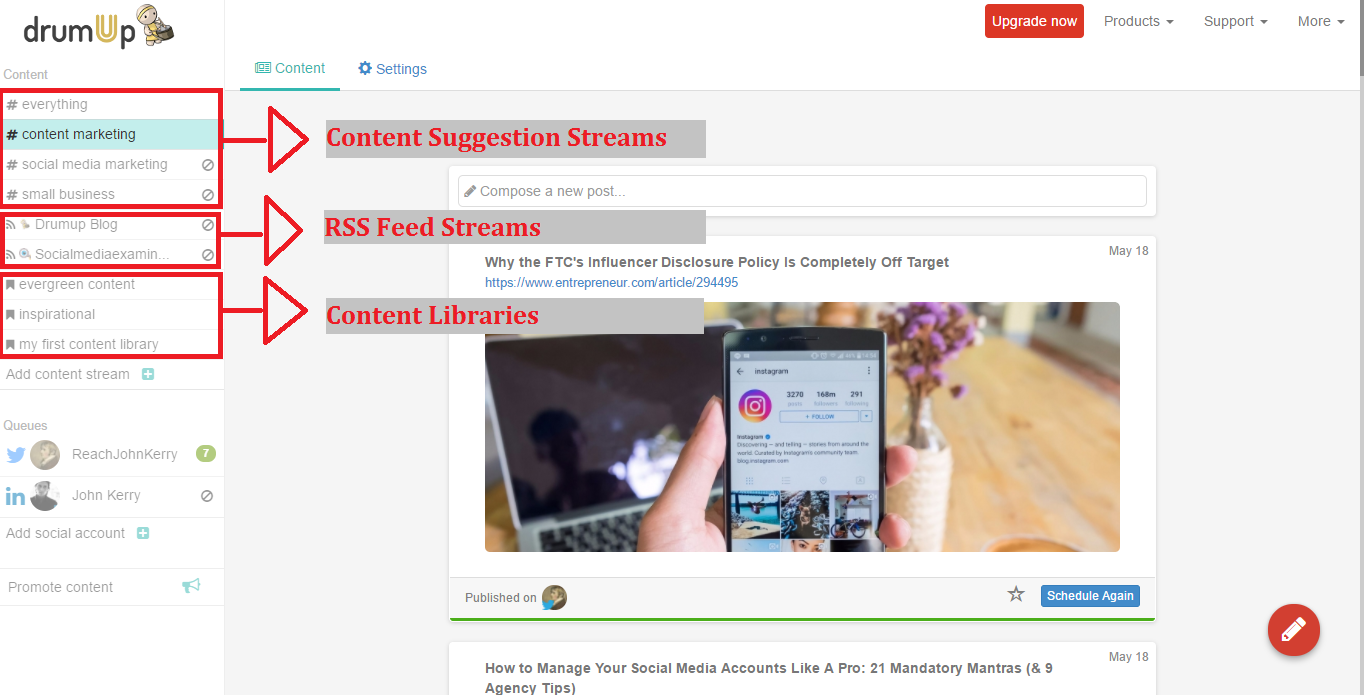
DrumUp is a social media management tool that fulfils both these functions. You can use the tool to curate fresh content (using keyword streams and/or RSS feeds) and schedule them on social media accounts. You can also use the tool’s employee advocacy platform to enable employees to share your content effortlessly.
2. Canva for visual communication
Visuals are great way to drive a message home because they get processed by the human mind quicker than text does. Visuals are also offer you the opportunity to build trust with your social media audience. For instance, visual testimonials (such as a customer’s raving video review) can improve your credibility.
You can also use visuals such as graphs and screenshots to make your communication more transparent and effective by showing customers how your products and pricing work.
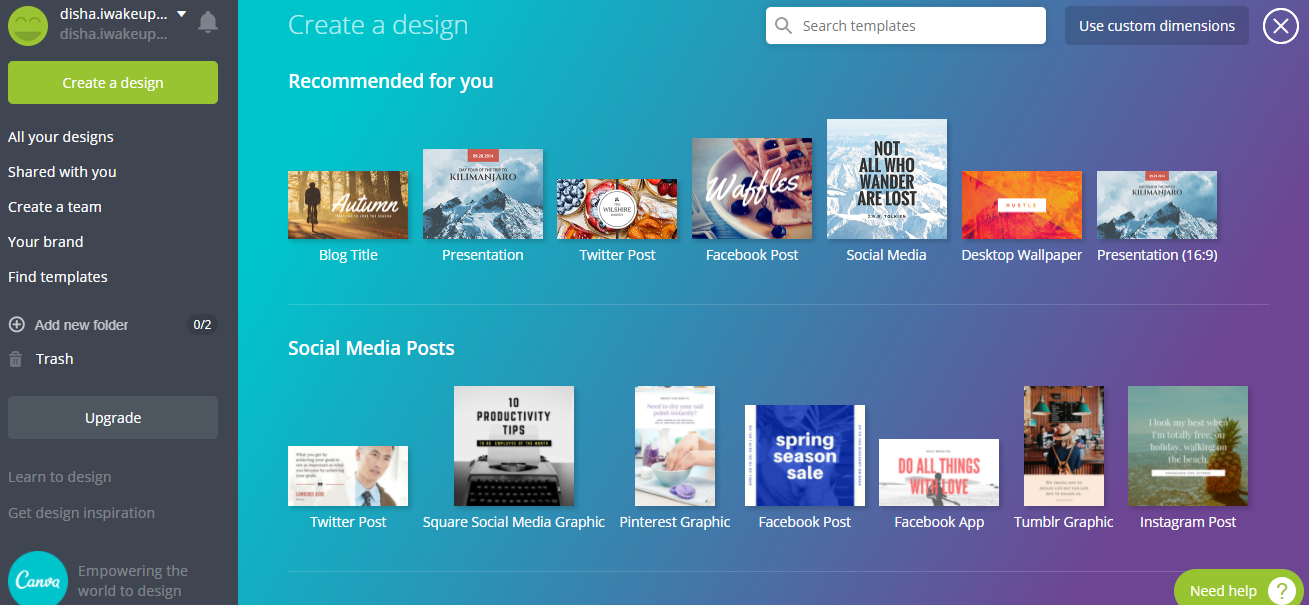
Canva is a graphic design tool that you can use to design most of the visuals that you can use on social media. The tool stocks canvases and templates optimized for most use cases on social media. The tool’s drag and drop feature and its flexibility make it a great choice for graphic design.
3. Brand24 for real & personal conversations
Successful social media managers see social media platforms as channels not only for publishing but also for conversations. You can use social media channels to connect with current and future customers, potential partners and co-marketers, influencers and brand ambassadors. You can also use social media channels to enable employee conversations and employee advocacy.
For social media to count, you have to show customers that you care. And you can’t do that at scale. You have to focus on one-on-one conversations.
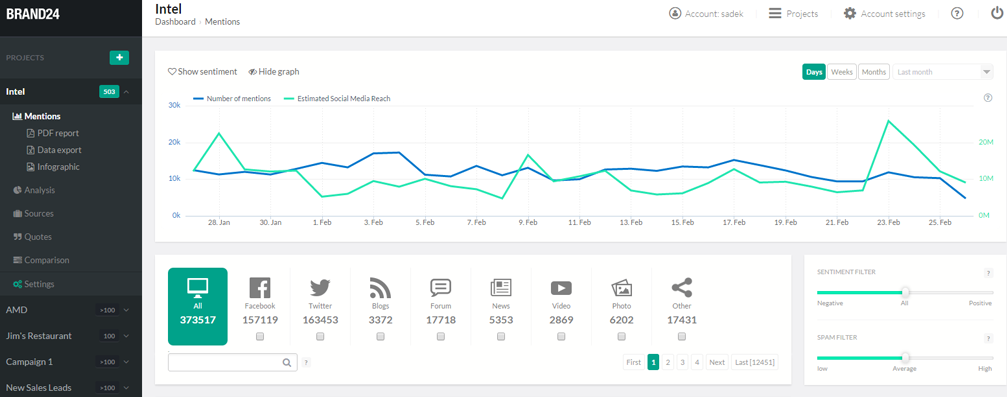
Brand24 is a social media monitoring tool that you can use to identify mentions, important keywords – any indicator of important conversations. The tool’s alerts will give you opportunity to create real and personal conversations.
4. FAQFox for customer-centric content research
It’s not enough to just be in contact with current customers. You should also be in touch with prospect customers and know their wants, concerns and challenges. That involves assessing the temperament of different target groups of people. And doing this can be tricky.
The objective of understanding prospect customers is to be able to connect with them by creating/sharing content that’s most relevant to them.
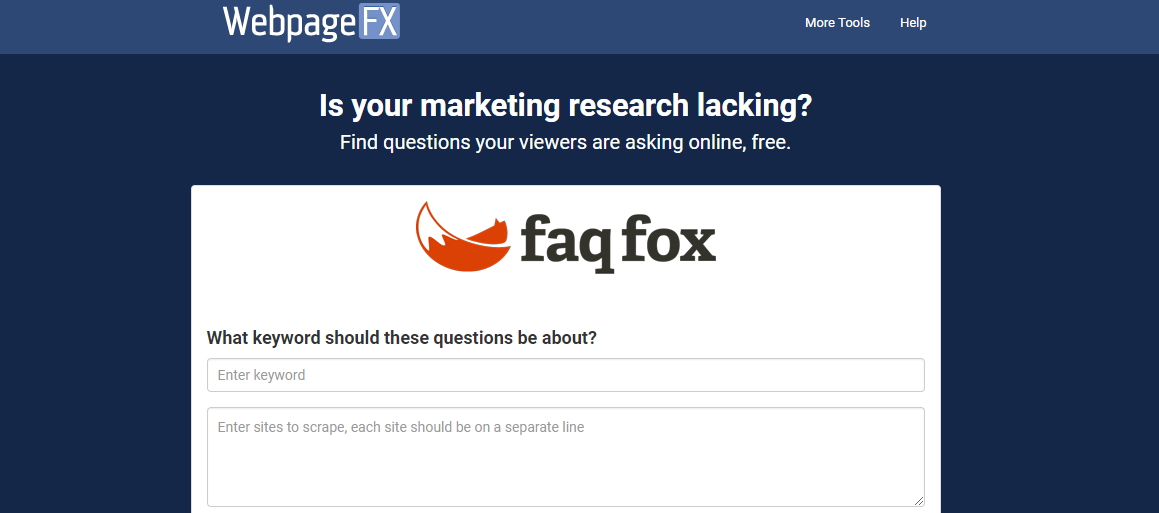
FAQFox is an unorthodox content research tool which you can use to find questions that certain groups of people are asking. You can do this by running keyword searches across commonly used discussion forums such as Quora and those relevant to your niche.
5. FollowerWonk for influencer and ambassador hunting
Twitter is an excellent social media platform for influencer and ambassador outreach because it’s open and allows you to communicate with anyone from your friend to the POTUS.
When searching for influencers/ambassadors on Twitter, you need to analyze profiles to see who makes the best fit. This is easier done with the assistance of a tool than done manually.
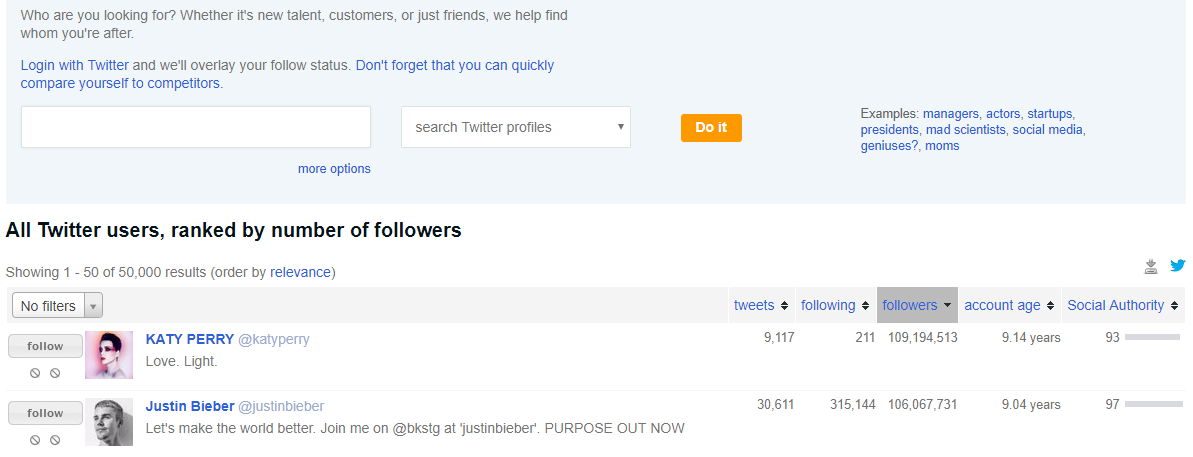
FollowerWonk is a Twitter analytics tool that you can use to analyze profiles and filter them by matching keywords to Twitter bios. Using the tool, you can also identify influencers within your social circles and reach out to them with relevant content.
6. GIPHY for GIF based communication
GIFs are videos on caffeine. They are easy to consume as they take barely any space when compared with full-fledged videos and are much shorter in length. They are also more appealing, effective and affordable than full-fledged videos.
While curating videos is hard (videos are usually covered by copyrights because they’re expensive), curating GIFs is easy and inexpensive.
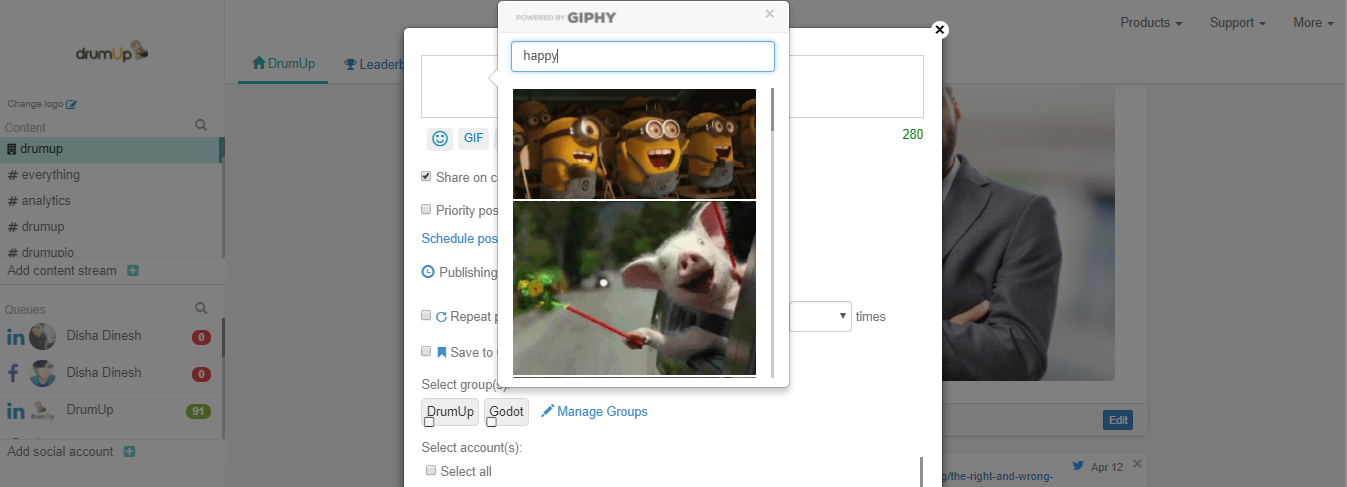
GIPHY is a copyright free extensive source of GIFs that you can use to spice-up your conversations on social media. The repository also has an API that we’ve used to enable GIF curation within DrumUp.
7. RelayThat for branded image creation
Branding is an important part of building trust on social media. The consistency that your messaging has affects how social media users see and interact with your brands. However, it’s difficult to keep track of colors and fonts when you are creating content on a large scale, everyday.
Many brands choose their colors, fonts and image creation styles in advance and stick to them perpetually, without deviating from them on any channel.
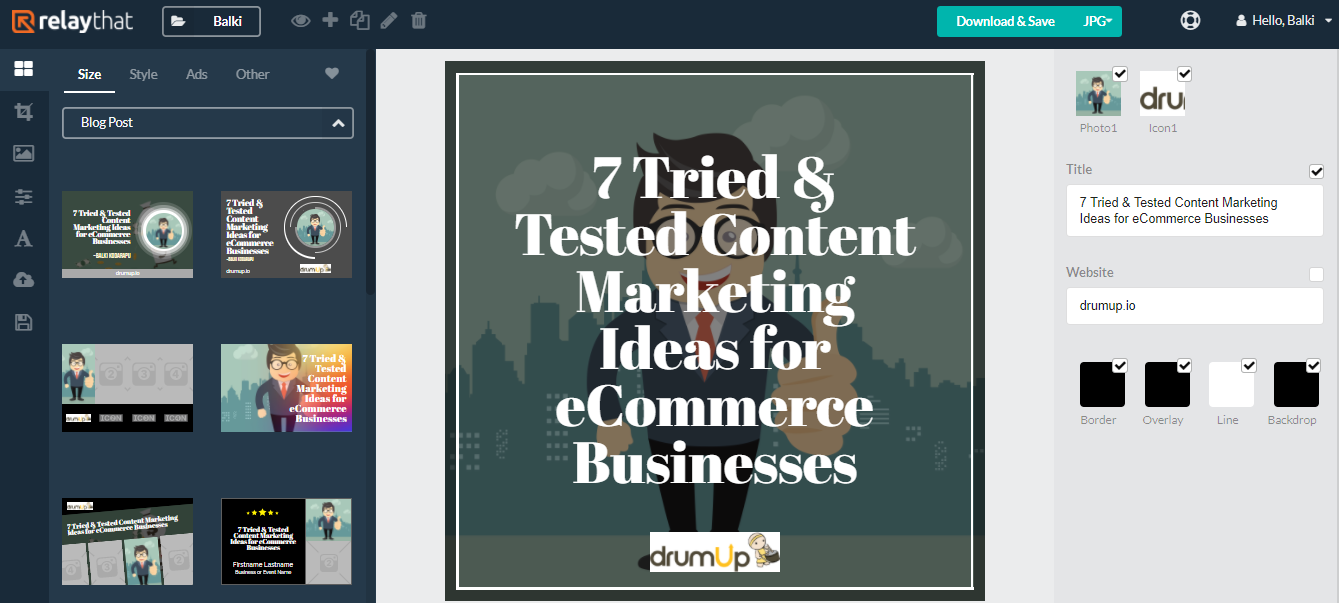
RelayThat is a graphic design tool that allows you to choose and maintain brand parameters that you can easily add to all of your social media images. RelayThat also allows you to add your logo and original images to standard templates effortlessly.
8. Rocketium for video content creation
Video is an indispensable part of social media marketing. An overwhelmingly large segment of social media users are beginning to consume video on a daily basis. Video has become everyone’s preferred format of content for consumption.
There’s a lot that you can do with video for social media, from creating How-to videos to conducting expert interviews and doing live QnAs.
Rocketium is a video builder that you can use to quickly put together videos for social media use. The tool has video templates that you can use to put together professional looking social media videos to make an impact on your target audience.
9. Pocket for niche content curation
Content curation is a smart way to build a relationship with your audience without spending too much on content creation. By curating content, you can the best content in the industry with your target users without to create it yourself on a daily basis.
However, it can be really hard curating content manually. Imagine having to visit multiple websites to find the content that you want to share, every single day.
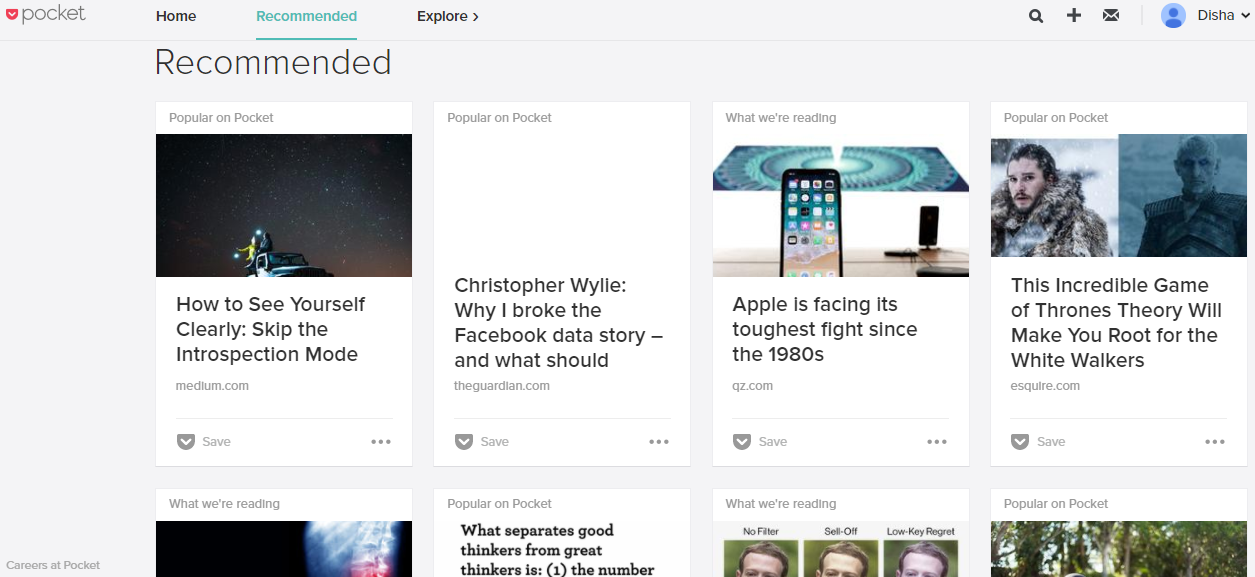
Pocket is a content collection app that helps curate content for you, based on your preferences. The tool is smart and adapts to the posts you choose to read, eventually omitting all the content that you wouldn’t want to read.
10. TweetChat for Twitter networking & conversations
Yet another way to network with the right people is through Twitter chats. The people who participate in Twitter chats are usually very interested in specific niches and in meeting the right people.
Typically the format of Twitter chats allow you to exchange knowledge in areas within an industry and find others who are also doing the same.
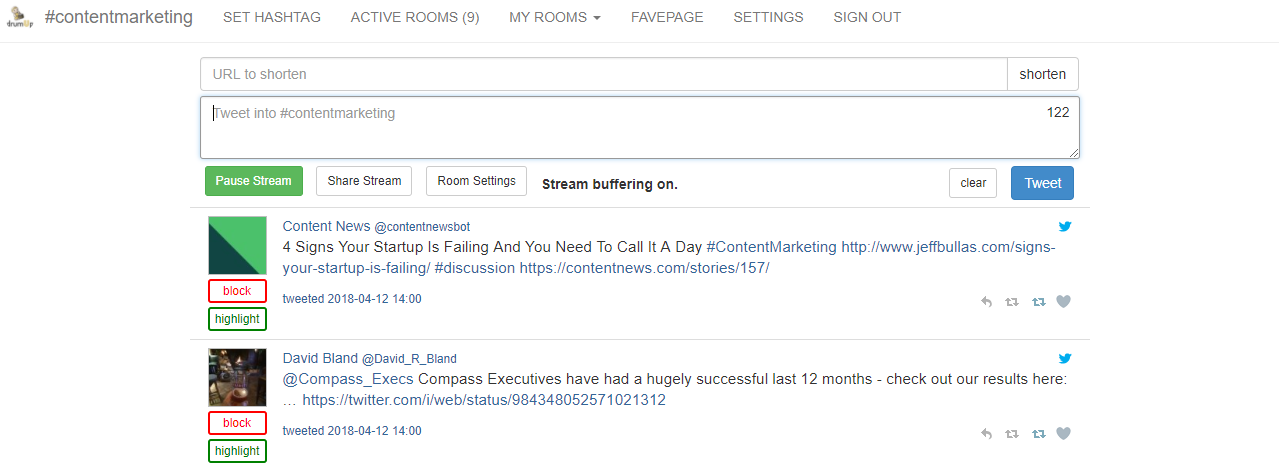
TweetChat is a Twitter chat tool that you can use to follow hashtag specific conversations and participate in them real-time, which can otherwise be a nightmare. Within the tool, you can experience Twitter chats at your pace and never miss a tweet.
11. Socedo for social media lead generation
While social media conversations and content publishing are great for audience engagement, your social media efforts only affect your business when conversations turn into queries and eventually sales.
There’s plenty of opportunities on social media for you to turn conversations into business, but these opportunities usually take time to manifest.
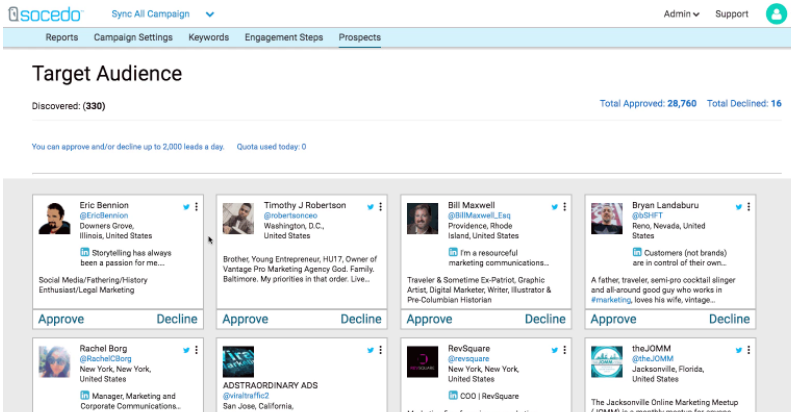
Socedo is a social media lead generation tool which automatically assesses social media profiles and identifies the people who are most likely to be interested in your business and the products/services that you have to offer.
12. PitchBox for blogger outreach and off-social PR
Blogs are still relevant in many industries. If your company’s referrals are majorly driven through blogs and bloggers, building strategic relationships with them can be beneficial. And you don’t have to focus only on your niche. General blogs whose audience matches your target audience also count.
When building relationships with bloggers, it counts to make it as organic as possible. Identify individuals you admire and want to work with and let them know the same.
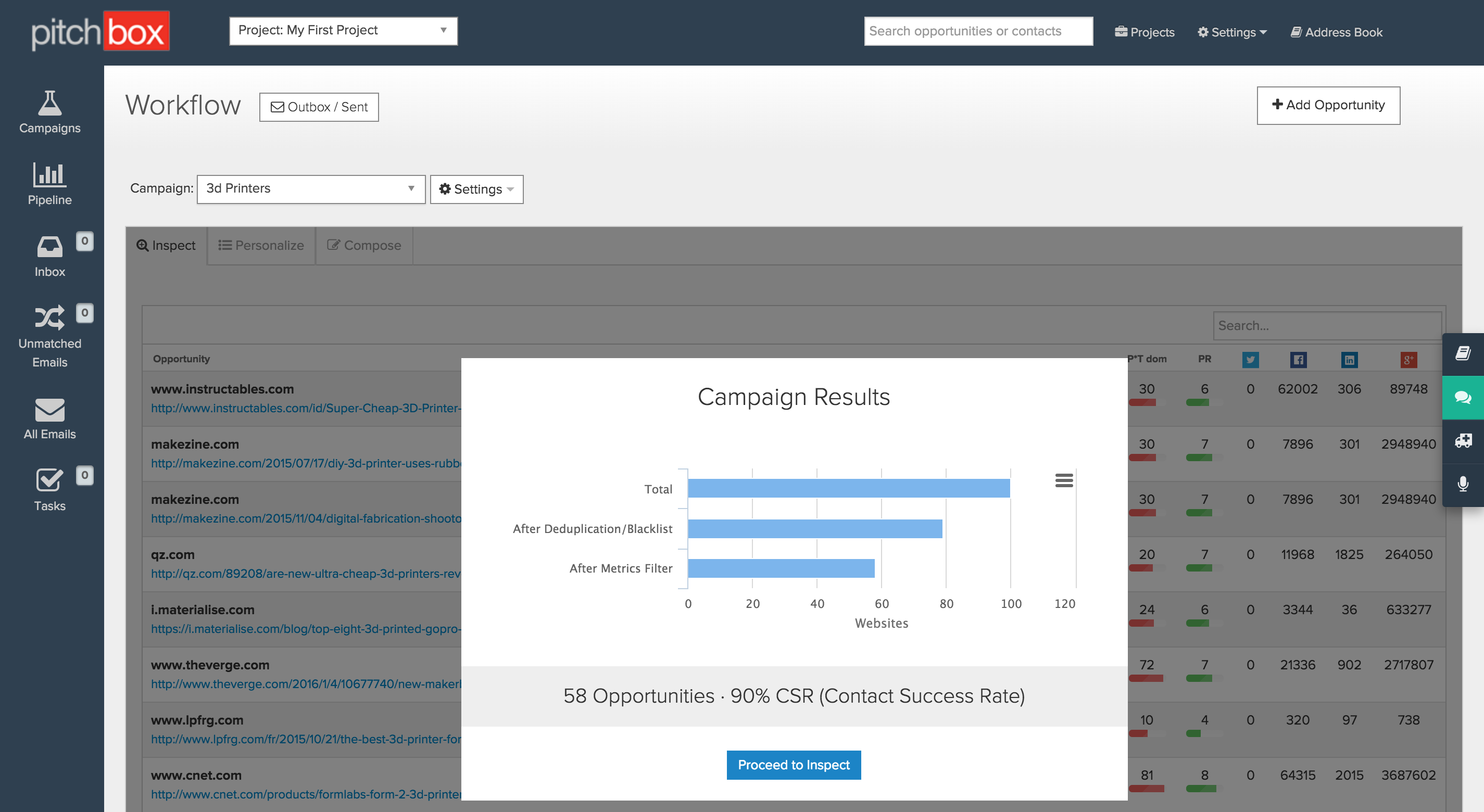
PitchBox is an influencer marketing tool that can be used to search for influencers and bloggers in your niche using keywords that you provide. The tool’s extensive search leverages integrations with major SEO tools such as Moz, SEMRush and Majestic.
13. BuzzSumo for targeted content promotion
One of the secrets of being successful on social media is building a network of loyal followers who engage with your content. However, building that network is a slow and time-consuming process.
The network of followers you build need not be restricted to just influencers. You can also work with micro-influencers or employees, customers and brand ambassadors.
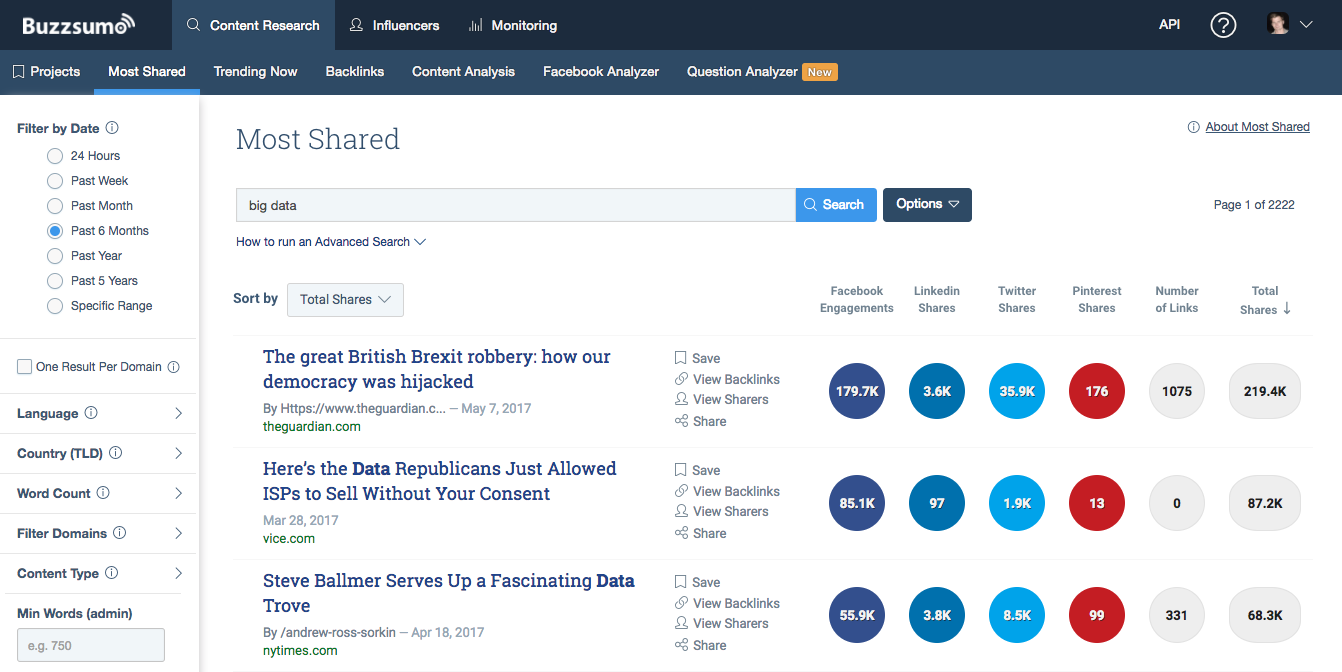
BuzzSumo is a content research tool that you can use to identify people and blogs belonging to a certain niche, so you can reach out to the right people. Using the tool, you can breakdown the source of any article on the internet and access backlink and share data.
14. Twitter lists and Google Drive/Email for relationship building
Twitter lists are great for relationship building because you can create a context for every relationship that you build by adding people to certain lists. However, even Twitter lists can get messy once you have added too many people to too many lists. To ensure that the lists you create make sense, create small groups of people and limit your lists to only as many as you can handle.
One way to ensure that the Twitter lists you create have value, is by following up with Twitter list members away from the social media platform.
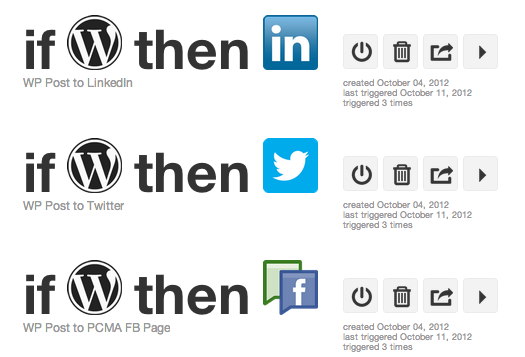
IFTTT is a cross-action app that has a few interesting recipes that you can consider using. One of them allows to store mentions in Drive or on email, after which you can personally make contact with the people who mention you.
15. SumoMe for social media referral based list building
Social media referrals are probably one of the top three or four sources of traffic to your website. So, what do you do with the traffic that comes to your website from social media? If you’re not converting it at the moment, you should probably consider focusing on that.
There are tons of ways to convert the traffic that lands on your website. Most of it involves connecting the right content on social media to the right landing pages on your website.
SumoMe is a website traffic analytics tool and traffic conversion tool that you can use to optimize website traffic and conversion. The tool even has customizable email signup forms that you can instal on your website to convert incoming referrals.
Wrap
With social media platforms undergoing major changes to battle fake news and survive its repercussions, it’s critical to invest in social media tools and strategies that are likely to survive the fallout. This list includes a collection of some of the smartest investments that you can make to ensure that your brand isn’t affected by drastic algorithm changes. Over to you.