People love their blackberry, iphone, android and tablet. With that,
the use of mobile email is increasing. Using smartphones to connect
with the trusted inbox.
Statistics say that 15 to 65% of email is opened on a Mobile device.
The time has come to harness the power of mobile + email and create a
solid mobile email strategy. And that encompasses more than just email….
Mobile email strategy is more than email
A Mobile Email Strategy covers how a brand will make use of the
smartphone in the pocket of their (potential) customers. A smartphone or
tablet allows people to go on the web, search, receive social status
updates, read email and use all kinds of apps. The smartphone is a
Digital Swiss Army Knife, a desktop-nano on the go.
The mobile phone changes the way people will interact with brands, in
stores, with friends and family, their work and lastly with your email
program. The challenge of a good Mobile Email strategy is to recognise
these changes and utilize the new possibilities to reach your (email)
marketing and business goals.
Harness the power of redesigned processes
 The combination of mobile and email is very powerful. It allows companies to for jump through time, and over printing and information barriers. All this by changing the design of your business processes.
No more waiting at a service desk. A service employee can easily send
you an email when he fixed your problem and send you a notification per
email while you are still in the shop!
Printed receipts aren’t necessary; just send them to my inbox. I can
easily show the receipt on my mobile if they ask for it. Online
check-in, your boarding pass is mailed to your mobile inbox. That isn’t
future talk, it is already happening right now. The combination of email
and smartphones offers many possibilities, so think beyond the obvious
and included them in your mobile email strategy.
The combination of mobile and email is very powerful. It allows companies to for jump through time, and over printing and information barriers. All this by changing the design of your business processes.
No more waiting at a service desk. A service employee can easily send
you an email when he fixed your problem and send you a notification per
email while you are still in the shop!
Printed receipts aren’t necessary; just send them to my inbox. I can
easily show the receipt on my mobile if they ask for it. Online
check-in, your boarding pass is mailed to your mobile inbox. That isn’t
future talk, it is already happening right now. The combination of email
and smartphones offers many possibilities, so think beyond the obvious
and included them in your mobile email strategy.
Mobile email list growth
How can we realize mobile email list growth
and stimulate sign-ups using the mobile platform? You see that this is
not about your email at all, but about the contact moments that we have
with smartphone users. We will need to encourage the people to grab
that smartphone and opt-in for your mailing list. Or sign up when they
are already using the mobile phone, for instance when they are looking
up an address or comparing prices.
Localization, geographical data
A smartphone has a great feature; it is small. People take it with
them everywhere they go. The traditional shop is now webenabled. With
smartphones serving as portals to go online. And with the use of
geographical data, an event driven email or an app can give you offers
based on your current location. Or the location you have been. Imagine
the data that can be leveraged from that. Knowing which store your
individual customers like the most can boost results of your email
marketing efforts greatly. Transforming dynamic or on-demand emails to
match their current location.

Mobile Email best practices
Quickly email marketers are learning what works and what doesn’t work
in mobile email. But to see these results, you have to monitor them
(separately). Email designs are changed to fit mobile email navigation,
with relatively bigger images and buttons, but less text.
How will your email work with different email
clients? We don’t know if someone will open messages on a mobile phone a
desktop or both. Include implementing best practices in your strategy,
but also test, because what works for another brand, might not for you.
One of your first challenges might just be to make it through the mobile email filter.
Mobile messaging strategy reaches beyond
It is inevitable that commercial and transactional messages are going
mobile. Technology is moving at an incredible speed, we can’t clearly
see what will be adopted in the future. But clear is that not all of the
future solutions will include email. So your mobile email strategy goes
beyond just the email itself. Creating a solid strategy to harness the
power of the mobile messaging, including the strength of email, can give
brands the edge they need to stay ahead of the curve.
Source
With the increase of consumers that own a mobile phone, more and more email is read on smartphones. But mobile email has its’ own set of rules.
Mobile email can now account for 15 to 75% of email opens and that percentage is still increasing. So marketers have to take mobile email marketing more seriously.
But the first question is: How to get through the mobile email filter and reach that subscriber on the go?
Mobile email as a first filter
Many users prioritize their email when viewing it on their mobile. They might still behave in a chaotic always on, always busy kind of way, but there is some logic involved.
Truly urgent or personal emails are treated differently than commercial emailing when they land in the mobile inbox
Urgent and interesting emails are checked and answered first. After that they progress through the rest of the emails, deleting or mentally labelling the uninteresting ones.
Effectively keeping the most interesting emails to open on a different platform even if they read it as mobile email first. B Looking at it that way, our goal is to make it through that mental mobile email filter and stay undeleted. ut this is only a very small percentage. According to a recent Knotice report, only 2,39 percent of emails opened both on desktop and mobile, so you want to be in that double openers category, but how to get there?
Value and brand: Coca-Cola has a head start
As with all email, the presentation and technical aspects seem less important to the end user than the content, well we will get back to that.
But the value of every message is largely determined by the sender. Meaning that different people or brands sending exactly the same message get a different response. This is the same for both desktop email, mobile email, and all other types of communication.
So working on the ‘whats in it for them’ at the same time as working on the ‘who is in it with them’ gets the largest increase in email results.Let’s go back to purely mobile email.
But you have to make sure your email looks good on mobile too. Because if an email does not display correctly, 69,7% will delete it immediately according to a study by BlueHornet.
Make your content scannable: 3 key elements
In filtering the mobile email, there are three key elements. The items that show at first glance. In a mobile inbox, there is no real preview pane so we can count that one out for mobile email filtration.
1. Optimized Sender Name
Your sender name needs to be recognisable. So be sure to use a consistent one. Keep the sender name short too, as you only have a limited number of characters that will be displayed, the rest gets broken off.

Ditch the “Newsletter” in the sender name and keep it to the brand, person, organisation or campaign name. The one that they will recognise. If you are doing a combined name and brand, put the most recognisable first.
2. Subject line for mobile email readers
The subject line also suffers the same fate as the Sender Name; only a limited number of characters are shown. For this reason, it is advised to frontload your subject line.
Put the most compelling information first. This might be different for different segments of your email list, using dynamic or personalised subject lines you can optimize them for the individual.
3. Extend your subject line with the Pre-header
Next, to the sender name and subject line, many mobile email clients also display the pre-header text in the inbox view. Extra space for capturing attention.
So be sure to make use of the pre-header. A preheader text is the first line of text that is found in the email. It would be a loss to use this valuable space in the mobile inbox to say “click here for the online version”. You can see your pre-header text as an extension to your subject line.
The next step for your mobile email
We have covered how to get through the mobile email filter. The mental filter that is hard-wired in the brains of all your subscribers to quickly recognise non-important email.
Your email might be opened the desktop later, could be opened directly on the mobile itself or ignored altogether. Know that passing the first level of filtration, is just the first step. Read more about creating a mobile email strategy.
Source
Wondering what SEO means and how it can help your business?
Worried you don’t have the skills or budget needed to get started?
SEO is affordable and effective, allowing you to reach new customers and increase sales.
Let’s dig deeper into SEO and how it can benefit your business.
What is SEO?
SEO, or Search Engine Optimization, means setting up your website and content to show up through online search results.
While many marketing tactics rely on you reaching out to your audience, SEO gives you the power to reach people when they are actively searching out information related to your products and services.
That’s why it’s no surprise that SEO leads have a 14.6 percent close rate, compared to the 1.7 percent close rate of leads from other channels like direct mail or print advertising.
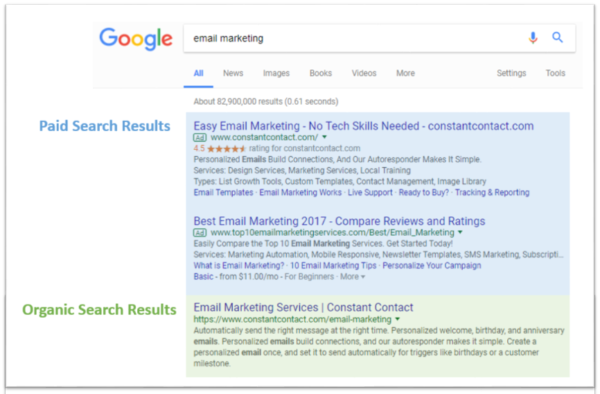
SEO helps you improve your visibility within the organic (or natural) search results, not to be confused with the paid search results.
Want see what SEO can do for your business? Join us for a FREE webinar: How to Show Up on the First Page of Google (And Get More Business from Your Website)
Why is SEO so important?
If you don’t optimize your website for search engines, you risk losing potential customers to your competitors because their websites appear higher in search engine results than yours.
Think of how many times you turn to Google each day to find out which local bakeries have gluten free options or where you can get new sandals at a good price.
When someone searches for information that relates to the products and services you offer, you want to show up.
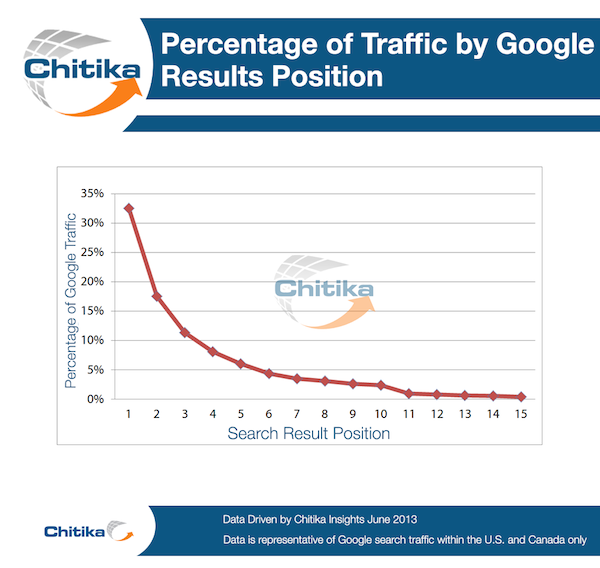
And ideally, you want to show up prominently. Research shows that 60 percent of traffic from Google searches go to websites that appear in the first three search results.
How do search engines determine where your business ranks?
Search engines use algorithms to help provide people with relevant information.
To make sure your website appears on Page 1, rather than 27, you need to focus on building authority on key topics related to your business.
Your website’s authority is determined through onsite and offsite factors.
- Onsite, search engines give higher rankings to websites that regularly publish fresh content on a specific topic. If you own a real estate agency, for example, publishing regular blog posts on home buying tips would start establishing your online authority.
- Offsite, search engines like to see that websites other than your own are linking back to your webpages. When other websites link to your content or people share your content on social media, you have a better chance of being listed prominently in search results.
How can you get started with SEO?
Influencing search engines takes time, but it pays off when you start reaching a relevant audience. If you’re just starting out, it’s best to get really specific with your focus.
Rather than writing about general home buying tips, publish content on your website that answers specific questions related to your audience.
Going back to the real estate example, things like: When is the best time to buy a home in New England? Or What is the Boston housing market forecast in 2017?
And once you start writing content, start establishing some early authority by promoting it in your email newsletter and on your social media channels.
Source


